
“Food deserts” refer to low-income areas where convenience stores are often the only viable food source and fresh produce is a rarity. But nutritious foods aren’t the only thing kids need to thrive and grow. Many of these undernourished kids also live in so-called “book deserts”—areas without easy access to libraries and reading material to nurture their imaginations and development (just think of the 12-year-old boy in Utah who asked his mailman for junk mail to read because he couldn’t get to a library). To combat these problems, creative-thinking librarians and literacy supporters are using inventive solutions to expand access to books and promote a love of reading. READ MORE: Librarians on Bikes Are Delivering Books and WiFi to Kids in “Book Deserts” | GOOD
Tag Archives: books
Freshmen Skipping ‘Fun Home’ for Moral Reasons | The Chronicle #books #diversity #censorship #intellectualfreedom #religion
For some members of the Class of 2019, the choice of “Fun Home” as a summer reading book was anything but fun. Several incoming freshmen decided not to read “Fun Home” because its sexual images and themes conflicted with their personal and religious beliefs. Freshman Brian Grasso posted in the Class of 2019 Facebook page July 26 that he would not read the book “because of the graphic visual depictions of sexuality,” igniting conversation among students. The graphic novel, written by Alison Bechdel, chronicles her relationship with her father and her issues with sexual identity. READ MORE: Freshmen skipping ‘Fun Home’ for moral reasons | The Chronicle.
‘Trashy’ #Books: Garbage Collector Rescues #Reading Material for Colombian #Children | Times Colonist #kids
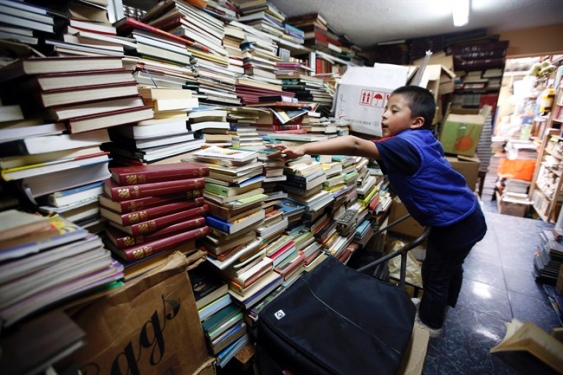
A second-grade education has not stopped garbage collector Jose Gutierrez from bringing the gift of reading to thousands of Colombian children. Gutierrez started rescuing books from the trash almost 20 years ago, when he was driving a garbage truck at night through the capital’s wealthier neighbourhoods. The discarded reading material slowly piled up, and now the ground floor of his small house is a makeshift community library stacked from floor to ceiling with some 20,000 books, ranging from chemistry textbooks to children’s classics. READ MORE: ‘Trashy’ books: garbage collector rescues reading material for Colombian children | Times Colonist.
#Japanese #Bookseller Buys Almost Every Copy Of New #Murakami Book To Protest @Amazon | HuffPost #books #authors
A Japanese bookseller is fighting back against online retail giants like Amazon by buying up a staggering 90 percent of the first printing of a famous Japanese author’s new collection of essays. READ MORE: Japanese Bookseller Buys Almost Every Copy Of New Murakami Book To Protest Amazon | Huffington Post
Who Won #ScienceFiction Hugo #Awards, and Why It Matters | WIRED #diversity #books #SciFi
SINCE 1953, TO be nominated for a Hugo Award, among the highest honors in science fiction and fantasy writing, has been a dream come true for authors who love time travel, extraterrestrials and tales of the imagined future. Past winners of the rocket-shaped trophy—nominated and voted on by fans—include people like Isaac Asimov, Arthur C. Clarke, Harlan Ellison, Philip K. Dick, and Robert A. Heinlein. In other words: the Gods of the genre.
But in recent years, as sci-fi has expanded to include storytellers who are women, gays and lesbians, and people of color, the Hugos have changed, too. At the presentation each August, the Gods with the rockets in their hands have been joined by Goddesses and those of other ethnicities and genders and sexual orientations, many of whom want to tell stories about more than just spaceships. READ MORE: Who Won Science Fiction’s Hugo Awards, and Why It Matters | WIRED.
The 51 Best #Fantasy #Series Ever Written | BuzzFeed #books #reading #genrefiction
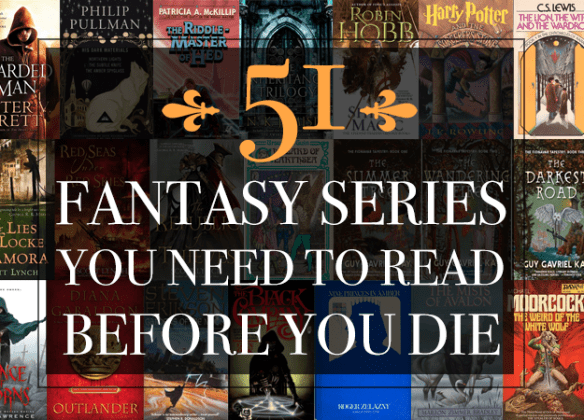
Whether you’re a Swords and Sorcery type of fantasy reader, a fan of battles and betrayal, or you just want a few more goddamn elves in your life, there’s something for you here. These are the truly great fantasy series written in the last 50 years. READ: The 51 Best Fantasy Series Ever Written | BuzzFeed Books.
Is the New Lady Chatterley’s Lover Adaption Borderline Pornographic? God, We Hope So. | Jezebel #books #adaptations
Swearwords in the content (clean images) so consider this post borderline NSFW. READ MORE: Is the New Lady Chatterley’s Lover Adaption Borderline Pornographic? God, We Hope So..
In Defense of Uncomfortable Subject Matter in #Genre #Fiction | Flavorwire #books #opinion #genderviolence #intellectualfreedom
Last week, The New Statesman ran an essay by Liz Lutgendorff, wherein she describes reading every book on NPR’s reader-selected list of the top 100 science fiction and fantasy books, and finding them to be “shockingly offensive” in their “continued and pervasive sexism.” In the course of proposing “a Bechdel test for books,” Lutgendorff launches broadsides at a variety of authors, some of whose work is indeed genuinely awful (step forward, Piers Anthony), and questions why these works remain so respected.
It’s an interesting essay, and makes some valid points about the weight of nostalgia on this particular corner of genre fiction. But it also falls into a pattern that’s worryingly prevalent these days in the world of criticism, particularly when it gets to the topic of rape and sexual assault in fantasy. It’s at this point that Lutgendorff’s argument falls into the trap of confusing a depiction of something in a work of fiction for an endorsement of that thing (at least, in any instance where there’s an absence of explicit, unequivocal condemnation of it). READ MORE: In Defense of Uncomfortable Subject Matter in Genre Fiction | Flavorwire.
Women’s Groups and the Rise of the #BookClub | JSTOR #books #reading #women
Since 1989, leisure reading groups have become a full-fledged phenomenon and are now found everywhere from offices to religious communities to, increasingly, virtual platforms. Although exact numbers are hard to come by, the New York Times reports an estimated 5 million Americans belong to a book club. Even more belong to online reading groups like those housed on the popular site goodreads.com, which has 40 million members. Large-scale book clubs even have the power to influence the publishing market. When Mark Zuckerberg announced in January he was starting an online reading group humbly titled A Year of Books, his first pick shot up amazon.com’s sales list, surging overnight from 45,140 to the top 10. The public, it seems, has fully embraced book club culture.
Or, at least, a certain demographic has. The population of in-person book clubs skews heavily toward college-educated women, and a large proportion of these groups are single-sex, either by default or design. READ MORE: Women’s Groups and the Rise of the Book Club | JSTOR Daily.
Five Great Questions I Was Asked As A #Reference #Librarian | BookRiot #libraries #books #reading
Danika’s post that asked how well we would do on the bookseller’s quiz show got me thinking about some of the best questions I was asked when I worked as a reference librarian. Anyone who knows anything about libraries knows that all patron interactions are private and that librarians never, ever share information about those who ask questions or seek advice. Anonymity is of the utmost importance.
That said, I’ve been out of libraries now for a while and feel confident enough that all of these questions are generic and rendered anonymously enough as to not be pinpointed to any individual. I thought it would be fun to compile a handful of the best, most unique, and most head-scratching questions I was asked as a reference librarian. READ MORE: Five Great Questions I Was Asked As A Reference Librarian |
BOOK RIOT.
 infophile