Who Owns Hackathon Inventions? | Alan Steele – Harvard Business Review


I recently served as a mentor at a hackathon and came away shaking my head. In hackathons, teams compete intensively, typically for just a day or two, to create software (and sometimes hardware) solutions. What struck me was that most of the participants — young, tech-savvy programmers, engineers, and others — seemed largely uninformed or unconcerned about intellectual property. Participants tend to come from many different organizations, and often view hackathons as recreational social events, so perhaps they can be forgiven for not focusing on IP. But the companies they come from need to pay attention — or risk losing valuable IP.

See the full article at: Who Owns Hackathon Inventions? | Alan Steele – Harvard Business Review


5 Tech Trends That Will Change Gaming Forever | Mashable


This year’s E3 showed off a myriad of new technology intended to enhance our gaming experiences. The impending release of two powerful next generation gaming consoles this holiday season [PS4 and the Xbox] means games are going to become more advanced.

These advancements will not only improve the quality of the games’ looks onscreen, but also allow them to interact with the players unlike ever before. From motion controls to second-screen gaming, E3 offered a glimpse of the bright, innovative future to come in gaming.

Of all the technology on display, we’ve highlighted the five trends we expect to change gaming in the next few years or so.

via 5 Tech Trends That Will Change Gaming Forever | Mashable.

The article reviews:

  1. Motion Controls Get Smarter
  2. The Evolved Second Screen
  3. Virtual Reality
  4. Game DVR and Streaming
  5. Cloud Computing

See also:

Google Is Trying To Give The Entire World Internet Access With High-Flying Balloons | Co.Exist


Project Loon will use these solar-powered giant devices hovering 12 miles above the ground to beam down Internet to places where they can’t lay cable.

Google Is Trying To Give The Entire World Internet Access With High-Flying Balloons | Co.Exist: World changing ideas and innovation

See the article for more discussion and videos!!!

New DRM Will Change the Words in Your E-Book | Gadget Lab | Wired.com


The next e-book you buy might not exactly match the printed version. And those changes are there to make sure you’re not a pirate.

German researchers have created a new DRM feature that changes the text and punctuation of an e-book ever so slightly. Called SiDiM, which Google translates to “secure documents by individual marking,” the changes are unique to each e-book sold. These alterations serve as a digital watermark that can be used to track books that have had any other DRM layers stripped out of them before being shared online. The researchers are hoping the new DRM feature will curb digital piracy by simply making consumers paranoid that they’ll be caught if they share an e-book illicitly.

via New DRM Will Change the Words in Your E-Book | Gadget Lab | Wired.com

It will be interesting to see if those publishers who have recently moved to open access on ebooks reverse their stance due to this new technology. I’m sure libraries will be having many discussions about the implications of this new technology on ebook lending and relationships with publishers.

You may also like:

Digital Rights Management (DRM) & Libraries | American Library Association 

A Beautifully Simple Comic Book for the Blind | Wired Design | Wired.com


Braille has come a long way since its invention in the 19th century, but it’s still tough to apply it to the highly-visual storytelling we see in comics. This realization led Phillipp Meyer, a Copenhagen-based interaction designer, to create the first comic for the blind.

Simple, recognizable shapes paired with a contextual title and a simple narrative flow was enough for readers to glean a basic understanding of a story. From there, the reader’s imagination is in charge.

For the full story see: A Beautifully Simple Comic Book for the Blind | Wired Design | Wired.com.

Braille Comic

Some Lists for Best Websites of 2013


Here are some lists for the best websites of 2013.

50 Best Websites 2013 | TIME Tech. Includes categories News & Information, Audio & Video, Web Tools, Social, Education, Home & Family, Special Interest, Shopping, Games and Quirky.

Best Free Reference Web Sites 2013 15th Annual List RUSA Emerging Technologies in Reference Section (MARS). 26 websites are listed. Among them educational websites Codeacademy, Coursera, and VideoLectures.NET.

The eBiz website has posts listing all kinds of top websites of 2013 including Top 10 Best HTML5 Websites of 2013 and Top 15 Most Popular Media Websites | June 2013.

For website design best sites of the month check out AWWWARDS.

23 Mobile Things: Join the Australian / New Zealand Course « Tame The Web


23 Mobile Things: Join the Australian / New Zealand Course « Tame The Web

Excerpt below from Tame the Web | http://tametheweb.com/2013/05/01/23-mobile-things-join-the-australian-new-zealand-course/

What are the 23 Mobile Things?

  1. Twitter
  2. Taking a photo with a mobile device:  Instagram / Flickr app / Snapchat
  3. eMail on the move
  4. Maps and checking in: Foursquare
  5. Photos + Maps + Apps: Historypin / What was there / Sepia Town
  6. Video: YouTube and screencasts
  7. Communicate: Skype / Google Hangout
  8. Calendar
  9. QR codes
  10. Social reading: RSS / Flipboard / Feedly / Goodreads / Pocket
  11. Augmented reality: Layar
  12. Games: Angry Birds / Wordfeud
  13. Online identity: FaceBook and LinkedIn
  14. Curating: Pinterest / Scoop.it / Tumblr
  15. Adobe ID
  16. eBooks and eBook apps: Project Gutenberg / Kindle / Overdrive / Bluefire / Kobo, etc.
  17. Evernote and Zotero
  18. Productivity tools: Doodle / Remember the Milk / Hackpad / any.do /  30/30
  19. File sharing: Dropbox
  20. Music: last.fm / Spotify
  21. Voice interaction and recording
  22. eResources vendor apps
  23. Digital storytelling

You can view the 23 Mobile Things on the official blog here –http://23mobilethings.net/wpress/the-things/

What is this NZ/Australian cohort all about?
simple; it is just establishing a group of librarians in NZ and Australia who are keen to do the 23 Mobile Things at the same time. This cohort will give us mutual support and contact with each other so that we can learn together and keep each other motivated. Hopefully it will help you grow your own personal learning network (PLN) and have fun and great collaborations throughout the course!

Music Discovery Services


My personal preference was to discover new music based on recommendations from previous purchases or my library content, rather than listening to the radio. Or I would be watching a TV program (e.g. So You Think You Can Dance) and hear a track and absolutely must have it. Its time-consuming to find new music, so more and more I’m using recommender systems for discovery. There are so many options available now to discover music, its hard to decide which one is best for you. I’ve used Shazam in the past for recognition and just signed up for This is My Jam to follow what my friends like and Noon Pacific (because who doesn’t want handpicked music recommendations delivered by email!).

(Note: For music within an academic context most academic libraries offer a music library portal or music subject guides.)

Music curation and discovery is shifting from computer-generated algorithms back to including human recommendations and integrating social media and sharing within music streaming and radio services. The article Human Editors Are Returning To Music | FastCompany discusses services Pandora, iTunes, NPR and Rdio in this context.

There seems to be no end to the options for music streaming services, offered offline, online or as apps, free, freemium or subscription-based. Some services put social discovery at the forefront, rather than streaming. Here is a non-comprehensive list of music discovery and streaming services, with emphasis on discovery. Some of these services, such as Pandora (only offered within the U.S), have restrictions based on country.

  • 2u.fm. Free. “Finds music from music sites all over the web.”
  • 8tracks. Sign up for free. Internet radio created by people not algorithms.
  • Accuradio. Free. Also free mobile app.”Internet radio crafted by music lovers.” 600+ free Internet radio stations.
  • Amazon MP3. Shop 20+ million songs. Recommendations and Discover Music services.
  • Beastmode.fm. Free. “Random music to make you happy.” Music published on blogs courtesy of Shuffler.fm.
  • Blip.fm. Free. “Internet radio made social – free music streaming and sharing.”
  • Deezer. Free basic account (ads, restricted listening, discovery only) and subscription (no ads, mobile requires subscription). 180 countries – not in the U.S. “Discover, enjoy, share the music you love.”
  • Earbits. Free online radio. Connect with bands, support artists. No Top 40, no ads. Awesome “About Earbits” video.
  • Google Play Music. “Discover, play, store and share.” Only available in a few countries (not Canada). Google Play All Access subscription service coming soon.
  • Groove. Remixes your music library based on listening habits.
  • Grooveshark. Free basic account. Paid subscribers have access to cloud storage. 15+ million songs, 35+ million users. Listen to music online. Grooveshark Community and recommendation application. Full-featured.
  • Hype Machine. Free. MP3 blog aggregator.
  • iTunes. Also iTunes Genius for playlists, mixes and iTunes Match subscription for cloud storage. Apple Internet radio announcement coming soon (WWDC June 10-14).
  • Jango. Free Internet radio and on mobile that “plays what you want.” Simple. Search by artist. “Making online music easy, fun and social.”
  • Last.fm. Free and premium subscription. “Personalised recommendations based on the music you listen to.” Requires Scrobble plugin.
  • Live365. Free (with ads), 5 day unlimited with signup. 3, 6 and 12 month subscriptions. Network of 5000+ radio stations, 260+ genres. Personalized recommendations. Create your own Internet radio station.
  • liveplasma. Discovery search engine for music, movies and books. Search results are browsed using a graphical interface.
  • MOG. “Music On the Go.” Find, play anywhere, share with friends. Listen for free with ads (basic account). Subscriptions for unlimited music and no ads. U.S. only. 16+ million songs.
  • Musicovery. Free. Graphical interface Internet radio. Music by mood.
  • Noon Pacific. Free. Weekly playlist of the best songs handpicked from the best music blogs. Email delivery.
  • NPR Music. Web portal. NPR Music Radio for continuous music streaming. Social media integration.
  • Ohmytracks. Free. “Uses Last.FM to create a better user experience by offering you music that matches your tastes.”
  • Pandora. Personalized Internet radio. Free basic account, subscription for premium. Full-featured. Only available in the U.S., Australia and New Zealand.
  • Piki.fm. Free. Handpicked radio. Counterpart to Turntable.fm. U.S. only.
  • reddit Music. Web portal and forum. Listen and share. radioreddit. Free. Tunes are voted on.
  • Rdio. Discover (following friends, tastemakers, critics and artists), collect and share. 14 days unlimited trial. Up to 6 months free on computer. Subscription required. Many devices and full-featured.
  • Rhapsody. “More than just Internet radio.” Follow members, artists interviews and reviews. Full-featured. Subscription required. 16+ million songs. U.S. only.
  • seevl. Semantic music discovery plugin for Deezer and YouTube. Free.
  • Shazam. Music recognition app. Share to Facebook, Twitter and email.
  • Shuffler.fm. Free. An audio magazine made by music blogs. “Channel surf the music web through thousands of music sites and blogs, curated by tastemakers who filter the music information overload.”
  • Slacker Radio. Free. Subscribe for commercial free and offline listening. “The Best Music — Anytime, Anywhere, Any Device.” Curated by 200+ experts. 10+ million songs. Highly customizable.
  • Songbird. Free. Connect artists and fans. Handpicked YouTube playlists.
  • Songza. Free. Curated by music experts. Choose to customize music by day, time and situation. No listening limits.
  • SoundCloud. “The world’s leading social sound platform where anyone can create sounds and share them everywhere.” Distribution platform for artists.
  • SoundHound. Music recognition app. Also identifies by songs you sing or hum. Share and bookmark.
  • Spotify. Free and premium accounts. Desktop application. 20+ million songs. 20+ million users = many “eclectic playlists.” Full-featured.
  • Stereomood. Free. Turn your mood into music.
  • Tastebuds.fm. This is unique. Meet people through music – a music-based online dating service.
  • Torch Music. Free. Create online music collections with your friends.
  • Twitter #music. Truly social music discovery.
  • This is My Jam. Free. Music handpicked by your friends.
  • TuneIn. Free. “…the world’s radio station.” 70,000 stations. Multiple devices and connectivity in cars, televisions, etc. Social media and favourites integration, linked playlists.
  • Turntable.fm. Free. Share music interactively, play music together using “rooms”. U.S. only.
  • Whyd. By invitation. Keep, play and share tracks.
  • Xbox Music Pass. Previously known as Zune. Subscription required. Xbox 360/Windows devices only. 30+ million tracks. SmartDJ to create custom stations.
  • YouTube Disco. “Find > Mix > Watch.” Find by artist or song.

You may also like:

Slacker Radio Wants to Redefine Top 40 Music Charts by “Engagement” | Gizmodo

Why it’s still hard to discover new music online (and how we can fix it) | Digital Trends

100 Ways to Discover and Enjoy Music | DailyTekk – April 16, 2012

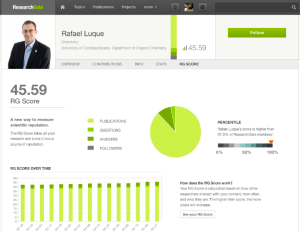
Bill Gates, Benchmark And More Pour $35M Into ResearchGate, The Social Network For Scientists | TechCrunch


ResearchGate announced that it has closed a $35 million round of series C financing from Microsoft founder Bill Gates and Tenaya Capital, with participation from Dragoneer Investment Group and Thrive Capital. This hefty third-round of financing follows its series A and B rounds raised in 2010 and 2012, respectively. Short-term returns may not be part of the equation for ResearchGate’s investors, but Bill Gates, for one, hasn’t been shy about placing big bets on potentially high-impact education, energy and health-related technologies, even if those are long-term — or long shot — investments.

ResearchGate has endeavored to give researchers a platform where they can not only upload the journals they’ve been published in, but share raw data as well — along with experiments that failed or succeeded — in an effort to make that knowledge accessible in a broader context.

For the full article see:  Bill Gates, Benchmark And More Pour $35M Into ResearchGate, The Social Network For Scientists | TechCrunch.

ResearchGate

See also: Bill Gates Backs “Open Science” Social Network ResearchGate In Push For Nobel Prize | ReadWrite

Hogwarts for Hackers: Inside the Science and Tech School of Tomorrow | Wired Enterprise | Wired.com


Hogwarts for Hackers: Inside the Science and Tech School of Tomorrow | Wired Enterprise | Wired.com

The article takes an in depth look at the unique education approach at the Illinois Mathematics and Science Academy (IMSA), where students have the opportunity to work on self-directed projects.