This Throwable Computer Teaches Kids How To Code | Co.Design


This Throwable Computer Teaches Kids How To Code | Co.Design | business + design

Coding is a great skill for kids to learn but it can be a lonely, sedentary endeavor. Hackaball, a new toy created from a partnership between the design agencies MAP and Made By Many, promises to get kids off their butts and playing outside—all while teaching basic coding skills and empowering kids to invent their own kind of play.

READ MORE: This Throwable Computer Teaches Kids How To Code | Co.Design | business + design.

A Typology of Web 2.0 Learning Technologies [Article] | EDUCAUSE.edu


This article presents the outcomes of a typological analysis of Web 2.0 learning technologies. A comprehensive review incorporating over two thousand links led to identification of 212 Web 2.0 technologies that were suitable for learning and teaching purposes. The typological analysis then resulted in 37 types of Web 2.0 technologies that were arranged into 14 clusters. The types of Web 2.0 learning technologies, their descriptions, pedagogical uses and example tools for each category are described, arranged according to the clusters. Results of this study imply that educators typically have a narrow conception of Web 2.0 technologies, and that there is a wide array of Web 2.0 tools as yet to be fully harnessed by learning designers and educational researchers.

READ MORE: A Typology of Web 2.0 Learning Technologies | EDUCAUSE.edu

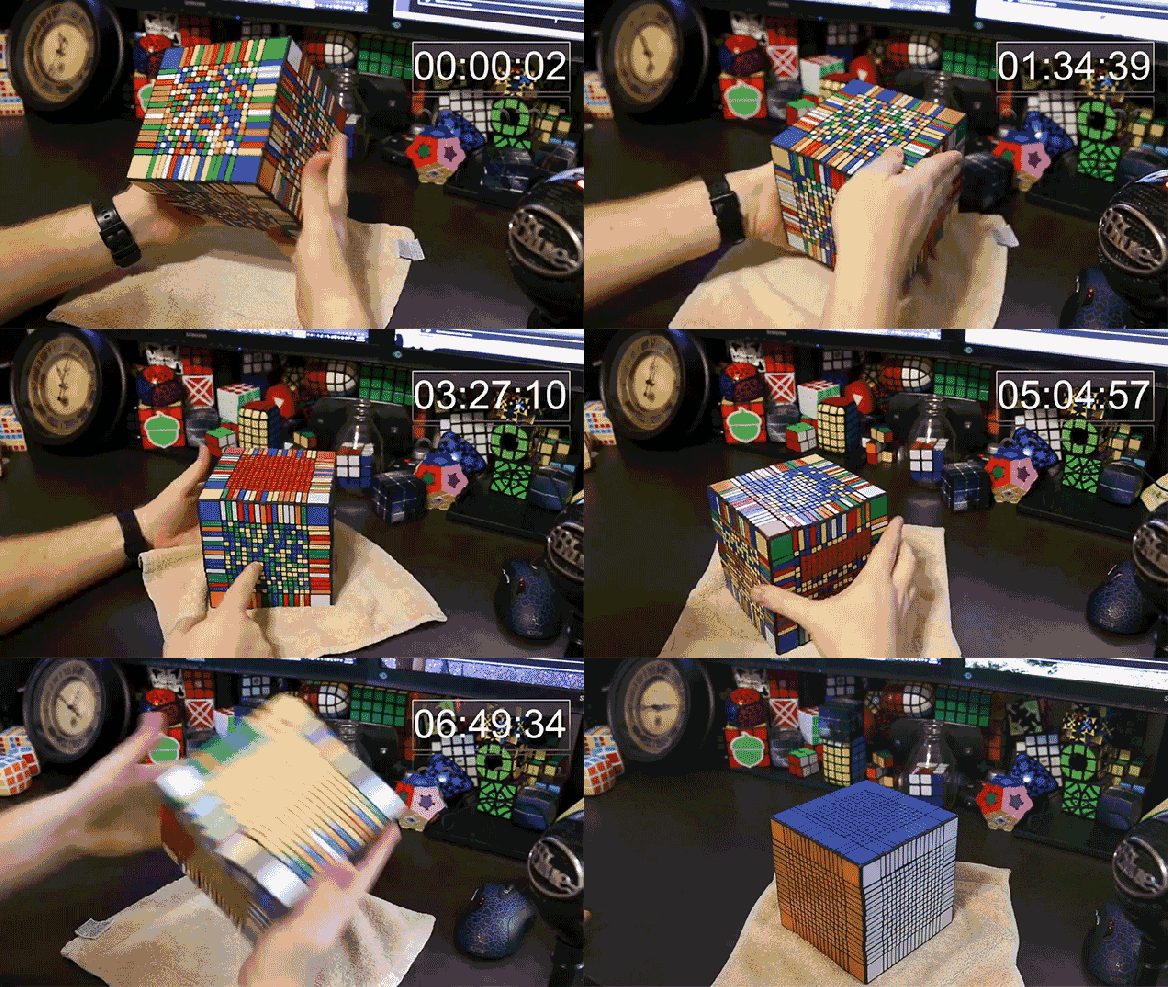
It Took This Guy Over 7 Hours To Solve the World’s Hardest Rubik’s Cube | Gizmodo


It Took This Guy Over 7 Hours To Solve the World's Hardest Rubik's Cube

Fascinating to glimpse the different types of Rubik’s Cubes this guy has in his collection. I thought there was only the original! The 17x17x17 cube would be a unique addition for libraries to have available for patrons to borrow. 

Seven hours sounds just about right for the average puzzle enthusiast to solve a standard 3x3x3 Rubik’s Cube. But Youtuber RedKB isn’t your average puzzle enthusiast. Instead of tackling a 3x3x3 cube, he solves this incredibly complex 17x17x17 cube designed by Oskar Van Deventer. In the end it took him about seven-and-a-half hours to get all the colored sides put back in order. READ MORE: It Took This Guy Over 7 Hours To Solve the World’s Hardest Rubik’s Cube | Gizmodo

Disabled Boy Learns to Play Piano With His Eyes Using Virtual-Reality Headset | The Guardian


Eye Play the Piano is the work of Japanese VR headset manufacturer Fove, working with the University of Tsukuba. The project is pitched as a “universal piano” which children can play using eye movements while wearing the headset.

Through the use of Fove’s eye-tracking technology, the headmount recognises the user’s eye movement. The user blinks on one of the many panels within the interface to trigger the preferred note, which is then conveyed to the piano,” explains the Eye Play the Piano website.

READ MORE: Disabled boy learns to play piano with his eyes using virtual-reality headset | Technology | The Guardian.

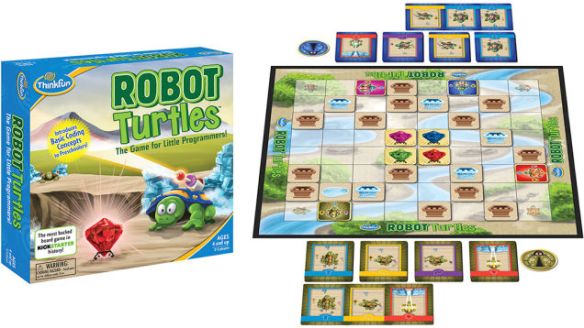
A Board Game That Teaches Four-Year-Olds How To Code | Kinja


When was the last time a champion speller rolled up to a Bee in a Ferrari? Never. If you really want to guarantee your kids make something of themselves one day, youll want to forget board games like Scrabble and focus on building real-world skills. Not only does Robot Turtles teach a love of Herpetology the study of reptiles it also teaches them the basics of computer programming—aka coding.

Read More: A Board Game That Teaches Four-Year-Olds How To Code | Kinja

Top 100 Tools for Learning 2014 | Jane Hart


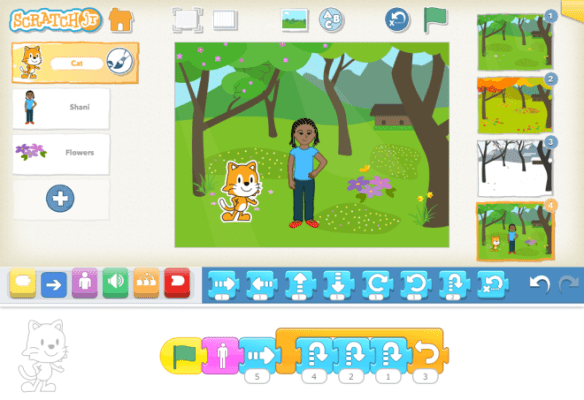
Finally, a Way to Teach Coding to the Touchscreen Generation | WIRED


Finally, a Way to Teach Coding to the Touchscreen Generation | Enterprise | WIRED

[A] new app might be able to break through that passivity by meeting the Touchscreen generation where their fingers live. ScratchJr is a new iPad variation of the Scratch programming language, a tool created at MIT to help teach kids to code. The premise for both is the same: instead of text, Scratch uses interlocking colored blocks to mimic the logical structures and functions of a typical grown-up programming language. Scratch scripts allow their creators to direct and interact with “sprites”—cartoonish characters on the screen. By introducing kids to coding without the hurdles of arcane syntax and bug-prevention, the hope is that they’ll become engaged enough with the process that their sensibilities will shift.

READ MORE: Finally, a Way to Teach Coding to the Touchscreen Generation | WIRED.

Are Courses Outdated? MIT Considers Offering ‘Modules’ Instead | The Chronicle of Higher Education


People now buy songs, not albums. They read articles, not newspapers. So why not mix and match learning “modules” rather than lock into 12-week university courses?

READ: Are Courses Outdated? MIT Considers Offering ‘Modules’ Instead | The Chronicle of Higher Education.

How mobile phones are democratising education | Guardian Sustainable Business | Guardian Professional


The ubiquity of mobile phones is providing a new low cost tool for teaching in some of the poorest communities.

The following programs are discussed:

  1. MobiLiteracy
  2. Dr. Math
  3. Worldreader
  4. MoMaths

READ MORE: How mobile phones are democratising education | Guardian Sustainable Business | Guardian Professional.

13 Essential Lessons Little Women Can Teach You About Living Well | HuffPost Books


13 Essential Lessons Little Women Can Teach You About Living Well

Louisa May Alcott’s Little Women, a two-volume novel following the four March sisters through their adolescence and young adulthood, was first published in the late 1860s. Almost 150 years later, the book remains remarkably popular; in fact, the unassuming tale is one of the ten most beloved books in America, according to a poll released recently by Harris International…

…Modern readers would not be alone in finding Little Women a bit fusty. The author herself notoriously described her children’s stories as “moral pap for the young.” She wrote the books not for artistic reasons, but to pay the bills. Yet it can’t be denied that her stories have spoken to generations of readers. Maybe because there are some genuinely good lessons for living in there — as well as some sneaky progressivism, endearing characters, and funny stories of everyday life. All in all, Little Women may not be perfect, but most of us could learn a great deal about how to live today from this old-fashioned novel…

READ: 13 Essential Lessons Little Women Can Teach You About Living Well | HuffPost Books