Stunning, Tiny Paintings Found On Vintage Books | HuffPost Books


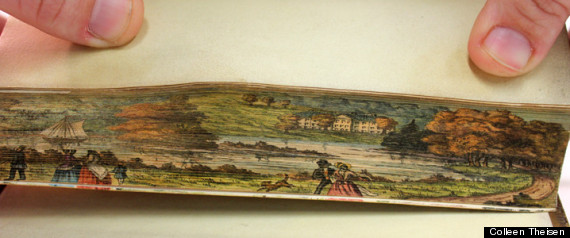
Colleen Theisen, a librarian at University of Iowa’s Special Collections and University Archives, recently found these awesome fore-edge paintings on a series of books from the 19th century.

The books are a four volume series by Robert Mudie, one volume for each season of the year, and the paintings reflect each of those seasons. The artist of these mini paintings is unknown.

Iowa Special Collections

The full story: Stunning, Tiny Paintings Found On Vintage Books | HuffPost Books.

With Modern Makeovers, America’s Libraries Are Branching Out | NPR


With Modern Makeovers, America’s Libraries Are Branching Out | NPR.

Quotable: When you say the words “libraries” and “future” together, the first question a lot of people have is: Will there still be books? According to most librarians interviewed for this story, the answer is a firm “yes.” But they also say that housing books will be less of a priority.

‘Most Amazing, Stupendously Clever’ Little Free Library of the Day | Shelf Awareness


Checking in at Little Free Library’s Facebook page is always fun, but a post yesterday was so mesmerizing that even the LFL folks couldn’t resist exclaiming: “Is this the most amazing, stupendously clever, epic, mechanically excellent (?!) and stunningly cool Little Free Library ever? It’s a kinetic sculpture! A neighborhood art piece! Destined for the Museum of Modern Art? The Walker? The Guggenheim? Have you ever seen anything this fab?”

via ‘Most Amazing, Stupendously Clever’ Little Free Library of the Day | Shelf Awareness for Wednesday, September 4, 2013 | Shelf Awareness.

How You Too Can Transition from a Librarian to a Doctoral Student | Hack Library School


Editor’s note: This is a guest post by Abigail Phillips.

So, how do you, dear reader, know if you really want to get a PhD? If you are working as a public librarian or school media specialist, how do you know if academia is a good fit for you? What follows are some suggestions, tips, and advice from an ex-librarian turned academic for those thinking about entering a PhD program. Although my focus in this post is on potential doctoral students in Information Studies, this advice can be applied to any doctoral program.

via How You Too Can Transition from a Librarian to a Doctoral Student | Hack Library School.

Robert Darnton: The Library in the Digital Age…08.30.13 | The Proverbial Lone Wolf Librarian’s Weblog


Robert Darnton: The Library in the Digital Age…08.30.13 | The Proverbial Lone Wolf Librarian’s Weblog

Power Tools | Roy Tennant – The Digital Shift


Excerpt of article content specific to libraries:

Tools in a digital library context often provide similar benefits, although they tend to be different in nature. I would say that a basic tool for any digital librarian is likely a computer running a LAMP stack:

L = Linux
A = Apache web server
M = MySQL
P = A “P” programming language such as Perl or Python

With that, there is very little you can’t do. Well, that is, once you install the dependencies of whatever else you’re wanting to run. But you get the idea. It’s a basic platform from which much else is made possible. It’s an essential tool set.

Some of the other digital library tools in my repertoire include:

Swish-e – I’ve used this indexing software since the mid-90s, and haven’t seen a reason to change. With it, I’ve set up and maintained a variety of web sites that function as if they are database-supported but in fact are simply flat XML files that are indexed using Swish-e (see, for example, FreeLargePhotos.com).

XSLTProc – Sure, there are many options for XML processing out there and I won’t attempt to defend this particular decision except to say that it is easy to use and does what I need it to do (process XSLT stylesheets against specified XML files). Again, it underpins a number of my web sites.

Nano – You can stop laughing now. Seriously. Stop laughing. I mean it. Nano is a simple text editor (before it was Pico, which was what the PINE linemode email system used for message editing). I use it to do simple editing tasks in text files and programs on the server. I know it isn’t nearly as cool emacs, or even vi, but hey, it’s what I’m used to.

Tools are power. They give you capabilities you would not have without them.

via Power Tools | Roy Tennant – The Digital Shift.
10 Futuristic Libraries | Ellyssa Kroski – OEDB.org


See the list: 10 Futuristic Libraries | Ellyssa Kroski – OEDB.org

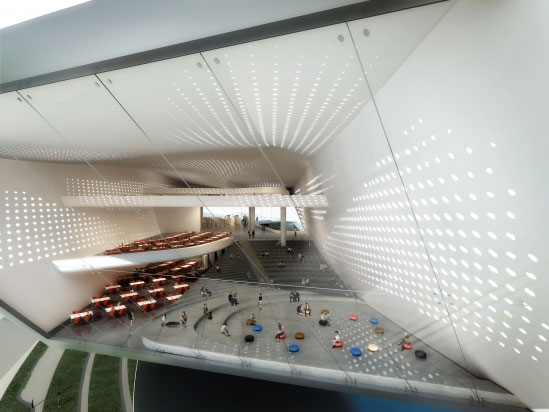
Dalian Public Library

So, You Want to be a Law Librarian? | Letters to a Young Librarian


So, You Want to be a Law Librarian?, by Janelle Beitz and Mari Cheney | Letters to a Young Librarian

An interview with two academic law librarians.

Value of Libraries Megapost | Stephen’s Lighthouse


I have been pulling together all of my posts on studies and reports on the value of public libraries for my work with the Federation of Ontario Public Libraries.  I thought I might as well post it here too. I’m sure I’ve got some dupes in here but c’est la vie!  Hope you find it useful!  There are many useful talking points and proofs in this research.

See the very mega megapost: Value of Libraries Megapost | Stephen’s Lighthouse.

Alabama Legislator Bill Holtzclaw Calls On Schools To Ban Toni Morrison Book | Huffington Post


An Alabama legislator who does not support efforts to repeal the sweeping U.S. education initiative known as the Common Core Standards says he believes the reading list issued in conjunction with the standards needs to be revised.

State Senator Bill Holtzclaw (R-Madison) told Alabama Media Group this week that he believes The Bluest Eye, by Toni Morrison, should be banned from high school libraries, despite the fact that this book is on the Common Core Standard’s recommended reading list for 11th-graders. 

See the full story: Alabama Legislator Bill Holtzclaw Calls On Schools To Ban Toni Morrison Book | Huffington Post.