#Refugee #Library Flooded With #Books | Guardian + 17 Books Capturing The #Immigrant Experience | BuzzFeed #people #reading #libraries


Calais Refugee Library Flooded with Thousands of Books | Books | The Guardian
Creator of Jungle Books urges people to donate money, not books, so refugees can cook – and read – in safety.

17 Books That Perfectly Capture The Immigrant Experience | BuzzFeed
These authors share fiction and non-fiction about staying afloat in the system.

14 Stories on #Diversity in #Books and #Libraries That May Interest You | #fiction #literacy #intellectualfreedom #literature #comics


Female-Led Graphic Novels Your Library Needs. You Know Comics Aren’t Just for Boys…Right? | CCGC in Libraries
History shows that superheroes have been primarily white males, and the comics in which they are featured are primarily written for a male audience. Now that geek culture is becoming increasingly more acceptable, let’s admit something obvious: girls like comics too! It seems kind of silly to feel the necessity to release a statement like that, but it is possible that not everyone in your library is aware of the growing audience of comics and graphic novels.

Why We Need Diverse Libraries | BOOKRIOT
Public librarians fight the good fight: we’re champions of literacy and intellectual freedom, we oppose book bannings, and we’re pro-education and public service. We’ve had a bit of a public image problem what with our shushing and our late fees, but we’ve been hard at work reinventing our image as welcoming, affirming professionals who are here to spread the love of books and information. We even have literary tattoos and bookish roller derby names. All of this makes it harder to say this next thing: Public librarians need to do better with race.

9 Books to Add to the Modern Brown Girl Literary Canon  | Elle.com
Women—particularly women of color—are coming for the old guard in literary writing circles and have been for some time now.

Back This Kickstarter: A Feminist Indian Comic Anthology | BOOKRIOT
Every once in awhile, I like to jump over to Book Riot from Panels (HI have you met us over at Panels? We talk about comics the way Book Riot talks about books!) to talk about comics that are really resonating with me, and today that’s Drawing the Line: Indian Women Fight Back, a comics anthology that’s currently 1/3 funded on Kickstarter with 18 days to go.

The Case for Reading Books that Offend You | BOOKRIOT
Recent news that several students at Duke University chose to abstain from reading Alison Bechdel’s graphic novel Fun Home, part of the school’s summer reading program, comes in the wake of a slew of lengthy think-pieces attempting to analyze Millennial views on offensive language. The students’ stance is relatively straightforward – Fun Home, specifically the images, contradicts their religious beliefs.

Ten Must-Read YA Novels You’ve Probably Never Heard Of | The Guardian
Just like adult fiction, popular YA books such as The Hunger Games or Divergent are not representative of the sheer diversity of titles and authors out there. John Hansen, creator of #VeryRealisticYA, explores some of the totally unique YA books you’ve probably not come across but really ought to look up…

2015 Partner for Pride Reading List | 3M | Scribd
At the 2015 American Library Association’s Annual Conference, 3M Library Systems asked librarians to share their favorite titles that support diversity, resulting in the librarian-recommended reading list below.

100 Best Novels: One in Five Doesn’t Represent Over 300 Years of Women in Literature | The Guardian
“Best of” lists are strange and silly things, particularly in the realm of books: as prize shortlists prove time and time again, fiction is a most subjective art. But still, what fun they can be, and how unwittingly revealing. Of Robert McCrum’s 100 Greatest Novels, just 21 are by women. Even allowing for the fact that his list takes in the 17th, 18th and 19th centuries, when women writers were relatively rare, this seems extraordinary to me.

Diversity Matters: Lee and Low Push for Transparency in the Publishing World | BOOKRIOT
Diversity has been the topic of discussion in the bookish world, and for good reason. The Children’s Book Council estimates only about 10% of children’s books featured main characters of color in 2014, and only about half of those were written by authors of color. In a world where nearly half of children in American elementary schools are children of color and where children of color are predicted to outnumber white children by 2024 in classrooms in the United States, publishing is not keeping pace with reality.

Here’s How New Texas Public School Textbooks Write About Slavery | Jezebel
In 2010, the Texas Board of Education approved a revised social studies curriculum that, wrote The New York Times that year, would “put a conservative stamp on history” once going into effect in 2015. In advance of their debut in Texas classrooms last week, it was widely reported that the new textbooks, published by Houghton Mifflin Harcourt and Pearson, “whitewashed” slavery by downplaying the brutality of the facts and treating it as a “side issue.”

Why Diversity in Children’s Literature Really Matters | HuffPost Books
Fortunately, an enormous push to increase diversity in children’s literature has emerged, thanks to campaigns like We Need Diverse Books. However, this push hasn’t always been prevalent among writers and readers.

How to Tackle Graphic Novel Collection Development for the Adult Department | CCGC in Libraries
Graphic novels have become an essential part of a library’s collection. Their popularity has grown due to literary and art awards, librarian and education societies, and librarian research. But including these publications in a library’s collection can be difficult for some, especially those who work in the adult department.

Women Authors Need Your Support. Here’s Why | HuffPost Books
According to a recent poll, male writers are the ones doling out inspiration.

All Our Worlds: Diverse Fantastic Fiction | DoubleDiamond
The conversation about diversity and representation is unavoidable. People are constantly clamoring for diverse media and denouncing what they see as harmful or not good enough. Fantastic fiction is a big target of this criticism. There is that stereotype: the idea that fantasy is all Arthurian white guys waving swords around and winning the helpless girl, and that science fiction is all white guys on spaceships waging wars against bug-eyed aliens. But that conception never felt right to me. Yes, there was plenty of that, but I had seen so much more!
‘Dune’ at 50: Why the Groundbreaking Eco-Conscious Novel Is More Relevant Than Ever | Flavorwire #Dune #books #SciFi #environment


“Men and their works have been a disease on the surface of their plane… you cannot go on forever stealing what you need without regard to those who come after.” READ MORE: Dune at 50: Frank Herbert’s Environmentalist Legacy | Flavorwire

Why #NASA Helped Ridley Scott Create ‘The Martian’ #Film | Popular Science #science #books #adaptations


The day Ridley Scott called NASA was a great day for NASA. Scott, or Sir Ridley, or the dude who has directed several of the greatest sci-fi movies of all time, plus Thelma and Louise, was in the early stages of his newest movie, The Martian, based on the mega-popular novel by Andy Weir.

The Martian is a deadly simple tale of an astronaut named Mark Watney (played by Matt Damon) trying to survive and eventually escape from Mars after being stranded there. But the most important fact about The Martian is not all of the extreme close ups on Matt Damon’s handsome astronaut mug (there are many!). It’s that The Martian is extremely recent science fiction. Its set in a version of the future that is not distant or fantastic, but familiar and possible. And the premise of the story is based on just the type of mission that NASA is planning. READ MORE: Why NASA Helped Ridley Scott Create ‘The Martian’ Film | Popular Science

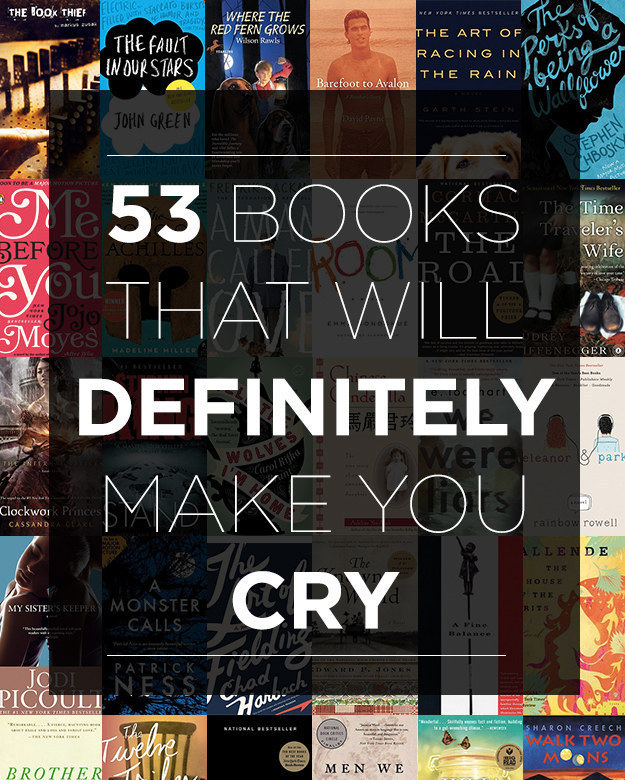
53 #Books That Will Definitely Make You Cry | BuzzFeed #reading #fiction


We recently asked subscribers of the BuzzFeed Books newsletter to tell us about a book that would definitely make us cry. They gave us a lot to choose from, so take your pick — and maybe grab some tissues, too. READ MORE: 53 Books That Will Definitely Make You Cry | BuzzFeed

#Librarians on Bikes Are Delivering #Books and #WiFi to #Kids in “Book Deserts” | GOOD #libraries #access


“Food deserts” refer to low-income areas where convenience stores are often the only viable food source and fresh produce is a rarity. But nutritious foods aren’t the only thing kids need to thrive and grow. Many of these undernourished kids also live in so-called “book deserts”—areas without easy access to libraries and reading material to nurture their imaginations and development (just think of the 12-year-old boy in Utah who asked his mailman for junk mail to read because he couldn’t get to a library). To combat these problems, creative-thinking librarians and literacy supporters are using inventive solutions to expand access to books and promote a love of reading. READ MORE: Librarians on Bikes Are Delivering Books and WiFi to Kids in “Book Deserts” | GOOD

Freshmen Skipping ‘Fun Home’ for Moral Reasons | The Chronicle #books #diversity #censorship #intellectualfreedom #religion


For some members of the Class of 2019, the choice of “Fun Home” as a summer reading book was anything but fun. Several incoming freshmen decided not to read “Fun Home” because its sexual images and themes conflicted with their personal and religious beliefs. Freshman Brian Grasso posted in the Class of 2019 Facebook page July 26 that he would not read the book “because of the graphic visual depictions of sexuality,” igniting conversation among students. The graphic novel, written by Alison Bechdel, chronicles her relationship with her father and her issues with sexual identity. READ MORE: Freshmen skipping ‘Fun Home’ for moral reasons | The Chronicle.

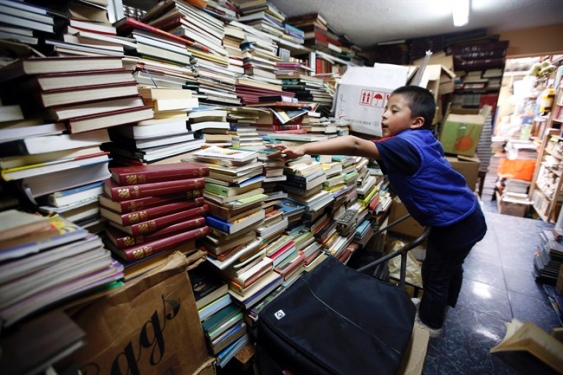
‘Trashy’ #Books: Garbage Collector Rescues #Reading Material for Colombian #Children | Times Colonist #kids


A second-grade education has not stopped garbage collector Jose Gutierrez from bringing the gift of reading to thousands of Colombian children. Gutierrez started rescuing books from the trash almost 20 years ago, when he was driving a garbage truck at night through the capital’s wealthier neighbourhoods. The discarded reading material slowly piled up, and now the ground floor of his small house is a makeshift community library stacked from floor to ceiling with some 20,000 books, ranging from chemistry textbooks to children’s classics. READ MORE: ‘Trashy’ books: garbage collector rescues reading material for Colombian children | Times Colonist.

Are #Tablets Harming Our Children’s Ability to Read? | Technology | The Guardian #reading #kids #tech #devices


The last few years have seen the biggest change in how young people spend their time since the invention of the television – but is it a good thing? READ MORE: Are tablet computers harming our children’s ability to read? | Technology | The Guardian.

Who Won #ScienceFiction Hugo #Awards, and Why It Matters | WIRED #diversity #books #SciFi


SINCE 1953, TO be nominated for a Hugo Award, among the highest honors in science fiction and fantasy writing, has been a dream come true for authors who love time travel, extraterrestrials and tales of the imagined future. Past winners of the rocket-shaped trophy—nominated and voted on by fans—include people like Isaac Asimov, Arthur C. Clarke, Harlan Ellison, Philip K. Dick, and Robert A. Heinlein. In other words: the Gods of the genre.

But in recent years, as sci-fi has expanded to include storytellers who are women, gays and lesbians, and people of color, the Hugos have changed, too. At the presentation each August, the Gods with the rockets in their hands have been joined by Goddesses and those of other ethnicities and genders and sexual orientations, many of whom want to tell stories about more than just spaceships. READ MORE: Who Won Science Fiction’s Hugo Awards, and Why It Matters | WIRED.