16 Free Live Webinars for Librarians in June – OEDB.org.
I particularly intrigued by Public Libraries: Become a Community Publishing Portal (PLA) and Support Patron Learning in Small Spaces with Small Budgets.

16 Free Live Webinars for Librarians in June – OEDB.org.
I particularly intrigued by Public Libraries: Become a Community Publishing Portal (PLA) and Support Patron Learning in Small Spaces with Small Budgets.
Less than two years after DC Comics began selling digital versions of its own comics on the same day as print, the superhero publisher announced two new digital comics formats: DC2, which will feature “dynamic artwork” that unfolds as the reader taps on the screen, and DC2 Multiverse, a choose-your-own-path format that will allow users to make decisions at key points that will unlock different storylines.
via DC Announces Choose-Your-Own-Path Digital Comics | Underwire | Wired.com.

See also:
ResearchGate announced that it has closed a $35 million round of series C financing from Microsoft founder Bill Gates and Tenaya Capital, with participation from Dragoneer Investment Group and Thrive Capital. This hefty third-round of financing follows its series A and B rounds raised in 2010 and 2012, respectively. Short-term returns may not be part of the equation for ResearchGate’s investors, but Bill Gates, for one, hasn’t been shy about placing big bets on potentially high-impact education, energy and health-related technologies, even if those are long-term — or long shot — investments.
ResearchGate has endeavored to give researchers a platform where they can not only upload the journals they’ve been published in, but share raw data as well — along with experiments that failed or succeeded — in an effort to make that knowledge accessible in a broader context.
For the full article see: Bill Gates, Benchmark And More Pour $35M Into ResearchGate, The Social Network For Scientists | TechCrunch.
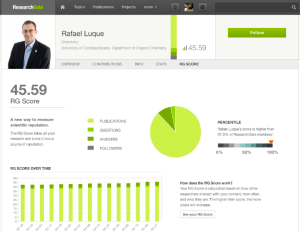
See also: Bill Gates Backs “Open Science” Social Network ResearchGate In Push For Nobel Prize | ReadWrite
Google will soon launch Google Web Designer, an HTML5 development tool for “creative professionals.” The service, Google says, will launching within “the coming months” and is meant to “empower creative professionals to create cutting-edge advertising as well as engaging web content like sites and applications – for free.”
Google’s only service for creating websites right now is Google Sites, which allows you to easily create basic sites and wikis from pre-built templates. That product has lingered without any meaningful updates for a while now, so maybe Web Designer will be a more sophisticated replacement for Sites’ editor.
Hogwarts for Hackers: Inside the Science and Tech School of Tomorrow | Wired Enterprise | Wired.com
The article takes an in depth look at the unique education approach at the Illinois Mathematics and Science Academy (IMSA), where students have the opportunity to work on self-directed projects.
Another great idea to bring community members to the library!
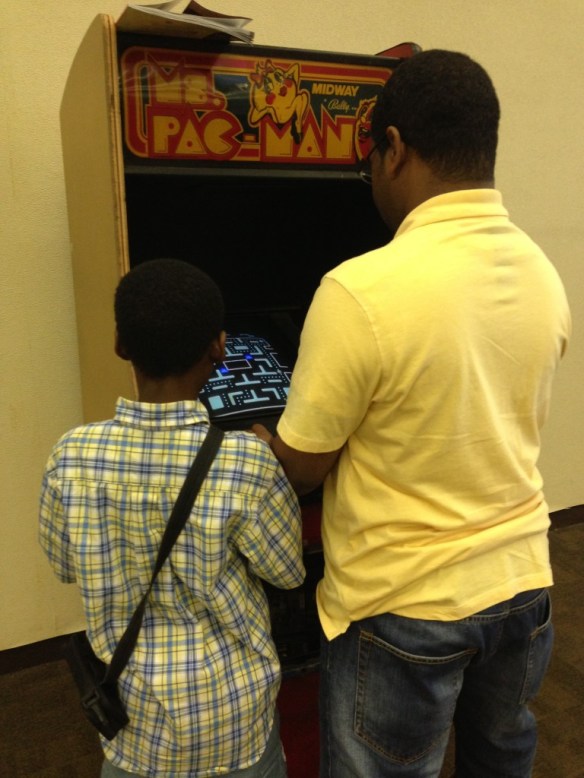
Video gaming in libraries isn’t a new thing. It seems to have picked up steam in the last decade and is now something that most libraries will offer to their communities. This is a good thing: video games can be fun, rewarding, help those playing them understand stories/character/plot, and so much more.
Public libraries are places where people come together and experience something. Why not have a bit of that something be an arcade machine?
via Ms. Pac Man at the Chattanooga Public Library « Tame The Web.
If you’re trying to reach specific audiences, you can’t afford to ignore mobile-only users. As Pew Internet reports:
See the full article: The Rise of the Mobile-Only User | Karen McGrane – Harvard Business Review.
Infographic: 2012 Mobile Growth Statistics | DigitalBuzzBlog

Quotables:
“ALA’s Office for Intellectual Freedom recommends that libraries cultivate videogame creation, play, and contests. Many reluctant learners are at-risk youth, and gaming helps bring them into the library.”
“Libraries are among the most trusted of institutions. It is time to use that trust to create activities and programs that help solve the problem of gun violence.”
via Gun Violence, Videogames, and Libraries | American Libraries Magazine.
Last fall, the Internet Archive celebrated a massive milestone, as the “online Library of Alexandria” reached 10 Petabytes of stored information. Yes, that means 10,000,000,000,000,000 bytes accessible to anyone. Wow.
Filmmaker Jonathan Minard was on hand for the celebration, and in the short doc above he speaks to the Archives founders about how it expanded from a project dedicated to cataloging everything ever published online—to a project to document every piece of information in existence. Turns out its possible—we just need the will to do it.
via Gizmodo | A Look Behind the Scenes of the Internet Archives Impossible Task.

 infophile