When General Stanley McChrystal started fighting al Qaeda in 2003, information and secrets were the lifeblood of his operations. But as the unconventional battle waged on, he began to think that the culture of keeping important information classified was misguided and actually counterproductive. In a short but powerful talk McChrystal makes the case for actively sharing knowledge.
Little kids may insist you read the same books over and over at bedtime (sometimes more than once in the same night), but that doesn’t mean you can’t stop trying to add variety to the mix. This new list, compiled by Reach Out and Read, a nonprofit organization that advocates for literacy, and book recommendation site Goodreads will help you do just that.
Goodreads came up with the idea for this list as a way to celebrate Reach Out and Read’s 25th anniversary. Together, the two put together fifty top picks published in that time period. Whether you are looking for popular classics or a few unknown gems, you’ll certainly find something great to add to the rotation here.
Professional development opportunities are still in full swing this month with an incredible 62 Free Live Webinars going on in the area of libraries and librarianship. So don’t switch to a summer schedule yet! Instead, look into attending some of these amazing sessions this month!!
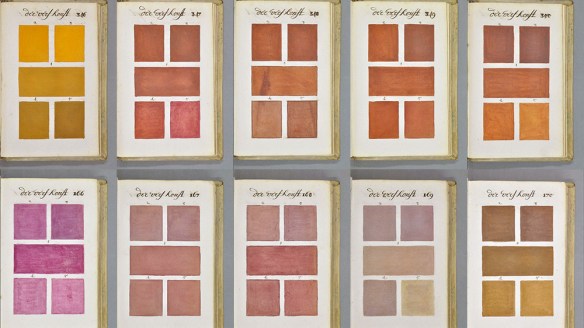
More than two centuries before Pantone divided the visible spectrum into six-digit color codes, a mysterious Dutch artist crafted this extraordinary guide to painting in watercolor. Hundreds of subtly varying colors were mixed by hand for this one-of-a-kind, encyclopedic volume. READ MORE: Who Painted This 300-Year-Old Guidebook to Every Imaginable Color? | Gizmodo
Russian President Vladimir Putin is not f*cking around.
The president signed a new law on Monday that will prohibit cursing in music, books, movies and at entertainment events throughout the country as of July 1. Existing books, CDs and hard copies of movies that contain curse words provide a warning label about the obscene language. Anyone who breaks the law is subject to a fine.
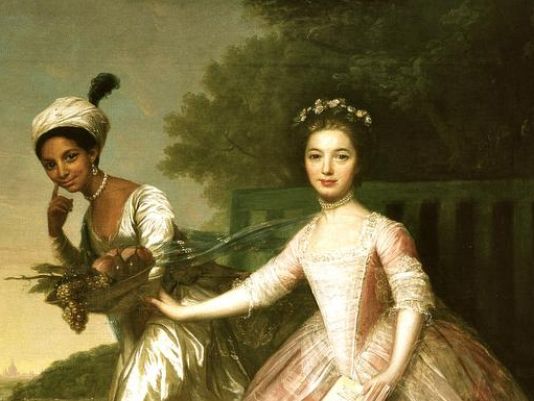
Wandering the grand halls of Scone Palace in Scotland you might stumble on a pretty portrait of two beautiful women in 18th-century clothes, seemingly affectionate sisters. Not so unusual — except one of the “sisters” is black.
Who is that, you might well wonder, as did Misan Sagay, then a young British college student of Nigerian descent, long accustomed to being the only black face in most British rooms. She stopped short upon spotting the painting while touring the palace near her university.
“I was stunned. And taken aback,” says Sagay, now in her 40s and a screenwriter (Their Eyes Were Watching God). The castle brochure named only the white woman in the portrait, Lady Elizabeth Murray. When she returned a few years later, Sagay says, there was more information on the label, naming the black woman as Dido, “the housekeeper’s daughter.”
“So the silent black woman had a name,” says Sagay. “But I looked at the portrait and the way they were touching, and thought, ‘I don’t buy this. There is more to this than meets the eye.’ ”
Indeed there was. Sagay dove into drafty palace archives to learn more, and years later the result is Belle, written on spec by Sagay, directed by Amma Asante, a British woman of Ghananian descent, and starring Gugu Mbatha-Raw,a British woman of South African descent.
Back in 2010, when Dana Saxon decided that she wanted to trace her family’s lineage, her expectations were low. “I thought, for people who survived slavery, there’d be little public information,” she says. What happened next “blew her mind”–and led to the creation of Ancestors Unknown, an international nonprofit that is bringing the past to the most impressionable among us: young students.
Saxon discovered that public archives had not completely ignored the existence of the enslaved, who legally were considered the same as property. While putting together the puzzle of her family’s past, she had an epiphany: “There were so many ancestors waiting to be discovered, waiting to be appreciated for what they did to help get us to where we are today,” she says. Knowing that most school curriculums do not include the names and contributions of people from the African Diaspora, she “wanted to find a way to help young people place themselves and their ancestors in the larger context of history.”
The Mission of Ancestors Unknown… “To inspire the personal and academic success of students throughout the world by introducing them to their unknown ancestors.”
 infophile