Projection Mapping Brings an Ancient Greek Statue to Life | WIRED


PURISTS WILL SCOFF, but we could be nearing a future where new technologies make art museums come to life. Not hyperbolically, in the sense that virtual reality displays and touchscreen tablets let you interact with art in new ways (we’re already seeing that in spades, thanks to smart renovations at places like the Cleveland Museum of Art and the new Cooper Hewitt.)

This is more literal. In this near-future, works of art might actually register facial expressions. They might blink, or look right at you. READ MORE: Projection Mapping Brings an Ancient Greek Statue to Life | WIRED.
Artist Takes Old Books and Gives Them New Life as Intricate Sculptures | Open Culture


New York-based artist Brian Dettmer cuts into old books with X-ACTO knives and turns them into remixed works of art. Speaking at TED Youth last November, he told the audience, “I think of my work as sort of a remix …. because I’m working with somebody else’s material in the same way that a D.J. might be working with somebody else’s music.” “I carve into the surface of the book, and I’m not moving or adding anything. I’m just carving around whatever I find interesting. So everything you see within the finished piece is exactly where it was in the book before I began.”

READ MORE: Artist Takes Old Books and Gives Them New Life as Intricate Sculptures | Open Culture.

25 Essential Graphic Novels | Flavorwire


Best Graphic Novels – Flavorwire

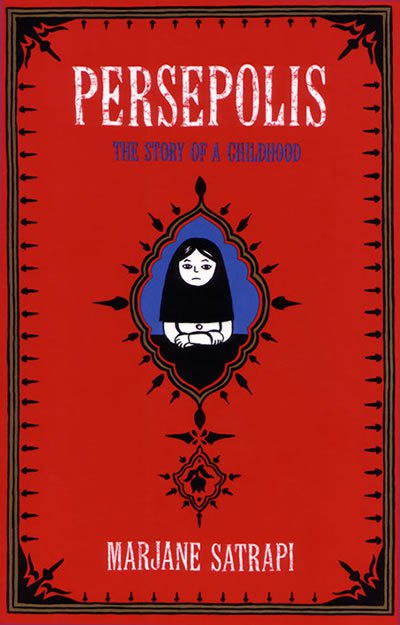
Long dismissed as a less serious art form, graphic novels have finally started to gain more mainstream credibility over the last 20 years. There are many, many excellent examples out there, but if you’re looking for a place to start, start here! The world of the graphic novel is one that spans a wide range of authors, artists, styles, and subject matter, and this primer covers all the bases. While the distinction between graphic novels and comic books gets dicey the term “graphic novel” was only introduced in the late 1970s, for the purposes of this list, they are lengthier, meatier book-like works — and they’re all brilliant for both their literary and visual merit.

via 25 Essential Graphic Novels | Flavorwire.

This Is A Floating Library. Every City Should Probably Have One. | HuffPo


There are a few places where we dream of curling up to read a book. Mostly, these include treehouses, cozy attics and the Gilmore residence in Stars Hollow. But now there’s another: artist Beatrice Glow’s floating library. Who said water and books don’t mix?

Docked off Pier 25 in New York City beginning September 6, the library-slash-art-installation will include an outdoor reading lounge on the upper deck that will, according to its website, be “conducive to fearless dreaming.” Glow’s project will be taking over the Lilac Museum Steamship, a decommissioned steam-powered ship that once carried supplies to lighthouses and is listed on the National Register of Historic Places.

READ MORE: This Is A Floating Library. Every City Should Probably Have One | HuffPo

24 Of Designs Most Important Principles, Animated | Co.Design


Although not anyone can be a designer, everyone who wants to can learn the elements of visual design: contrast, transparency, hierarchy, randomness, and so on. In fact, it doesnt even take all that long. Just watch this 50-second video. Animated by Toronto-based art director and motion designer Matt Greenwood, this video walks you through 24 of the most important visual design principles, ranging from rhythm to texture to color. It wont teach you everything you need to know to be a designer, but its a good start.

via 24 Of Designs Most Important Principles, Animated | Co.Design | business + design

The real Jane Austen immortalised as waxwork | CNET


Working from a single confirmed portrait of the Regency author, a forensic artist has created what she believes to be the most accurate representation of Jane Austen possible. READ: The real Jane Austen immortalised as waxwork | CNET

An Ingenious Museum Design That Turns Visitors Into Creators | WIRED


An Ingenious Museum Design That Turns Visitors Into Creators | Design | WIRED

In the revamped Cooper Hewitt, still in Carnegie Mansion, there will be around 15 new interactive screen displays where users can draw, design, and virtually explore the Cooper Hewitt collection. Much of this will happen via an electronic pen conceived by Local Projects and Diller Scofidio + Renfro, and designed by Cooper Hewitt, GE, Sistelnetworks and Undercurrent. Each is paired with a unique URL on the visitor’s ticket, and as guests pass through different galleries they can touch the tip of their pen to wall text next to objects they find interesting, or inspiring. The pen then stores those selections. The museum still is finalizing details, but either way what follows will be a free-flowing, open-ended experience: with their pen, visitors can download all their selected items into a screen, and begin designing.

Read More: An Ingenious Museum Design That Turns Visitors Into Creators | Design | WIRED

This Museum Gave Kids Crayon Helmets And Let Them Go Wild | Gizmodo


If drawing on the walls at home is a no-no, drawing on the walls at a museum is a massive dont-even-think-about-it. Or it was, until the playful design duo behind Matheny Studio teamed up with Melbournes National Gallery of Victoria to create a new on-site space where kids can strap on crayon studded helmets, shoes, and all kinds of wacky gear and go completely nuts. All. Over. Everything.

READ MORE” This Museum Gave Kids Crayon Helmets And Let Them Go Wild | Gizmodo

The Largest Makerspace On The Planet Opens In Columbus, Ohio | TechCrunch


Announced as far back as January, the efforts of founder Alex Bandar, COO Casey McCarty and Shop/Production Manger Matt Hatcher have finally come to fruition; the Columbus Idea Foundry — a 65,000 square ft. “makerspace” in the heart of Columbus, Ohio — is open in its brand new location.

READ MORE: The Largest Makerspace On The Planet Opens In Columbus, Ohio | TechCrunch

Sarah Lewis: Embrace the Near Win | TED.com


At her first museum job, art historian Sarah Lewis noticed something important about an artist she was studying: Not every artwork was a total masterpiece. She asks us to consider the role of the almost-failure, the near win, in our own lives. In our pursuit of success and mastery, is it actually our near wins that push us forward?

Sarah Lewis: Embrace the near win | Talk Video | TED.com