Kinematics is a system for 4D printing that creates complex, foldable forms composed of articulated modules. The system provides a way to turn any three-dimensional shape into a flexible structure using 3D printing. Kinematics combines computational geometry techniques with rigid body physics and customization. Practically, Kinematics allows us to take large objects and compress them down for 3D printing through simulation. It also enables the production of intricately patterned wearables that conform flexibly to the body.
The White House promised that it would open up government data last year, and it’s now expanding those plans in some intriguing directions. For one, it’s opening up the Smithsonian American Art Museum’s digitized collection; you’ll soon get to build apps and other tools using the institution’s artwork as a foundation. Even curators don’t have that much access right now, the administration says. via The US is opening up the Smithsonian’s digitized art collection | Engadget
Smithsonian American Art Museum Collection: The Smithsonian American Art Museum’s entire digitized collection will be opened to software developers to make educational apps and tools. Today, even museum curators do not have easily accessible information about their art collections. This information will soon be available to everyone.
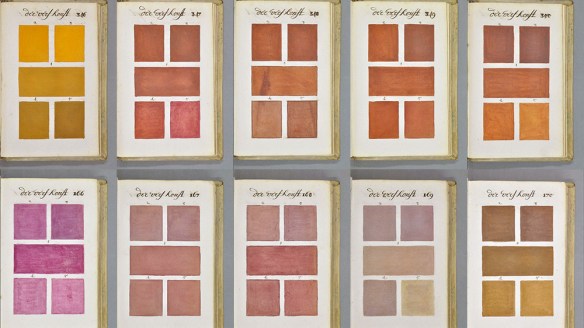
More than two centuries before Pantone divided the visible spectrum into six-digit color codes, a mysterious Dutch artist crafted this extraordinary guide to painting in watercolor. Hundreds of subtly varying colors were mixed by hand for this one-of-a-kind, encyclopedic volume. READ MORE: Who Painted This 300-Year-Old Guidebook to Every Imaginable Color? | Gizmodo
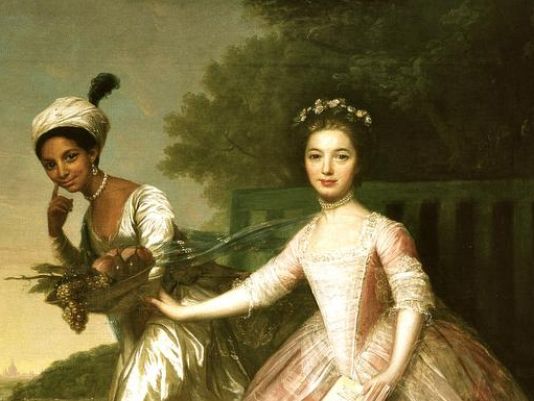
Wandering the grand halls of Scone Palace in Scotland you might stumble on a pretty portrait of two beautiful women in 18th-century clothes, seemingly affectionate sisters. Not so unusual — except one of the “sisters” is black.
Who is that, you might well wonder, as did Misan Sagay, then a young British college student of Nigerian descent, long accustomed to being the only black face in most British rooms. She stopped short upon spotting the painting while touring the palace near her university.
“I was stunned. And taken aback,” says Sagay, now in her 40s and a screenwriter (Their Eyes Were Watching God). The castle brochure named only the white woman in the portrait, Lady Elizabeth Murray. When she returned a few years later, Sagay says, there was more information on the label, naming the black woman as Dido, “the housekeeper’s daughter.”
“So the silent black woman had a name,” says Sagay. “But I looked at the portrait and the way they were touching, and thought, ‘I don’t buy this. There is more to this than meets the eye.’ ”
Indeed there was. Sagay dove into drafty palace archives to learn more, and years later the result is Belle, written on spec by Sagay, directed by Amma Asante, a British woman of Ghananian descent, and starring Gugu Mbatha-Raw,a British woman of South African descent.
portland-based photographer jim golden delivers a hearty dose of nostalgia in his series ‘relics of technology’, comprising animated gifs and still life images. geometrically placed in a palette of vintage tones, the documented objects are society’s ‘technological’ media devices from the past, brought to life in a collection of moving images
The Getty Research Institute has just added more than 77,000 high-resolution images to the Open Content Program from two of its most often-used collections.
The largest part of the new open content release—more than 72,000 photographs—comes from the collection Foto Arte Minore: Max Hutzel photographs of art and architecture in Italy. Foto Arte Minore represents the life’s work of photographer and scholar Max Hutzel (1911–1988), who photographed the art and architecture of Italy for 30 years. In recent years, the interdisciplinary use of these photographs has exposed their historiographic significance and their unrealized research potential.
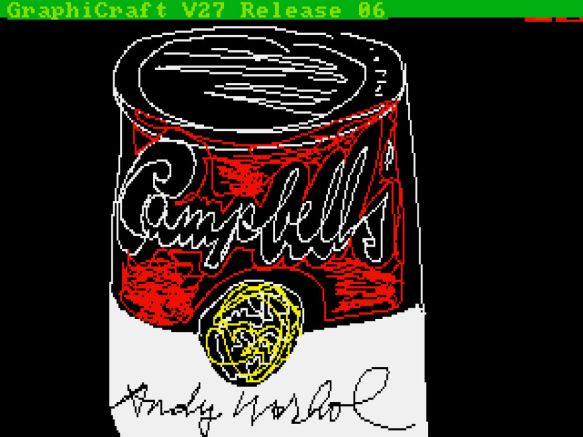
Back in the mid-1980s, Andy Warhol made a series of digital artworks on an Amiga 1000, a personal computer created by Commodore International. The artist, tapped by the company to be a spokesperson for the computer’s multimedia capabilities, created a few public pieces as part of a marketing campaign, but it was unknown if he had made any digital artworks on his own time.
Decades later, we now know he did. Stashed away on dozens of unlabeled floppy disks was a treasure trove of never-before-seen Warhol works that were slowly deteriorating. A multi-year, collaborative effort between a team of artists, museum professionals and the Carnegie Mellon Computer Club unearthed 28 works of art and a host of 1980s graphics software that Warhol used to create these digital pieces. Read more: An Amazing Discovery: Andy Warhol’s Groundbreaking Computer Art | Design | WIRED.
New York-based Proxy Design Studio has given Gizmodo a first glimpse of its incredible, 3D-printed spherical gear called the Mechaneu, equal parts tactile toy and mechanical sculpture, a mind-bogglingly precise intermeshing of wheels within wheels.
I went around San Francisco asking random people on the street how they felt about email versus handwritten letters. This video was created to help promote the Snail Mail My Email project and its third annual event, going on November 11 – 17, 2013.
Snail Mail My Email (snailmailmyemail.org) is a collaborative art project I founded where volunteers handwrite strangers’ emails and send physical letters to the intended recipients, free of charge. The project has since transitioned to a week-long annual event.
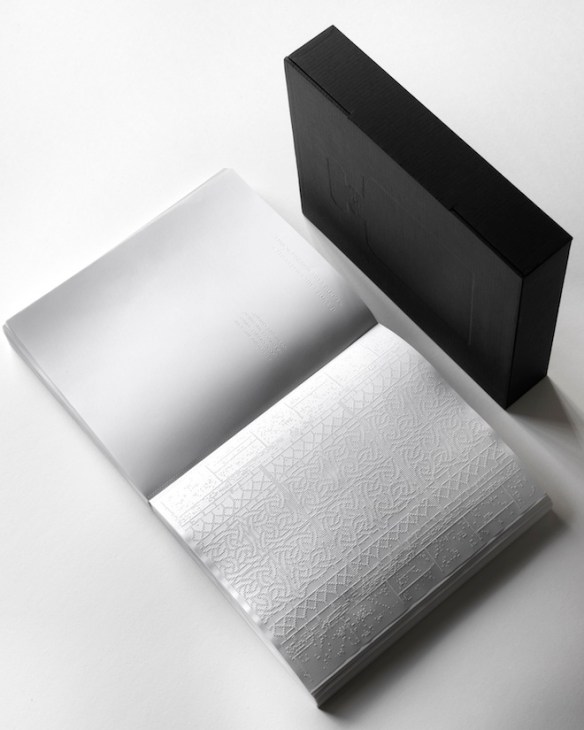
Irma Boom designed a book for the perfume Chanel No. 5. Image: Jonathan Leijonhufvud
It’s not an exaggeration to say that Irma Boom has designed some of the coolest books ever put on a bookshelf. Throughout her career, the Amsterdam-based designer has made more than 250 volumes, and a staggering 20 percent have found a home in a permanent collection at MoMA. They really are works of art, though Boom herself is vehemently against calling them so. “I do not consider and approach my work as art. I do push the boundaries of bookmaking, but it is never art,” she says. “Books are not unique—it is commissioned work, it is a reproduction.”
Ok, so maybe art isn’t quite the right word, but what Boom creates is often more than just a book as we typically know it. A book by Boom is an experience, an object to be appreciated in its own right, even when its technically just a vehicle for another artist. Most recently, she completed a book commissioned by Chanel, the Parisian fashion house, for its Chanel No. 5 perfume. And in classic Boom style, it’s not what you’d expect. The 300-page book has no ink—each of the crisp white pages is embossed with a drawing or quotation that helps the story of Gabrielle Chanel unfold. It’s clean, understated and ephemeral, and somehow still totally engrossing.


 infophile