17 Amazing Stories of Lost and Found Films | Flavorwire


Exciting news for silent comedy fans, movie buffs, and people who generally like things that are awesome: film historian Fernando Pena has discovered an alternate version of the classic Buster Keaton short The Blacksmith, featuring numerous never-before-seen gags and a new ending. The film, buried in a large purchase of European prints from eBay, is the kind of discovery that makes movie lovers’ hearts dance; there are so many great old films either lost entirely or no longer in their original form that these kind of finds in archives, collections, and odd spots make the impossible seem possible.

via 17 Amazing Stories of Lost and Found Films | Flavorwire.

Gizmodo | A Look Behind the Scenes of the Internet Archives Impossible Task


Last fall, the Internet Archive celebrated a massive milestone, as the “online Library of Alexandria” reached 10 Petabytes of stored information. Yes, that means 10,000,000,000,000,000 bytes accessible to anyone. Wow.

Filmmaker Jonathan Minard was on hand for the celebration, and in the short doc above he speaks to the Archives founders about how it expanded from a project dedicated to cataloging everything ever published online—to a project to document every piece of information in existence. Turns out its possible—we just need the will to do it.

via Gizmodo | A Look Behind the Scenes of the Internet Archives Impossible Task.

Worldwide National Library Catalogs | OEDB.org


National libraries are tasked with the centuries-long responsibility of preserving books and documents that keep a country’s history and heritage safe through war, disaster, and the passage of time. They’re also responsible for sharing these vast and valuable documents with citizens of the country, and the world.

National libraries are the absolute best resource for finding publications within any given country. This is thanks to legal deposit, legislation in many countries that requires publishers to provide the national library with a copy of each publication. In some countries, this even includes digital publications.

Through national library catalogs, you can search all of the publications within a country. Many national libraries also offer extensive digital collections, offering online researchers access to documents of historical importance, official publications, even images and video.

via Worldwide National Library Catalogs – OEDB.org.

The post provides a comprehensive list of Worldwide National Library Catalogs, including 3 from Canada. 

The Declassification Engine: Your One-Stop Shop for Government Secrets | Wired Enterprise | Wired.com


A fascinating article about researchers developing the “Declassification Engine” – a tool to analyze declassified documents in the United States.

In many cases, documents are declassified only because individuals will request them under the Freedom of Information Act, and this often means they’re spread to the four winds. “There are a lot of declassified documents out there. Some of them are in historians’ basements. Some are in specific libraries. Some are in digital archives. And they’re in different formats. No one has systematically collected them into a searchable, usable, user-friendly database,” says Columbia law professor David Pozen.

The Declassification Engine seeks to remedy this, but that’s only the first step. Columbia’s Matthew Connelly first dreamed up the idea when he realized that although more and more government documents are now created in electronic format, a dwindling percentage are declassified in electronic format. The rise of digital records, he told himself, should provide more opportunities for researchers, not less.

See the full article: The Declassification Engine: Your One-Stop Shop for Government Secrets | Wired Enterprise | Wired.com.

Brandon Zarzyczny: My Dad And His 10,496 Book Reviews | Huffington Post Books


“He originally bought most of the books he read, and the attic is still filled with boxes of old books, however for the past 15-20 years he’s mostly loaned the books from the library. My Dad loved our local library, the James V Brown Library, where all of the librarians knew his name, and he would leave there with a bag full of books about once a week. For the past year or two, he’d also tried reading ebooks on a Tablet I bought for him for Christmas, and while he loved downloading all of the free indie Kindle books he could get his hands on, he still preferred a good hardcover book.” See full article here: Brandon Zarzyczny: My Dad And His 10,496 Book Reviews | Huffington Post Books.

What a great story! I too keep track of the books I have read within both a database called Bookpedia (print) and Calibre (digital) on my Mac (now I’m thinking I should combine them into one). Not with as much detailed information as Mr. Craig Zarzyczny though! I also used to post reviews to GoodReads, LibraryThing and ChaptersIndigo Community. Reviewing was taking the enjoyment out of reading, so I slowed down around 2 years ago.

How Graphic Novels Became the Hottest Section in the Library | Publishers Weekly


According to old stereotypes, it shouldn’t work—serious librarians should want nothing to do with the raucous, pulp world of comics—and for a long time it didn’t. But over the past decade, the graphic novel genre has become one of the fastest-growing at libraries of all kinds, as a new generation of librarians adopts the category as a means to energize collections and boost circulation and patronage via How Graphic Novels Became the Hottest Section in the Library  | Publishers Weekly.

Digital wealth: Comparing national digital libraries | Rechtsgeschiedenis Blog


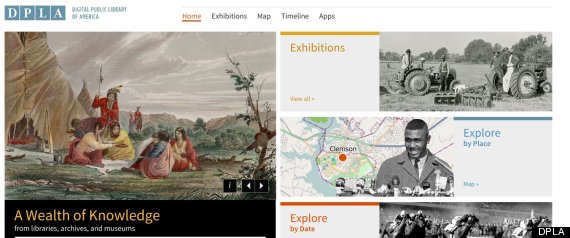
On April 13, 2013 the Digital Public Library of America (DPLA) was launched, an initiative that brings together digitized sources from a number of cultural institutions in the United States. In November 2012 the Deutsche Digitale Bibliothek (DDB) started which combines the digital collections of over 2,000 institutions in Germany. The DDB is still in its beta-version. A Wealth of Knowledge is the motto of the DPLA. In this post I will try to make a comparison between the new American and German national digital libraries.

via Digital wealth: comparing national digital libraries | Rechtsgeschiedenis Blog

You may also like:

Closure of fisheries’ libraries called ‘a ‘disaster’ for science | Canada.com


Closure of fisheries’ libraries called ‘a ‘disaster’ for science | Canada.com

Quotables

“Seven DFO libraries across Canada are to close by the fall, including two that have been amassing books and technical reports on the aquatic realm for more than a century.”

“It is information destruction unworthy of a democracy,” said Peter Wells, an ocean pollution expert at Dalhousie University in Halifax, who describes the closing of the libraries as a “national tragedy.”

“It will likely be a decade or more before all DFO’s technical reports are all digitized and available online, the librarian said.  But most of the reference books and materials in the DFO libraries – like Russia’s fishing monograms – cannot be digitized by the department because of copyright restrictions.”

“Wells see the library closures as more evidence of the way the federal government is “eviscerating” aquatic science by cutting jobs and eliminating programs, labs and services. “Libraries cannot simply be replaced by digitized collections,” he said.”

Huffington Post | Da Vinci Notebook: British Library Publishes Full Collection And More Arts News


Another amazing digital library…

Da Vinci Notebook: British Library Publishes Full Collection And More Arts News via Huffington Post.

You may also like:

Einstein Archives Online

World Digital Library

Artsy