
Why Free Software Is More Important Now Than Ever Before | Richard Stallman | Wired.com


It is now 30 years since I launched the campaign for freedom in computing, that is, for software to be free or “libre” (we use that word to emphasize that we’re talking about freedom, not price). Some proprietary programs, such as Photoshop, are very expensive; others, such as Flash Player, are available gratis — either way, they subject their users to someone else’s power.

Much has changed since the beginning of the free software movement: Most people in advanced countries now own computers — sometimes called “phones” — and use the internet with them. Non-free software still makes the users surrender control over their computing to someone else, but now there is another way to lose it: Service as a Software Substitute, or SaaSS, which means letting someone else’s server do your own computing activities.

Both non-free software and SaaSS can spy on the user, shackle the user, and even attack the user. Malware is common in services and proprietary software products because the users don’t have control over them. That’s the fundamental issue: while non-free software and SaaSS are controlled by some other entity (typically a corporation or a state), free software is controlled by its users.

Why does this control matter? Because freedom means having control over your own life.

If you use a program to carry out activities in your life, your freedom depends on your having control over the program. You deserve to have control over the programs you use, and all the more so when you use them for something important in your life.

Read the full story: Why Free Software Is More Important Now Than Ever Before | Richard Stallman | Wired.com
Ron McCallum: How technology allowed me to read | TED.com


Months after he was born, in 1948, Ron McCallum became blind. In this charming, moving talk, he shows how he is able to read — and celebrates the progression of clever tools and adaptive computer technologies that make it possible. With their help, and that of generous volunteers, he’s become a lawyer, an academic, and, most of all, a voracious reader. Welcome to the blind reading revolution.

via Ron McCallum: How technology allowed me to read | Video on TED.com.

SAPL To Debut Digital Commons, Test “Public Proof” OverDrive Kiosk | The Digital Shift


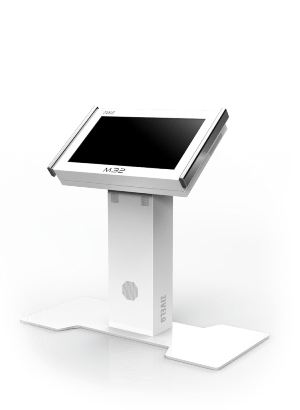
As a beta tester for OverDrive, SAPL will be experimenting with an installation of the company’s new OverDrive Media Station (OMS) interface on a ruggedized kiosk that could be deployed in public areas outside of a library.

SAPL will be featuring the OMS interface on a Zivelo M32 Floor Display, a pedestal-mounted kiosk made with an aircraft-grade aluminum enclosure. With swipes and taps that will be intuitive for anyone who has used a tablet or smartphone, patrons can navigate the OMS interface to explore a library’s collection of ebooks, audiobooks, music, and videos, and easily read or listen to samples, place holds, or have an available ebook sent to their tablet, e-reader, or smartphone.

See the full article: SAPL To Debut Digital Commons, Test “Public Proof” OverDrive Kiosk | The Digital Shift.

OverDrive OMS

Wearable Computers Create New Security Vulnerabilities | Gadget Lab | Wired.com


Among other things, Google Glass is bringing to light how wearable computers and the new wave of web-connected objects collectively known as the Internet of Things are introducing new security vulnerabilities to the puzzle of mobile computing.

See the full article: Wearable Computers Create New Security Vulnerabilities | Gadget Lab | Wired.com.

A Computer To Teach You Not To Act Like A Computer | Co.Exist


Technology enthusiasts who spend their days playing with computers and robots often have the amount of social graces of the machines they’re programming. So it’s either a brilliant or incredibly off-base intervention that an MIT graduate student has designed computer software to attempt to teach the socially-maladjusted how to be more sociable, via a Siri-like virtual conversation coach.

The program, called My Automated Conversation Coach (MACH), “uses a computer-generated onscreen face, along with facial, speech, and behavior analysis and synthesis software, to simulate face-to-face conversations,” according to a press release. “It then provides users with feedback on their interactions,” for example, how good was their eye contact, which words did they emphasize, how did their voice rise and fall.

via A Computer To Teach You Not To Act Like A Computer | Co.Exist: World changing ideas and innovation.

A Beginner’s Guide to DIYing with the Raspberry Pi | Lifehacker


“The Raspberry Pi is a wonderful little computer that fits in the palm of your hand, yet packs enough power to run your home media center, a VPN, and a lot more. Before you can do anything awesome, however, you need to configure it and install an operating system.”

via A Beginner’s Guide to DIYing with the Raspberry Pi | Lifehacker

You may also like:

A Librarian’s Guide to Makerspaces: 16 Resources – iLibrarian | The Modern MLIS
Manufacturing Makerspaces | American Libraries Magazine – The Modern MLIS