This is How the Vatican Will Digitize Millions of its Documents | Mashable


Digitizing the Vatican’s 40 million pages of library archives will take 50 experts, five scanners and many, many years before the process comes to a close.

The Vatican Library was founded in 1451 and has around 82,000 manuscripts, some of which date back about 1,800 years. It will work in tandem with NTT Data, a Japanese IT firm, to convert the first batch of 3,000 manuscripts. It is expected to take four years to digitize the initial round, though some of those documents will be online toward the end of 2014.

via This is How the Vatican Will Digitize Millions of its Documents | Mashable

A Pyramid in the Middle of Nowhere Built To Track the End of the World | Gizmodo


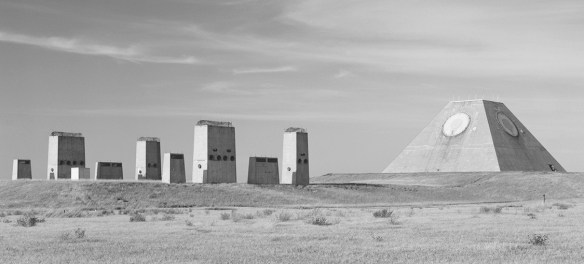
A huge pyramid in the middle of nowhere tracking the end of the world on radar, just an abstract geometric shape beneath the sky without a human being in sight: it could be the opening scene of an apocalyptic science fiction film, but it’s just the U.S. military going about its business, building vast and other-worldly architectural structures that the civilian world only rarely sees.

The Library of Congress has an extraordinary set of images documenting the Stanley R. Mickelsen Safeguard Complex in Cavalier County, North Dakota, showing it in various states of construction and completion. And the photos are awesome. Read more:  A Pyramid in the Middle of Nowhere Built To Track the End of the World | Gizmodo

digital collections – if you build them will anyone visit | Frederick Zarndt


British Film Institute to launch streaming video service on October 9th | Engadget


The British Film Institute promised that it would put 10,000 movies online as part of the Film Forever initiative, and it’s now making good on its word — if slowly. The Institute will launch the first phase of its BFI Player streaming service on October 9th with a library of more than 1,000 videos, including movies, behind-the-scenes clips and archival footage. About 60 percent of the content will be free, with the rest available as pay-per-view. As for those remaining 9,000 videos? The BFI expects those to appear in the months ahead, and it’s launching BFI Player’s second phase in early 2014.

via British Film Institute to launch streaming video service on October 9th | Engadget.

How will our country operate without the LOC? | MobyLives


The country is bracing for a temporary shutdown of the Library of Congress, beginning today. The twenty-five library system will be closed to the public and researchers, according to an announcement on the site you can’t see, and all public events are canceled. The digital collections, online catalog, and “Ask A Librarian” services are temporarily suspended.

Read: How will our country operate without the LOC? | MobyLives

You may also like: Library Services Impacted by Government Shutdown | District Dispatch | ALA Washington

YouTube Launches Free Audio Library With 150 Royalty-Free Tracks | TechCrunch


YouTube currently offers more than 150,000 audio tracks on its site that video producers can use as background music for their videos. Those tracks, however, can’t be downloaded or remixed, which makes it hard to use them in creative ways. For users who want to do a bit more with their background music, however, YouTube today is expanding this library with a selection of 150 new royalty-tracks. The music in this new YouTube Audio Library can be downloaded, remixed and used for free forever.

YouTube Audio Library

via YouTube Launches Free Audio Library With 150 Royalty-Free Tracks | TechCrunch.

BiblioTech Digital Library Opens this Week | GoodEReader


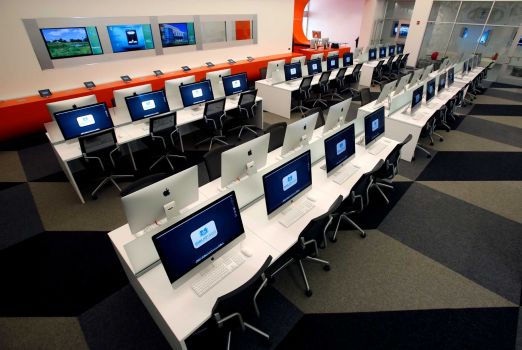
The BiblioTech library in Bexar County is doing something that no library in the US has ever done. Since last year, the organizers had a grand vision of an all digital library. Six hundred e-readers and over ten thousand eBooks will be available to loan out when the new library opens this week.

BiblioTech Library

via BiblioTech Digital Library Opens this Week | GoodEReader.

Power Tools | Roy Tennant – The Digital Shift


Excerpt of article content specific to libraries:

Tools in a digital library context often provide similar benefits, although they tend to be different in nature. I would say that a basic tool for any digital librarian is likely a computer running a LAMP stack:

L = Linux
A = Apache web server
M = MySQL
P = A “P” programming language such as Perl or Python

With that, there is very little you can’t do. Well, that is, once you install the dependencies of whatever else you’re wanting to run. But you get the idea. It’s a basic platform from which much else is made possible. It’s an essential tool set.

Some of the other digital library tools in my repertoire include:

Swish-e – I’ve used this indexing software since the mid-90s, and haven’t seen a reason to change. With it, I’ve set up and maintained a variety of web sites that function as if they are database-supported but in fact are simply flat XML files that are indexed using Swish-e (see, for example, FreeLargePhotos.com).

XSLTProc – Sure, there are many options for XML processing out there and I won’t attempt to defend this particular decision except to say that it is easy to use and does what I need it to do (process XSLT stylesheets against specified XML files). Again, it underpins a number of my web sites.

Nano – You can stop laughing now. Seriously. Stop laughing. I mean it. Nano is a simple text editor (before it was Pico, which was what the PINE linemode email system used for message editing). I use it to do simple editing tasks in text files and programs on the server. I know it isn’t nearly as cool emacs, or even vi, but hey, it’s what I’m used to.

Tools are power. They give you capabilities you would not have without them.

via Power Tools | Roy Tennant – The Digital Shift.

11 Amazing Historical Snapshots From One of the World’s Best Archives | Gizmodo


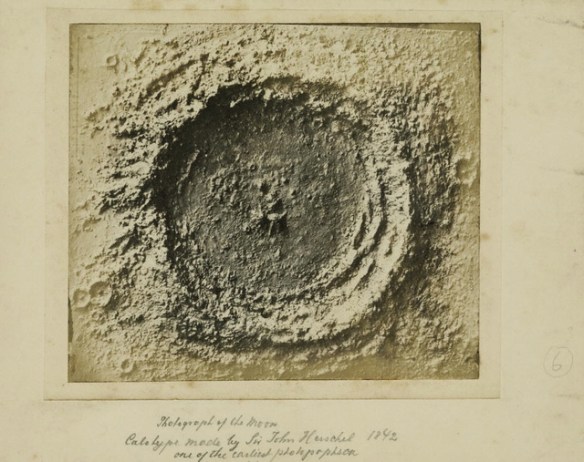
The J. Paul Getty Museum is home to troves of fascinating historical artifacts. And last week, the museum [announced] a project to give the public unfettered access to it. The Open Content Program makes 4,600 high-resolution images available for free and for any use whatsoever. 

Moon Crater

Unknown (photographer) , Moon Crater, late 1850s, Salted paper print from a Collodion negative.

See the full story:  11 Amazing Historical Snapshots From One of the World’s Best Archives | Gizmodo.

See also: Open Content, An Idea Whose Time Has Come | James Cuno | The Getty Iris

William Fisher, Copyright Spring 2013: Special Event 6, Orphan Works and Digital Libraries – YouTube


William Fisher, Copyright Spring 2013: Special Event 6, Orphan Works and Digital Libraries – YouTube