The 10 Most Controversial Books of the Year | BookBub Blog #bannedbooks


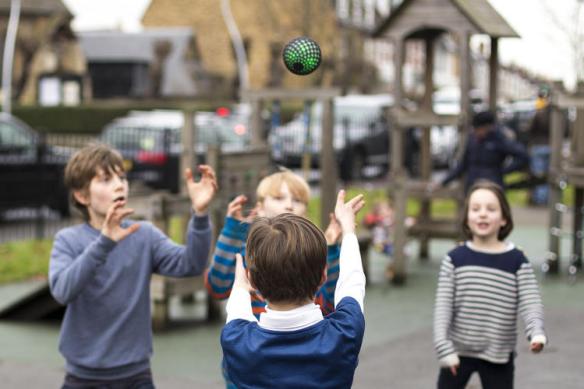
As part of National Library Week, the American Library Association just released its annual State of America’s Libraries Report analyzing the shifting role libraries play in today’s society. The full report is interesting in and of itself, but it also includes one of the most fascinating book lists of the year — the most frequently challenged books of the year.

In 2014, the ALA received 311 requests to ban books from schools and libraries. [Here] are the top 10 books that caused the most controversy over the past year, including the reasons they were challenged, as well as each book’s publisher description. READ: The 10 Most Controversial Books of the Year | BookBub Blog
For Schools With No Books, A Digital Collection So They Can Have A Real Library | Co.Exist #education #digital #libraries #literacy


For Schools With No Books, A Digital Collection So They Can Have A Real Library | Co.Exist | ideas + impact

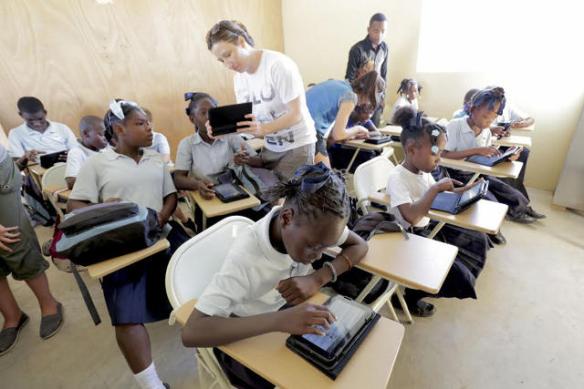
Library for All is now working in impoverished places around the world on a simple mission with a major impact. Rebecca McDonald came up with the idea for Library for All after visiting Haiti in 2010. The country had just experienced a major earthquake, and the schools there were having a tough time getting back to normal—even more so, because they lacked basic education materials.

“The reason we started the library was that, everywhere I went, they didn’t have any books. And if they did, they were in English when people either speak Haitian Creole or French. They were good paperweights, and that was about it,” McDonald says.

Library for All now works with 10 schools on the island, with plans to partner with nine more. The model is simple. The nonprofit assembles a highly curated local-language collection of books that schools access through Android tablets.

READ MORE: For Schools With No Books, A Digital Collection So They Can Have A Real Library | Co.Exist | ideas + impact.

Young Girls Are Much, Much Better Readers Than Boys, And Have Been For A Long Time | HuffPo


The gap between boys’ and girls’ respective reading abilities has been getting a lot of attention lately, but the trend itself is not new.

Girls have been better readers than boys for a long, long time, according to a report released Tuesday by the Brown Center on Education Policy at the Brookings Institution. The annual report analyzes three topics in contemporary education through the lens of up-to-date research. This year, the report looked at the effectiveness of the Common Core state standards, the relationship between student engagement and academic achievement, and the gender gap in reading.

READ MORE: Young Girls Are Much, Much Better Readers Than Boys, And Have Been For A Long Time | Huffington Post

30 Useful Apps For Students You Probably Don’t Know About | InformED


The number of college students taking at least one online course has nearly doubled over the past five years according to a report by market research agency Refuel.

Online students are often faced with the challenge of juggling their academic responsibilities alongside families or full-time jobs, which is certainly no easy task.

Technology can help students better manage their learning by providing everything from study aids and research tools to time-management apps, so it’s somewhat surprising to learn that few students are actually using such tools for learning purposes.

The majority of students use online and mobile apps primarily for entertainment according to the Refuel report, with over 70% using them for games, 67% using them for music, and 64% using them for social networking.

If you want to encourage your students to start taking advantage of the many technology tools available to them, here are a few examples of the types of productivity and learning apps that can support them in their studies.

SEE THE LIST OF TOOLS: 30 Useful Apps For Students You Probably Don’t Know About | InformED

26 Contemporary Books That Should Be Taught In High School | BuzzFeed


We recently asked members of the BuzzFeed Community to tell us what contemporary book should be taught in high school. Here are the brilliant results. READ MORE: 26 Contemporary Books That Should Be Taught In High School | BuzzFeed

Versal Helps Teachers Create Interactive Online Lessons, Partners With Wolfram Alpha | TechCrunch


Versal is a service that allows teachers to build and publish interactive online courses, homework assignments and tutorials. The company launched its service out of beta [March 4, 2015], but maybe more importantly, it also announced a partnership with Wolfram Research. Thanks to this deal with Wolfram Research — which includes Stephen Wolfram joining the Versal board of directors — Versal now allows teachers to embed content from Wolfram into their courses.

READ MORE: Versal Helps Teachers Create Interactive Online Lessons, Partners With Wolfram Alpha | TechCrunch

This Throwable Computer Teaches Kids How To Code | Co.Design


This Throwable Computer Teaches Kids How To Code | Co.Design | business + design

Coding is a great skill for kids to learn but it can be a lonely, sedentary endeavor. Hackaball, a new toy created from a partnership between the design agencies MAP and Made By Many, promises to get kids off their butts and playing outside—all while teaching basic coding skills and empowering kids to invent their own kind of play.

READ MORE: This Throwable Computer Teaches Kids How To Code | Co.Design | business + design.

Sesame Street’s executive producer on staying relevant after 46 years | Engadget


Thanks to Netflix, Amazon and YouTube, the competition for kid’s eyeballs is fiercer than ever, but that’s not slowing down Sesame Street. Now in its 46th year, the show is making a bigger and bigger push into social media, with often hilarious (but secretly educational) results. I sat down with the show’s Senior Vice President and Executive Producer, Carol Lynn-Parente, shortly after meeting my new best friend, Cookie Monster, to talk about the show’s digital life and more.

READ MORE: Sesame Street’s executive producer on staying relevant after 46 years |  | Engadget

A Typology of Web 2.0 Learning Technologies [Article] | EDUCAUSE.edu


This article presents the outcomes of a typological analysis of Web 2.0 learning technologies. A comprehensive review incorporating over two thousand links led to identification of 212 Web 2.0 technologies that were suitable for learning and teaching purposes. The typological analysis then resulted in 37 types of Web 2.0 technologies that were arranged into 14 clusters. The types of Web 2.0 learning technologies, their descriptions, pedagogical uses and example tools for each category are described, arranged according to the clusters. Results of this study imply that educators typically have a narrow conception of Web 2.0 technologies, and that there is a wide array of Web 2.0 tools as yet to be fully harnessed by learning designers and educational researchers.

READ MORE: A Typology of Web 2.0 Learning Technologies | EDUCAUSE.edu

Disabled Boy Learns to Play Piano With His Eyes Using Virtual-Reality Headset | The Guardian


Eye Play the Piano is the work of Japanese VR headset manufacturer Fove, working with the University of Tsukuba. The project is pitched as a “universal piano” which children can play using eye movements while wearing the headset.

Through the use of Fove’s eye-tracking technology, the headmount recognises the user’s eye movement. The user blinks on one of the many panels within the interface to trigger the preferred note, which is then conveyed to the piano,” explains the Eye Play the Piano website.

READ MORE: Disabled boy learns to play piano with his eyes using virtual-reality headset | Technology | The Guardian.