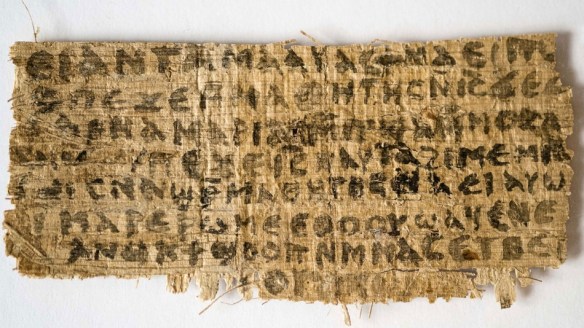
Papyrus Mentioning Jesus’s Wife Is Likely Ancient and Not Fake, Scientists Say | Mashable


A papyrus fragment that mentions Jesus’s wife is likely ancient, probably dating between the sixth and ninth century, latest research shows.

When Karen L. King, the Hollis Professor of Divinity at Harvard Divinity School, announced the fragment’s existence in September 2012, there was a widespread debate over its authenticity. The fragment, known as the “Gospel of Jesus’s Wife,” probably originated from Egypt. It’s written in Coptic and contains the phrase “Jesus said to them, ‘my wife…,'” never before seen in any ancient text. It also mentions Jesus’s mother and a female disciple, who may be identified as “Mary.”

Now, James Yardley, senior research scientist in the Center for Integrated Science and Engineering at Columbia University, and Alexis Hagadorn, head of conservation at Columbia, used a technique called micro-Raman spectroscopy to determine the papyrus fragment’s age. Furthermore, Malcolm Choat from Macquarie University examined the fragment’s handwriting. Combined, their findings indicate that the papyrus and the ink on it are ancient and not a modern forgery. Read more: Papyrus Mentioning Jesus’s Wife Is Likely Ancient and Not Fake, Scientists Say | Mashable.
The Untold History of Where Barcodes Come From | Gizmodo


READ: The Untold History of Where Barcodes Come From | Gizmodo

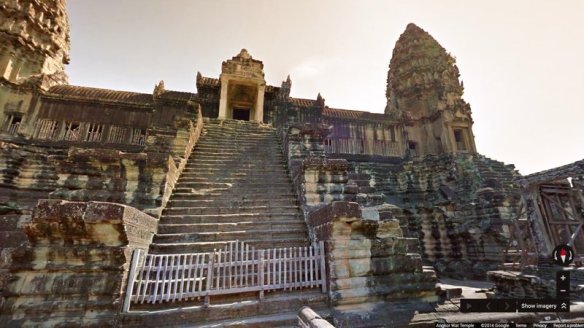
For the First Time Ever, Explore Angkor Wat With Google Street View | Travel | Smithsonian


[T]hose interested in exploring the wonder of Angkor don’t need to make a trek to Southeast Asia—and risk contributing to the damage of the site—to enjoy what the ruins have to offer. For the first time ever, Google Maps is granting users an up-close view of Angkor, through Google’s Street View project.

The move is an extension of Google Maps’ mission to make sure that its maps are the most accurate, comprehensive and useful available to users. While to most people, this might materialize in the form of directions—using Google Maps to get you from Point A to Point B— the company doesn’t see this as the limit for the product’s technology.

“Increasingly, if you look at the amount of power we have in our cellphones, the ability for those phones to know your location and customize an experience around you, they are becoming fairly good at making sure that people are able to explore the world around them,” says Manik Gupta, Google Maps Product Manager. “We want to make sure that we have the ability to share all these places with users all over the world.”

Read more: For the First Time Ever, Explore Angkor Wat With Google Street View | Travel | Smithsonian.

Finally, a Digital Library of Bizarre Human Bones From the Middle Ages | Gizmodo


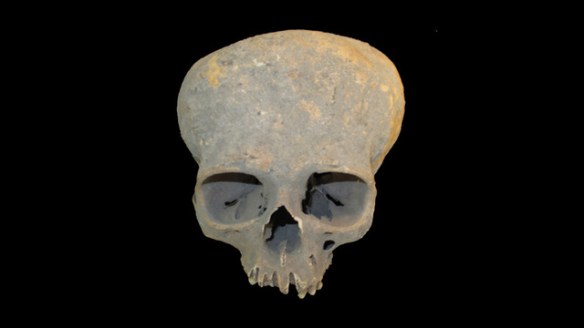
skull from Chichester

A spinal column with fused vertebrae. The bones of a woman with advanced syphilis. Skeletons deformed by rickets and leprosy. A fascinating online library of deformed bones from the Middle Ages goes live today—and while I didn’t even realize such a thing existed, now I can’t imagine living without it. God bless technology.

The Digit[ised] Diseases website is run by the Royal College of Surgeons in London. It brings together 3D scans of over 1,600 bone specimens taken from patients with debilitating and disfiguring conditions like rickets and leprosy, and makes them free for the public to browse. Bored on a Monday morning? Gawk at this deformed spinal column or marvel at this alien-like skull with an enlarged cranium. In the scientists’ own words, “it does not resemble any known hominid species.” Cool!

Read:  Finally, a Digital Library of Bizarre Human Bones From the Middle Ages | Gizmodo

8 Treasures That Are Too Precious To Display In Museums (PHOTOS) | Molly Oldfield | HuffPo


I traveled the globe to the world’s most interesting museums, bypassing the main galleries in favor of the things you can’t usually see. The things I found were astounding; in the basement of the Royal Society in London, I put my eye to Newton’s telescope, just as he did centuries ago in his lab in the Tower of London; in Edinburgh I pored over the original draft of Auld Lang Syne, now sung all over the world at New Year; at the New York Public Library I held a letter opener which belonged to Dickens — the handle was made the paw of his beloved cat Bob; and in the Vatican observatory in the countryside outside Rome, I marveled at pieces of Mars.

Two years of adventures later I had written the stories of sixty objects, their hidden location and the curators who care for them. These tales of hidden treasures make up The Secret Museum. It’s impossible to pick a favorite because I love them all, but here’s a taster to get you started. Hopefully you’ll dip into your own copy and find personal favorite treasures to enjoy.

See them all: 8 Treasures That Are Too Precious To Display In Museums (PHOTOS) | Molly Oldfield.

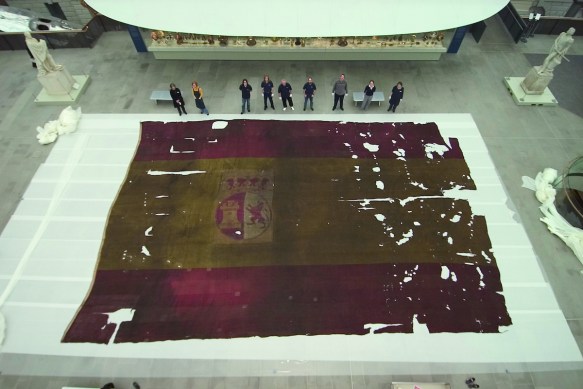
Flag from the Battle of Trafalgar

Bill Gates Unveiled Windows 30 Years Ago | Gizmodo


No matter what you think of Windows 8, it’s certain that Windows is both iconic and significant in the evolution of personal computing. It’s a series of operating systems, of course, but it’s also been a concept, a way of thinking, an influencer, and a touchstone for 30 years since Bill Gates introduced it on November 10, 1983.

The “Interface Manager” that would become Windows went into development in 1981 and finally had its public release as Windows 1.0 in November 1985. This first stab wasn’t actually a full OS, but more of a “graphical shell” that extended MS-DOS to have a user interface, as it is known today.

But Windows 1.0 had many defining OS features, like a calendar, clock, Microsoft Paint, a text editor, terminal, and clipboard. Windows allowed users to view multiple program windows at once, yup, though they couldn’t overlap at all. The early days of tiles! And 1.0 enabled data transfer between programs. Plus, it came with drivers for things like keyboards and the Microsoft Mouse, which had debuted earlier in 1983.

30 years seems simultaneously like an incredibly long time and a quick blur when you consider how Windows has evolved and spread to dominate between 80% and 90% OS marketshare. Windows 8 made it clear that Microsoft views interactive touch integration as crucial to a PC operating system going forward into the fourth Windows decade. Too bad hyper Ballmer ads won’t be the face of the next era.

Bill Gates Unveiled Windows 30 Years Ago Today | Gizmodo.

History of #Hashtags [Infographic] | Offerpop


In just 6 years hashtags have evolved from a simple symbol to one of today’s most valuable marketing tools.

And it doesn’t stop there. Hashtags have integrated the lives of every day people, every day. From a student’s Instagram pic to a CMO’s tweets, the use of hashtags have accelerated into mass popularity.

In this infographic, we’ve compiled some key moments of the hashtag’s lifetime to get a better idea of how this common sign turned into a global icon.

For marketers, the hashtag’s short, but rich history proves its ability to attract attention and build conversations around your message.

via History of #Hashtags | Offerpop.

You may also like:

History of Hashtags

Infographic: The History Of Audio Equipment | Co.Design


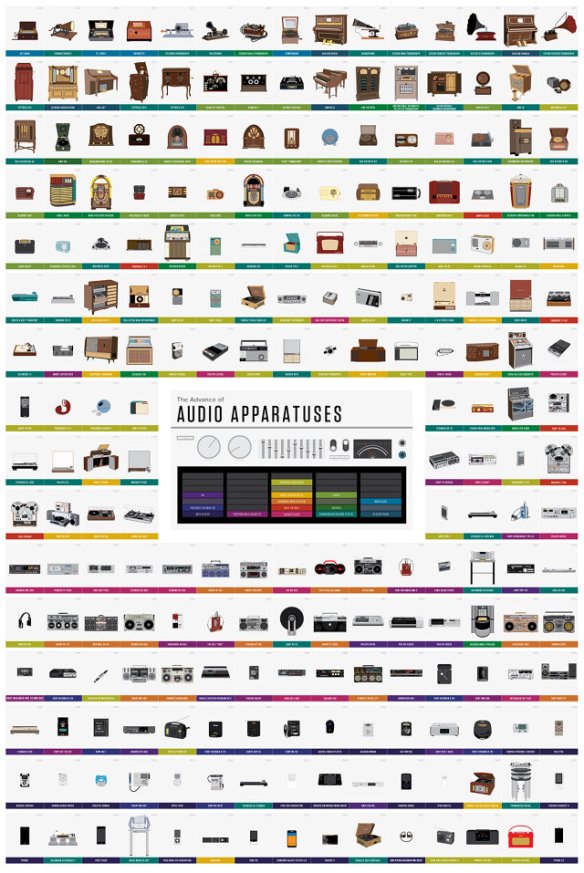
A prominent sci-fi writer once told me that, as prescient as they’d been, he and his peers had missed one big tech trend: Miniaturization. And they really did miss it. Because as you examine Pop Chart Lab’s latest mega print of 219 sonic devices across history, The Advance of Audio Apparatuses, it’s obvious that technology has been getting smaller for a long time.

Read more: Infographic: The History Of Audio Equipment | Co.Design | business + design.

Infographic: The History Of Audio Equipment | Co.Design | business + design

Climb Your Family Tree With These Online Genealogy Tools | Gizmodo


The questions of who we are and where we came from can often be answered, not by looking inward, but by looking backward. While nature and nurture certainly play the primary roles in our development as individuals, it’s only through the study of one’s ancestry that we develop a more complete view of ourselves as how we fit into the larger scope of human history. Luckily, tracing one’s roots is easier than ever thanks to the Internet.

The following web services are discussed:

  • Family Search
  • US Gen Web
  • Ancestry
  • World Vital Records
  • DistantCousin

via Climb Your Family Tree With These Online Genealogy Tools | Gizmodo.

Shhh! World’s most stunning libraries captured in new book that will leave you lost for words | Daily Mail Online


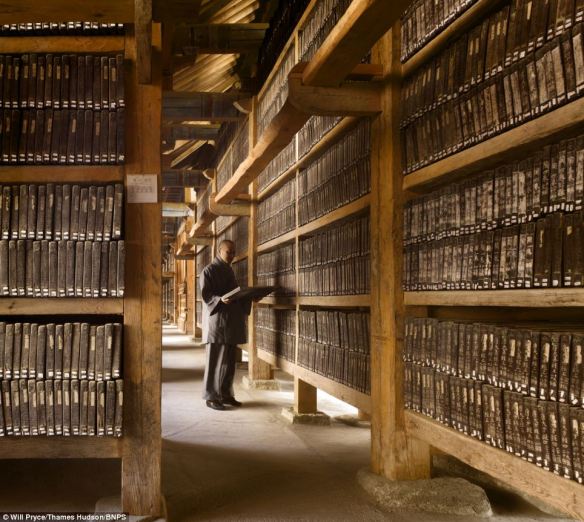
Some stunning photos of libraries you likely have not seen before from Dr. James Campbell’s new book. See more: Shhh! World’s most stunning libraries captured in new book that will leave you lost for words | Daily Mail Online.

British academic Dr James Campbell visited more than 80 libraries in 20 countries for his new book The Library, the first complete history of library buildings ever to be written.

Tripitaka Koreana

The Library: A World History