The 20 Most Beautiful Libraries on Film and TV | Flavorwire
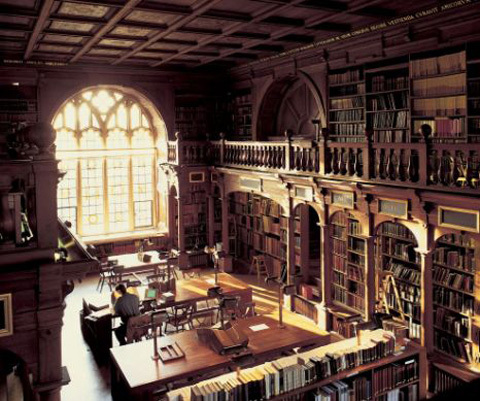
Duke Humfrey’s Library at Bodleian Library
from the Harry Potter Series | Flavorwire
The 20 Most Beautiful Libraries on Film and TV | Flavorwire
Duke Humfrey’s Library at Bodleian Library
from the Harry Potter Series | Flavorwire
“As space and budget concerns continue to grow, many libraries are opting to forego building their print collections in favor of providing electronic resources. This new trend toward building digital libraries has been developing over the past several years in spite of the controversy over eliminating print materials. Many people have spoken out against bookless libraries, especially with regard to public libraries, stating that the digital divide will keep many from using library resources and as well as the fact that many publishers won’t sell their publications to libraries in eBook format.” See the full article: 6 Bookless Libraries | Ellyssa Kroski – OEDB.org.
A unique pilot program to research book discovery and generate data on libraries supporting authors.
Sourcebooks and OverDrive are partnering on a pilot program that will allow library patrons worldwide the opportunity to read New York Times bestselling author Michael Malone’s acclaimed novel “The Four Corners of the Sky” in ebook format. The Big Library Read is a no cost program in which libraries worldwide promote from their lending catalog a single ebook to their patrons. In addition to creating a global “library book club,” it’s designed to generate data about the positive exposure and sales influence library ebook catalogs provide to authors and publishers. See the full article at Library eBooks: The Role of Libraries in the Book Discovery Process | Sourcebooks.com.
You may also like:
OverDrive and Sourcebooks to Launch Ambitious Ebook Data Experiment | The Digital Shift
“He originally bought most of the books he read, and the attic is still filled with boxes of old books, however for the past 15-20 years he’s mostly loaned the books from the library. My Dad loved our local library, the James V Brown Library, where all of the librarians knew his name, and he would leave there with a bag full of books about once a week. For the past year or two, he’d also tried reading ebooks on a Tablet I bought for him for Christmas, and while he loved downloading all of the free indie Kindle books he could get his hands on, he still preferred a good hardcover book.” See full article here: Brandon Zarzyczny: My Dad And His 10,496 Book Reviews | Huffington Post Books.
What a great story! I too keep track of the books I have read within both a database called Bookpedia (print) and Calibre (digital) on my Mac (now I’m thinking I should combine them into one). Not with as much detailed information as Mr. Craig Zarzyczny though! I also used to post reviews to GoodReads, LibraryThing and ChaptersIndigo Community. Reviewing was taking the enjoyment out of reading, so I slowed down around 2 years ago.
How can you attract more kids to visit the library? How about a nine-foot tall statue of The Hulk? That’s what Northlake Public Library in Northlake, IL is trying to get via a crowdfunding campaign on indiegogo.com. See full article at: Hulk Statue For Library: Northlake, Illinois Crowdfunding Scheme Has Big Goals | Huffington Post Books.
“User experience is an important tool for libraries to employ against a number of competitors like bookstores and at-home Internet access. Libraries have taken this as an opportunity to provide services that are not available elsewhere. The strategy to focus on users and their needs has earned libraries strong support from the public as demonstrated by a recent Pew Internet study: an overwhelming 91% of Americans “say public libraries are important to their communities.” See the full article: Libraries: A Canvas for Creating Meaningful User Experience | UX Magazine.
According to old stereotypes, it shouldn’t work—serious librarians should want nothing to do with the raucous, pulp world of comics—and for a long time it didn’t. But over the past decade, the graphic novel genre has become one of the fastest-growing at libraries of all kinds, as a new generation of librarians adopts the category as a means to energize collections and boost circulation and patronage via How Graphic Novels Became the Hottest Section in the Library | Publishers Weekly.
On The Modern MLIS website there is the Resources page where I list a number of career-related information services links. I faced a number of challenges in my own job search including taking time off after finishing my MLIS and transitioning my career into a new direction. The easiest ways to ensure you have a job offer after graduating, or to at least increase your chances of being contacted for an interview, is to work in a library services role while you are completing your graduate education and to network by participating in library conferences. New graduates should anticipate their job search taking up to 6 months or even longer before finding employment.
How to Survive and Prevent a Bad Internship | Hack Library School
Many MLS/MLIS programs require, or at least strongly recommend, an internship or practicum before graduation. Internships are great ways to taste-test a type of librarianship, network, and get practical experience. The unfortunate reality is that we don’t always know what we’re walking into when we begin an internship. So, how do we survive or prevent a bad internship?
Congratulations! Now Get A Job. | Hack Library School
It’s time to get a job. In a discouraging economy. Of course, I saw this coming, but I kept my view hazy, even as I researched different career paths. So, now that reality has finally arrived, how does a freshly minted graduate go about finding her first LIS job?
You’re Interviewing them Too! Finding the Academic Library Job of Your Dreams | Backtalk | LibraryJournal
This article shares a list of key considerations for academic library job-seekers.
The Simple Truth About Finding A Job | AOL Jobs
You’re looking for a job. Chances are it feels complicated, scary, overwhelming. My job-seeking clients have found the chart below comforting and helpful. It contains the essence of what you have to do.
How to be Awesome at Going to Library Conferences | PC Sweeney’s Blog
The author (a Branch Manager East Palo Alto Library in California) shares his experiences about what makes an awesome conference experience.
Big Idea: Post-Secondary Degrees with the Best Career Prospects | Avenue Calgary
There is a section discussing Information Specialists.
“After two and a half years of planning, the Digital Public Library of America (DPLA), the U.S.’s first public online-only library, opened its doors today — or at least was made publicly available on the Internet.
The DPLA is a free, open-source resource that makes a number of digital collections and archives across the country available in one place. It launched as a series of partnerships with the Smithsonian, the National Archives, New York Public Library, the University of Virginia, Harvard, Digital Library of Georgia, Minnesota Digital Library, Mountain West Digital Library and others. All of the text, photos, videos and audio contained in the DPLA can be searched, or browsed by place or time on the DPLA website” via Digital Public Library Of America (DPLA) Launches To Public | Mashable.
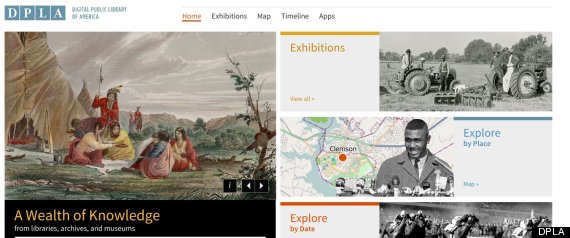
Vision of the DPLA Website:
The vision of a national digital library has been circulating among librarians, scholars, educators, and private industry representatives since the early 1990s. Efforts led by a range of organizations, including the Library of Congress, HathiTrust, and the Internet Archive, have successfully built resources that provide books, images, historic records, and audiovisual materials to anyone with Internet access. Many universities, public libraries, and other public-spirited organizations have digitized materials, but these digital collections often exist in silos. The DPLA brings these different viewpoints, experiences, and collections together in a single platform and portal, providing open and coherent access to our society’s digitized cultural heritage.
You may also like:
What is the DPLA? by John Palfrey | The Digital Shift
Quotable: “There are two key points about what the DPLA “is,” at least as of April 2013. First, the DPLA will be what we, the people, decide to make of it, as a shared, public-spirited resource. Second, the DPLA is the community of people who have devoted themselves (ourselves, in fact) to pursuing an ambitious, public-spirited vision of what the future might hold. On day one, we will present a radically open platform that will make a lot of exciting material available more broadly, as well as a lot of code and services with which technologists can do interesting things.”
 infophile