The 10 Most Controversial Books of the Year | BookBub Blog #bannedbooks


As part of National Library Week, the American Library Association just released its annual State of America’s Libraries Report analyzing the shifting role libraries play in today’s society. The full report is interesting in and of itself, but it also includes one of the most fascinating book lists of the year — the most frequently challenged books of the year.

In 2014, the ALA received 311 requests to ban books from schools and libraries. [Here] are the top 10 books that caused the most controversy over the past year, including the reasons they were challenged, as well as each book’s publisher description. READ: The 10 Most Controversial Books of the Year | BookBub Blog

Shakespeare’s Sonnets, All 154, Reimagined Through a New York Lens | NYTimes.com #Shakespeare


The endeavor, called the Sonnet Project, grew from the work of the New York Shakespeare Exchange, a local theater group. The group, which started the project in 2013, just completed its 100th film: Sonnet 27, starring Carrie Preston, an Emmy award-winning actress, and filmed on the Verrazano-Narrows Bridge, It will premiere April 8 on the Sonnet Project website and app. (Sonnet 108 will appear on April 22.) MORE: Shakespeare’s Sonnets, All 154, Reimagined Through a New York Lens | NYTimes.com

50 Great Novels About Madness | Flavorwire


Not so much into March Madness? Well, perhaps you should look at it another way. March is the perfect month for reading books about madness — it is a transitional time, after all, possessed of both lion and lamb. Plus, you’ll have ample reading time, both outside and inside. The books herein, it should be noted, are those that deal with a kind of literary madness — obsession and absurdity and hallucination — not directly focusing on mental illness proper, whenever the two can be separated. So you won’t find The Bell Jar or One Flew Over the Cuckoo’s Nest or The Yellow Wallpaper here, though those are all excellent reads. MORE: 50 Great Novels About Madness | Flavorwire.

26 Contemporary Books That Should Be Taught In High School | BuzzFeed


We recently asked members of the BuzzFeed Community to tell us what contemporary book should be taught in high school. Here are the brilliant results. READ MORE: 26 Contemporary Books That Should Be Taught In High School | BuzzFeed

Two Never Before Seen Fairy Tales by the Grimm’s Favorite Folklorist | Flavorwire


In March of 2012, the Guardian announced a major literary and cultural discovery: more than 500 new fairy tales had been unearthed in Germany. The haul of stories was vast, impressively so. It contained in its pages a new world of enchanted animals, magic and romance, legend, otherworldly creatures, parables about nature, and wild exaggeration. But there was something else. These tales had been collecting dust in a bunch of old boxes for more than 150 years. This dating is significant: it confirms that the tales are roughly contemporaneous with those of the Brothers Grimm. To be sure, this was an historic and unprecedented discovery. The woman who made it, a cultural curator and folklorist named Erika Eichenseer, compared the collection to “buried treasure.”

But before Eichenseer found this treasure, before she undertook the truly invaluable work of reading, sorting, and transcribing these tales, she had to discover them in a municipal archive in Regensburg, Germany. And before they were placed in this archive, they were the property of one Franz Xaver von Schönwerth, a high-ranking government official and amateur folklorist of the mid-nineteenth century, who, inspired by the Brothers Grimm, took it upon himself to travel around the Upper Palatinate region of Bavaria, to collect and interview and record the stories he heard from the people there. Schönwerth’s hard work did not go unnoticed. Jacob Grimm, in 1885, declared that “Nowhere in the whole of Germany is anyone collecting [folklore] so accurately, thoroughly and with such a sensitive ear.”

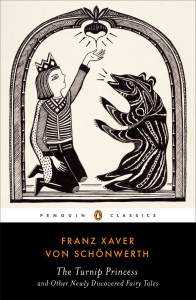
The fruits of this labor of love, of Schönwerth’s (and later Eichenseer’s) hard work, have now been expertly translated, introduced, and commented upon by Maria Tatar in a volume titled The Turnip Princess and Other Newly Discovered Fairy Tales.

READ EXCERPTS: Two Never Before Seen Fairy Tales by the Grimm’s Favorite Folklorist | Flavorwire

74 Essential Books for Your Personal Library: A List Curated by Female Creatives | Open Culture


When Open Culture recently published Jorge Luis Borges’ self-compiled list of 74 ‘great works of literature’, commissioned by Argentine publisher Hyspamerica, I, along with many others, saw one glaring issue in the otherwise fantastically diverse list: it included no works by female writers.

Whether intentional or not, the fact that women are excluded from Borges’ noteworthies (and in 1985, no less) means that a vast number of historically and culturally significant books and writings have been overlooked. While this ought not to discredit the works listed in any way, after witnessing the immense popularity of Borges’ list I certainly felt that for his selection to be relevant today it needed to be accompanied by a list of works which had been overlooked due to the gender of their respective authors.

I decided to put a suggestion to a group of international women writers, artists and curators, and we compiled our own list of 74 ‘great works of literature’ — one just as varied, loose and substantial as that of Borges, but made up solely of writers identifying as women or non-gender-binary. Over two days we amassed many suggestions, which I’ve now curated to form the list below. It’s not intended to invalidate the original, but rather to serve as an accompaniment to highlight and encourage a dialogue on gender imbalances in creative and intellectual realms, as well as to provide a balance by actively ‘equalising’ that of Jorge Luis Borges.

SEE THE LIST: 74 Essential Books for Your Personal Library: A List Curated by Female Creatives | Open Culture.

NPR’s Top 100 Science-Fiction & Fantasy Books – How many have you read? | NPR


More than 5,000 of you nominated. More than 60,000 of you voted. And now the results are in. The winners of NPR’s Top 100 Science-Fiction and Fantasy survey are an intriguing mix of classic and contemporary titles.

READ MORE NPR’s Top 100 Science-Fiction & Fantasy Books – How many have you read? | NPR

Listen to Free, High-Quality AudioBooks of Classic Literature on Spotify: Austen, Dickens, Tolstoy & More | Open Culture


Where music goes, technologically speaking, audio books soon follow. We’ve had audio books on vinyl LP, on cassette tape, on CD, and on MP3, just like we’ve had music. Now that so many of us pull up our daily jams on Spotify, it shouldn’t come as a surprise that we can do a fair bit of our “reading” there as well. We’ve found a few lists that gather up the best audio book available on Spotify, including 21 classics and a collection of Shakespeare plays and sonnets at Gnarl’d, ten evergreen literary picks from Lifehacker, and a Spotify forum thread dedicated to subject.

Below, you’ll find Spotify links to more than 60 classic works of literature that, even if you struggled on getting them read in your English classes, you can now revisit in a perhaps much more lifestyle-compatible medium. To listen to any of these, you will of course need Spotify’s software and account. MORE: Listen to 60+ Free, High-Quality AudioBooks of Classic Literature on Spotify: Austen, Dickens, Tolstoy & More | Open Culture.

For more great audio, don’t forget to visit our collection, 630 Free Audio Books: Download Great Books for Free | Open Culture.


Margaret Atwood Ruins a Marriage, Talks Memes, Politics in Reddit AMA | Jezebel


Just from reading some of Atwood’s answers to the reddit AMA, I feel I have been enlightened and transported to a surreal world!

Margaret Atwood, high priestess of an oracular temple deep in the digital Canadian woods, did a Reddit AMA Monday. Its great: she was asked all of the questions you might expect (Where do you see political dystopia today? Whats your ~process~?) and some you might not (Who is your fictional boyfriend?). Read on for the best bits. READ: Margaret Atwood Ruins a Marriage, Talks Memes, Politics in Reddit AMA | Jezebel

A Better Way to Think About the Genre Debate | The New Yorker

A very thoughtful essay questioning the distinction between genre versus literature, using Station Eleven by Emily St. John Mandel as an example. Well worth the read.

Snip

It’s hard to talk in a clear-headed way about genre. Almost everyone can agree that, over the past few years, the rise of the young-adult genre has highlighted a big change in book culture. For reasons that aren’t fully explicable (Netflix? Tumblr? Kindles? Postmodernism?), it’s no longer taken for granted that important novels must be, in some sense, above, beyond, or “meta” about their genre. A process of genrefication is occurring.

That’s where the agreement ends, however. If anything, a divide has opened up. The old guard looks down on genre fiction with indifference; the new arrivals—the genrefiers—are eager to change the neighborhood, seeing in genre a revitalizing force. Partisans argue about the relative merits of “literary fiction” and “genre fiction.” (In 2012, Arthur Krystal, writing in this magazine, argued for literary fiction’s superiority; he fielded a pro-genre-fiction riposte from Lev Grossman, in Time.) And yet confusion reigns in this debate, which feels strangely vague and misformulated. It remains unclear exactly what the terms “literary fiction” and “genre fiction” mean. A book like “Station Eleven” is both a literary novel and a genre novel; the same goes for “Jane Eyre” and “Crime and Punishment.” How can two contrasting categories overlap so much? Genres themselves fall into genres: there are period genres (Victorian literature), subject genres (detective fiction), form genres (the short story), style genres (minimalism), market genres (“chick-lit”), mode genres (satire), and so on. How are different kinds of genres supposed to be compared? (“Literary fiction” and “genre fiction,” one senses, aren’t really comparable categories.) What is it, exactly, about genre that is unliterary—and what is it in “the literary” that resists genre? The debate goes round and round, magnetic and circular—a lovers’ quarrel among literati.

READ MORE: A Better Way to Think About the Genre Debate | The New Yorker