23 Mobile Things: Join the Australian / New Zealand Course « Tame The Web


23 Mobile Things: Join the Australian / New Zealand Course « Tame The Web

Excerpt below from Tame the Web | http://tametheweb.com/2013/05/01/23-mobile-things-join-the-australian-new-zealand-course/

What are the 23 Mobile Things?

  1. Twitter
  2. Taking a photo with a mobile device:  Instagram / Flickr app / Snapchat
  3. eMail on the move
  4. Maps and checking in: Foursquare
  5. Photos + Maps + Apps: Historypin / What was there / Sepia Town
  6. Video: YouTube and screencasts
  7. Communicate: Skype / Google Hangout
  8. Calendar
  9. QR codes
  10. Social reading: RSS / Flipboard / Feedly / Goodreads / Pocket
  11. Augmented reality: Layar
  12. Games: Angry Birds / Wordfeud
  13. Online identity: FaceBook and LinkedIn
  14. Curating: Pinterest / Scoop.it / Tumblr
  15. Adobe ID
  16. eBooks and eBook apps: Project Gutenberg / Kindle / Overdrive / Bluefire / Kobo, etc.
  17. Evernote and Zotero
  18. Productivity tools: Doodle / Remember the Milk / Hackpad / any.do /  30/30
  19. File sharing: Dropbox
  20. Music: last.fm / Spotify
  21. Voice interaction and recording
  22. eResources vendor apps
  23. Digital storytelling

You can view the 23 Mobile Things on the official blog here –http://23mobilethings.net/wpress/the-things/

What is this NZ/Australian cohort all about?
simple; it is just establishing a group of librarians in NZ and Australia who are keen to do the 23 Mobile Things at the same time. This cohort will give us mutual support and contact with each other so that we can learn together and keep each other motivated. Hopefully it will help you grow your own personal learning network (PLN) and have fun and great collaborations throughout the course!
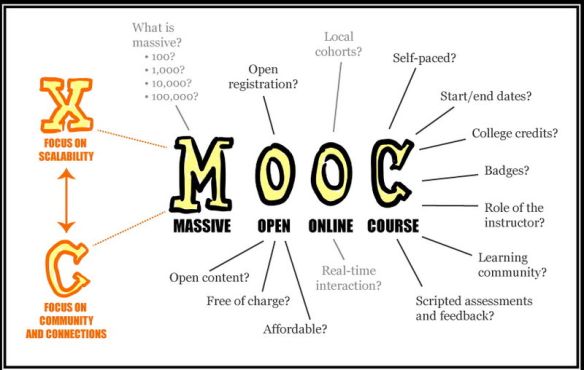
Librarians: Your Most Valuable MOOC Supporters – OEDB.org


Libraries offer resources, from research to licensing support, that are essential to the future of MOOCs as they grow both in numbers and in seriousness. As MOOCs become an increasingly valid and valuable resource, it’s clear that they can benefit from another great educational resource: librarians.

via Librarians: Your Most Valuable MOOC Supporters – OEDB.org.

You may also like:

Librarians: Your Most Valuable MOOC Supporters - OEDB.orgCC. Originally posted to Flickr by mathplourde. Retrieved from Wikipedia.

16 Free Live Webinars for Librarians in June | Ellyssa Kroski – OEDB.org


16 Free Live Webinars for Librarians in June – OEDB.org.

I particularly intrigued by Public Libraries: Become a Community Publishing Portal (PLA) and Support Patron Learning in Small Spaces with Small Budgets.

How and Why to Teach Your Kids to Code | LifeHacker


Whether or not your child grows up to be the next Zuckerberg, programming is a highly useful skill for him or her to learn. It teaches vital problem-solving, creativity, and communication skills. Plus, it can be downright fun for you both. Here are some of the best tried-and-true apps for teaching kids of all ages how to code.

via How and Why to Teach Your Kids to Code | LifeHacker

Apps discussed cover from the very young to older learners and include:

  • Daisy the Dinosaur
  • Move the Turtle
  • Hopscotch
  • Scratch
  • Stencyl
  • App Inventor
  • Alice
  • Pluralsight video lessons
  • Codeacademy, Khan Academy

You may also like:

Collection of Links: Resources for Learning to Code | The Modern MLIS

Top 5 Sites for Online Learning | Information Space


Top 5 Sites for Online Learning  | Information Space

The 5 sites discussed are:

  1. Khan Academy
  2. Skillshare
  3. Codeacademy
  4. Lynda.com
  5. EdX

Collection of Links: MOOCs


Got MOOC?: Massive open online courses are poised to change the face of education | The Digital Shift
Although it’s clear that there’s a flurry of interest in MOOCs among universities, higher-ed students, the tech industry, and pundits, these free online courses are also likely to have a significant impact on K–12 librarians and other educators. 

From the EDUCAUSE Library on MOOCs, the report What Campus Leaders Need to Know About MOOCs and many more additional resources.

California Universities Aggressively Expand Online Courses, Finds Failure Rates Drop | TechCrunch
The largest university system in America is aggressively expanding its experimental foray into Massive Online Open Learning (MOOCs), based on an unusually promising pilot course. 

The iSchool’s First MOOC: Lessons Learned | Information Space
There is much that still needs to be figured out about MOOCs. 

For Libraries, MOOCs Bring Uncertainty and Opportunity | Wired Campus
A lot of the discussion about massive open online courses has revolved around students and professors. What role can academic librarians play in the phenomenon, and what extra responsibilities do MOOCs create for them?

What Do Librarians Need to Know About MOOCs? | Stephen’s Lighthouse
“The following article appears in the March/April 2013 issue of D-Lib Magazine.”

Chronicle of Higher Education Blog Highlights Key Points from MOOCs and Libraries Event  | Stephen’s Lighthouse
“The “MOOCs and Libraries: Massive Opportunity or Overwhelming Challenge?” event, hosted by OCLC Research and the University of Pennsylvania on 18-19 March, featured thoughtful and provocative presentations about ways libraries are getting involved with massive open online courses (MOOCs), including the challenges and strategic opportunities they are facing.”

MOOCs and Libraries Event | The OCLC Research Channel (YouTube)
Playlist includes videos of the sessions from the “MOOCs and Libraries: Massive Opportunity or Overwhelming Challenge?” event that took place 18-19 March 2013 in which OCLC Research and the University of Pennsylvania Libraries presented thoughtful and provocative presentations about how libraries are already getting involved with MOOCs.  Also see this SlideShare presentation from OCLC: MOOCs & Libraries: Massive Opportunity or Overwhelming Challenge.

10,000 Free Courses Listed in a Massive Open Courses Directory | iLibrarian
The OEDb has just launched a massive Free Online Open Courses Directory organizing nearly 10,000 free courses in the liberal arts and sciences. The courses are available in a variety of formats including full courses, video lectures, audio lectures, text articles, and mixed media.

10 Incredibly Interesting Free Online Courses I’d Like to Take for Fun | iLibrarian
It’s amazing just how many colleges and universities are offering free open education courses that people can take from the convenience of their own computers. I’ve been investigating the offerings at many of these including MIT, University of Notre Dame, UC San Diego and others, and there are many classes that I’d enjoy taking just for fun. Here are ten of my choices, but click into the programs for listings of hundreds more!

Dewey-It-Yourself: How to supplement your library school education | Hack Library School
No matter how great a MLS/MLIS program is there just isn’t enough time and courses to learn everything.

Lynda.com, NYPL Explore New Library-wide Access Model | The Digital Shift
Patrons visiting the New York Public Library’s Science, Industry and Business Library (SIBL) now have free access to the entire catalog of more than 1,500 instructional online training videos offered by Lynda.com.

Emerging Student Patterns in MOOCs: A (Revised) Graphical View | e-Literate
Describes four student patterns emerging from Coursera-style MOOCs.

Massive Open Online Courses: Legal and Policy Issues for Research Libraries | ARL [Brief]
Massive Open Online Courses (MOOCs) raise significant legal and policy questions for research libraries, which are often asked to support the development of MOOC courses.

Collection of Links: Resources for Learning to Code


Update (August 30, 2015): Coding resources available on the Internet are listed here.

I began learning to code more than a decade ago during my undergraduate days at university sitting in a darkened room in front of a SunSystem computer running Unix. I programmed in C++ and Java for endless hours. I never complained about my biology and math labs and tutorials again after taking a computer science class! I did not realize at the time how useful I would find this skill in future years. During my Masters, which I completed in 2012, I learned to program in HTML/XHTML and CSS from the ground up, although I had prior knowledge from building my own websites. Now my next goals are to learn to code PHP and APIs. I not only want to learn these languages to bolster my resume but to learn more about the fundamentals of Internet and mobile architecture. How they are connected. I think learning to code is a great way to learn how to solve problems.

I find it surprising how popular coding is becoming, especially in libraries. Although now with the morphing of hackerspaces and makerspaces in libraries maybe its not so surprising. Librarians are known for being pioneers in education, learning and collaborative efforts after all. We can now even learn a programming language by attending a conference session – the 2013 ALA Conference in June will be presenting a LITA Pre-conference Introductory Python Workshop2012 was known as Code Year. With this push for awareness and education of coding there are now numerous resources one can use to learn abut coding and how to code. Here are a few of them:

Literacy

Learning to Code

APIs/Apps

Resources for Digital Learning – The Digital Shift


Resources for Digital Learning – The Digital Shift.

Includes resources on:

  • research/curation
  • ebooks/reading
  • common core
  • tools
  • apps
  • big picture

Beyond the Buzz, Where Are MOOCs Really Going? | Wired Opinion | Wired.com


“Everyone’s going MOOC-crazy these days. From frequent media coverage of online courses and platforms like Coursera, edX, Udacity, and Udemy to discussions about the complexities and business models of online education, the excitement around MOOCs (Massive Open Online Courses) has finally “bubbled” over.”

via Beyond the Buzz, Where Are MOOCs Really Going? | Wired Opinion | Wired.com.

You may also like:

The MOOC Revolution: A Sketchy Deal for Higher Education – DISSENT Magazine

Move Over Harvard And MIT, Stanford Has The Real “Revolution In Education”