
Introducing the Mozilla Science Lab | The Mozilla Blog


We’re excited to announce the launch of the Mozilla Science Lab, a new initiative that will help researchers around the world use the open web to shape science’s future.

Scientists created the web — but the open web still hasn’t transformed scientific practice to the same extent we’ve seen in other areas like media, education and business. For all of the incredible discoveries of the last century, science is still largely rooted in the “analog” age. Credit systems in science are still largely based around “papers,” for example, and as a result researchers are often discouraged from sharing, learning, reusing, and adopting the type of open and collaborative learning that the web makes possible.

The Science Lab will foster dialog between the open web community and researchers to tackle this challenge. Together they’ll share ideas, tools, and best practices for using next-generation web solutions to solve real problems in science, and explore ways to make research more agile and collaborative.

via Introducing the Mozilla Science Lab | The Mozilla Blog

You may also like:
The Case for Preserving the Pleasure of Deep Reading | MindShift


Recent research in cognitive science, psychology and neuroscience has demonstrated that deep reading—slow, immersive, rich in sensory detail and emotional and moral complexity—is a distinctive experience, different in kind from the mere decoding of words. 

For the full article see: The Case for Preserving the Pleasure of Deep Reading | MindShift.

CIA Releases Analyst’s Fascinating Tale of Cracking the Kryptos Sculpture | Threat Level | Wired.com


CIA Releases Analyst’s Fascinating Tale of Cracking the Kryptos Sculpture | Threat Level | Wired.com.

This story exemplifies qualities we could all try to nurture in ourselves and others: perseverance, dedication, motivation, discretion, problem-solving…and curiosity!

Quotable: “When confronted with a puzzle or problem, we sometimes can lose sight of the fact that we have issued a challenge to ourselves–not to our tools. And before we automatically reach for our computers, we sometimes need to remember that we already possess the most essential and powerful problem-solving tool within our own minds.”

Hyperlinked web version of The Puzzle at CIA Headquarters: Cracking the Courtyard Crypto by David D. Stein | Elonka.com

Bill Gates, Benchmark And More Pour $35M Into ResearchGate, The Social Network For Scientists | TechCrunch


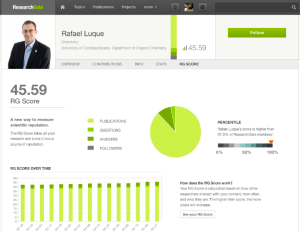
ResearchGate announced that it has closed a $35 million round of series C financing from Microsoft founder Bill Gates and Tenaya Capital, with participation from Dragoneer Investment Group and Thrive Capital. This hefty third-round of financing follows its series A and B rounds raised in 2010 and 2012, respectively. Short-term returns may not be part of the equation for ResearchGate’s investors, but Bill Gates, for one, hasn’t been shy about placing big bets on potentially high-impact education, energy and health-related technologies, even if those are long-term — or long shot — investments.

ResearchGate has endeavored to give researchers a platform where they can not only upload the journals they’ve been published in, but share raw data as well — along with experiments that failed or succeeded — in an effort to make that knowledge accessible in a broader context.

For the full article see:  Bill Gates, Benchmark And More Pour $35M Into ResearchGate, The Social Network For Scientists | TechCrunch.

ResearchGate

See also: Bill Gates Backs “Open Science” Social Network ResearchGate In Push For Nobel Prize | ReadWrite

Hogwarts for Hackers: Inside the Science and Tech School of Tomorrow | Wired Enterprise | Wired.com


Hogwarts for Hackers: Inside the Science and Tech School of Tomorrow | Wired Enterprise | Wired.com

The article takes an in depth look at the unique education approach at the Illinois Mathematics and Science Academy (IMSA), where students have the opportunity to work on self-directed projects.

Recent Pew Research Links


Teens, Social Media, and Privacy by Mary Madden, Amanda Lenhart, Sandra Cortesi, Urs Gasser, Maeve Duggan, Aaron Smith | Pew Internet & American Life Project

Parents, Children, Libraries, and Reading by Carolyn Miller, Kathryn Zickuhr, Lee Rainie and Kristen Purcell | Pew Internet & American Life Project

Related:

Greatest Hits from Pew Internet’s Library Research from Pew Research Center’s Internet & American Life Project

Tech trends and library services in the digital age from Pew Research Center’s Internet & American Life Project and also Pew: Tech trends and library services in the digital age | Stephen’s Lighthouse

Pew – Public’s Knowledge of Science and Technology | Stephen’s Lighthouse

Closure of fisheries’ libraries called ‘a ‘disaster’ for science | Canada.com


Closure of fisheries’ libraries called ‘a ‘disaster’ for science | Canada.com

Quotables

“Seven DFO libraries across Canada are to close by the fall, including two that have been amassing books and technical reports on the aquatic realm for more than a century.”

“It is information destruction unworthy of a democracy,” said Peter Wells, an ocean pollution expert at Dalhousie University in Halifax, who describes the closing of the libraries as a “national tragedy.”

“It will likely be a decade or more before all DFO’s technical reports are all digitized and available online, the librarian said.  But most of the reference books and materials in the DFO libraries – like Russia’s fishing monograms – cannot be digitized by the department because of copyright restrictions.”

“Wells see the library closures as more evidence of the way the federal government is “eviscerating” aquatic science by cutting jobs and eliminating programs, labs and services. “Libraries cannot simply be replaced by digitized collections,” he said.”

DMCA chilling effects: How copyright law hurts security research. – Slate Magazine


An informative exposition on the DMCA and security research. I thought the article interesting and a reminder of the power of political and lobbying bodies in the US. In Canada, we are weathering our own struggle against the muzzling of our scientific researchers and librarians by the PMO.

“The outdated copyright law doesn’t just hurt consumers—it cripples researchers.” via DMCA chilling effects: How copyright law hurts security research. – Slate Magazine.

You may also like:


Software That Can Piece Together Lost Languages | Co.Design: business + innovation + design


Another example of how big data is being leveraged in research and education.

Software That Can Piece Together Lost Languages | FastCompany Co.Design: business + innovation + design.

You may also like:
Big Data: A Rose by Any Other Name? – Information Space
ENCODE: Big Data, the Human Genome, and Non-Profit Global Enterprise – Information Space

Huffington Post | Da Vinci Notebook: British Library Publishes Full Collection And More Arts News


Another amazing digital library…

Da Vinci Notebook: British Library Publishes Full Collection And More Arts News via Huffington Post.

You may also like:

Einstein Archives Online

World Digital Library

Artsy