The Next Big Thing In Responsive Design | Co.Design


The Next Big Thing In Responsive Design | Co.Design | business + design

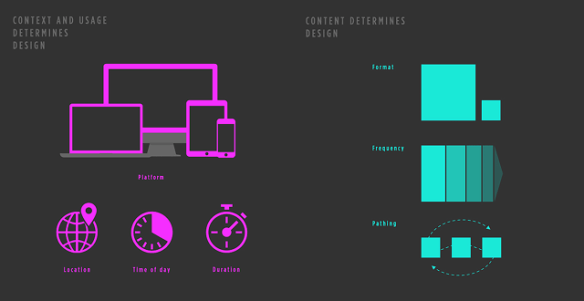
Responsive design, which allows designers and developers to build websites that adapt to every screen size, is one of the most empowering web tools to be adopted in the last decade.

But adapting to the screen is only the first frontier of a new, responsive web. Today, users expect online experiences that not only respond to what device theyre using, but also their location, time of day, what they’ve already read, and events happening in real time.

To capture a user’s attention for the next generation of the web, you’ll need more than just responsive design. You’ll need a responsive philosophy.

READ MORE: The Next Big Thing In Responsive Design | Co.Design | business + design.

Your New Favorite Storytelling Website Is All About Books | BuzzFeed


CallMeIshmael.com is a fascinating and fantastic new way to celebrate books. The concept is simple:

  • Step #1. Call Ishmael’s number: 774.325.0503. It goes straight to voicemail.
  • Step #2. Listen to Ishmael’s short answering machine message. It changes weekly.
  • Step #3. Leave a voicemail about a book you love and a story you have lived.

Read More: Your New Favorite Storytelling Website Is All About Books | BuzzFeed

Tools to Help Block Out Online Distractions | Gizmodo


The problem with the web is there’s just so much of it; an endless tide of funny videos, pop quizzes, and social alerts ready to distract you from other, more urgent tasks at hand. We wouldn’t say there’s anything inherently wrong with killing time online, but if you really need to buckle down on an important job then these tools should help.

Overviews of:

  • KeepMeOut
  • StayFocusd
  • LeechBlock
  • Cold Turkey
  • SelfControl
  • TomatoTimer
  • Freedom

READ MORE: Tools to Help Block Out Online Distractions | Gizmodo

Apps for Outdoor Learning | The Digital Shift


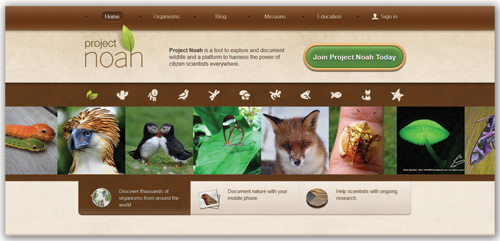
With spring in the air, students typically clamor to get outside—and teachers would often like to follow. April is an ideal time of year to explore outdoor learning opportunities, and these apps and sites can lead the way. READ MORE: Apps for Outdoor Learning | Cool Tools | The Digital Shift.

I would also recommend the Encyclopedia of Life’s Tools & Resources page for more tools to enhance outdoor educational activities.

I am an infophile. Are you? (Renaming this website.)


I have renamed this website to infophile from The Modern MLIS. The new name better aligns with being an established information services professional rather than the library and information services student I was when I first started the blog. I am an infophile (a person who loves information). Personally, I love advising, amusing and informing others about the stories, research and information I have come across. Professionally, I manipulate information for news monitoring purposes and to create classifications and taxonomies. It’s pretty amazing and validating to be able to do something you love every day…and even get paid for it!

I took a hiatus of a few months to decide whether I wanted to continue reposting future librarianship and technology-related news and resources to the LIS community. It can be challenging juggling the work/life balances thing, but I think I have it figured out now. So going forward, I will only be highlighted the coolest, most unique, worthy and must know news to the blog. I hope you will continue to follow me.

Readworthy: Education & Technology, Librarianship


Education & Technology

Librarianship

Our Government Has Weaponized the Internet. Here’s How They Did It | Wired.com


The internet backbone — the infrastructure of networks upon which internet traffic travels — went from being a passive infrastructure for communication to an active weapon for attacks.

According to revelations about the QUANTUM program, the NSA can “shoot” (their words) an exploit at any target it desires as his or her traffic passes across the backbone. It appears that the NSA and GCHQ were the first to turn the internet backbone into a weapon; absent Snowdens of their own, other countries may do the same and then say, “It wasn’t us. And even if it was, you started it.”

If the NSA can hack Petrobras, the Russians can justify attacking Exxon/Mobil. If GCHQ can hack Belgacom to enable covert wiretaps, France can do the same to AT&T. If the Canadians target the Brazilian Ministry of Mines and Energy, the Chinese can target the U.S. Department of the Interior. We now live in a world where, if we are lucky, our attackers may be every country our traffic passes through except our own.

Which means the rest of us — and especially any company or individual whose operations are economically or politically significant — are now targets. All cleartext traffic is not just information being sent from sender to receiver, but is a possible attack vector.

Here’s how it works.

Read more: Our Government Has Weaponized the Internet. Here’s How They Did It | Wired Opinion | Wired.com

How to Opt Out of Data Tracking on Your Most-Used Sites | Mashable


Google’s latest updates to its terms of service have left many privacy advocates crying foul. One new feature called “shared endorsements” allows your name and photograph to be used in targeted advertisements on Google property sites.

Google’s support page for shared endorsements claims the feature will allow for more friend-based recommendation of music and restaurants, working much like Facebook’s Sponsored Stories.

Shared endorsements are not unique. Many sites, apps and browsers are using your information in ways you might not entirely comply with if you’d take the time to read their privacy policies. Often, opting out is only a click away, though it may be difficult to find out where exactly to click.

We’ve compiled this list of ways various Internet companies are tracking and using your data — plus, given you the tools to opt out, if you wish.

Reviews how to opt out for:

  • Targeted Advertisements
  • Search History
  • Disable Third-Party Cookie Tracking

Read: How to Opt Out of Data Tracking on Your Most-Used Sites | Mashable

Related:

50 year after JFK’s death, new website asks people to share their stories about his legacy | The Washington Post


There’s no shortage of places for people to share memories of where they were 50 years ago when they found out John F. Kennedy had been assassinated. But a website debuting Monday aims to take the focus from past to future by asking people of all ages — even those who weren’t alive when Kennedy died — to share their thoughts about how he has inspired them.

The website is part of the JFK Library and Museum’s commemoration of the 50th anniversary of JFK’s death, which is Friday. The museum also plans a new exhibit of never-before-displayed items from his three-day state funeral, including the flag that draped his casket and notes written by first lady Jacqueline Kennedy.

Visitors to the “An Idea Lives On” site can explore an interactive video that includes NASA Commander Chris Cassidy, former Massachusetts Gov. Michael Dukakis, comedian Conan O’Brien, Freedom Rider Charles Person and others talking about Kennedy’s lasting impact.

Read more: 50 year after JFK’s death, new website asks people to share their stories about his legacy | The Washington Post.

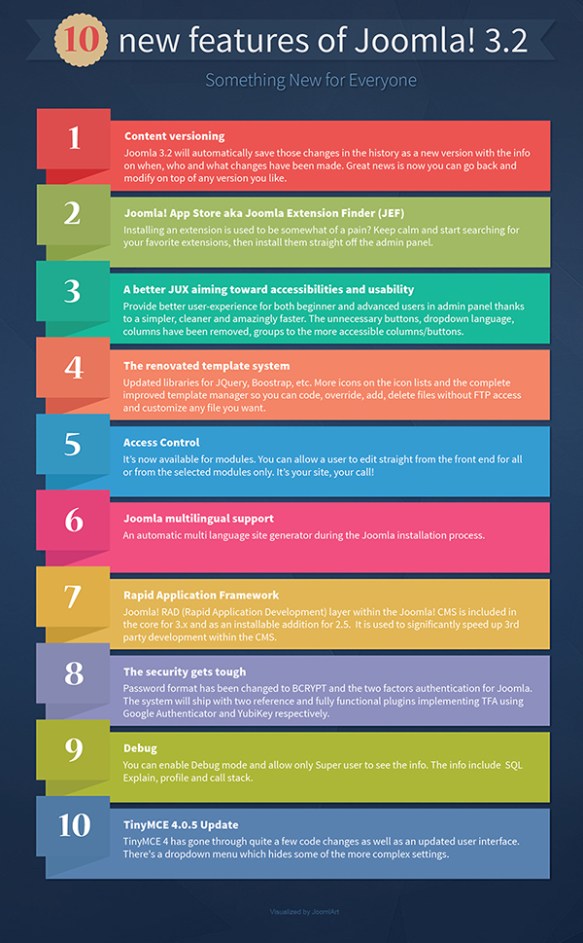
Joomla! 3.2 released – 10 new features it brings [Infographic]| JoomlArt


Joomla! 3.2 released – 10 new features it brings | JoomlArt

Joomla 3.2