Not so much into March Madness? Well, perhaps you should look at it another way. March is the perfect month for reading books about madness — it is a transitional time, after all, possessed of both lion and lamb. Plus, you’ll have ample reading time, both outside and inside. The books herein, it should be noted, are those that deal with a kind of literary madness — obsession and absurdity and hallucination — not directly focusing on mental illness proper, whenever the two can be separated. So you won’t find The Bell Jar or One Flew Over the Cuckoo’s Nest or The Yellow Wallpaper here, though those are all excellent reads. MORE: 50 Great Novels About Madness | Flavorwire.
Category Archives: Librarianship
Emerging Roles and Possible Futures for Librarians and Information Professionals | Emerald Group Publishing
What professional roles do you play as a librarian/information professional? How have they changed during your career? And perhaps most important, how do you see them changing and evolving in the future?
These issues are discussed in an intriguing recent article in New Library World, “A systematic literature review informing library and information professionals’ emerging roles.” Evgenia Vassilakaki and Valentini Moniarou-Papaconstantinou, of the Library Science & Information Systems Department of TEI of Athens, Greece, uncovered their findings from peer-reviewed literature published between 2000 and 2014.
Although a variety of libraries were included, the authors state that “the majority of the literature focused on academic libraries.” All of the papers are in English, and “the majority of studies reported on research conducted in the United Kingdom and North America.”
Their findings have implications given the changes taking place in work, society and education, and how those changes affect our institutions. Six emerging roles were discovered, all of which would seem to be applicable within many types of libraries and information centres…READ MORE: Emerging roles and possible futures for librarians and information professionals | Emerald Group Publishing
The Insane History of How American Paranoia Ruined and Censored Comic Books | Vox
One of the most hurtful things you can say to a comic book reader is that comic books are for kids.
It’s a chilling insult that the stuff they read — the stuff they love — never advanced beyond its funny-page beginnings. But it’s also — often unknown to comics fans — a blunt reminder of one of the worst things to ever happen to comic books.
Some 60 years ago, during the era of McCarthyism, comic books became a threat. The panic culminated in a Senate hearing in 1954. This, of course, isn’t to say that McCarthyism and the comic book panic were comparable in their human toll. But they share the same symptoms of American fear and a harsh, reactive response to it.
The reaction to the suspected scourge was the Comics Code — a set of rules that spelled out what comics could and couldn’t do. Good had to triumph over evil. Government had to be respected. Marriages never ended in divorce. And it was in the best interests of publishers to remain compliant.
What adults thought was best for children ended up censoring and dissolving away years of progress and artistry, as well as comics that challenged American views on gender and race. Consequently, that cemented the idea that this was a medium for kids — something that we’ve only recently started disbelieving.
READ MORE: The insane history of how American paranoia ruined and censored comic books | Vox
The Gorgeous Typeface That Drove Men Mad and Sparked a 100-Year Mystery | Gizmodo
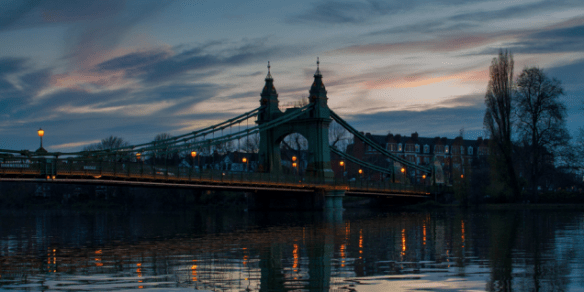
No one seemed to notice him: A dark figure who often came to stand at the edge of London’s Hammersmith Bridge on nights in 1916. No one seemed to notice, either, that during his visits he was dropping something into the River Thames. Something heavy.
Over the course of more than a hundred illicit nightly trips, this man was committing a crime—against his partner, a man who owned half of what was being heaved into the Thames, and against himself, the force that had spurred its creation. This venerable figure, founder of the legendary Doves Press and the mastermind of its typeface, was a man named T.J. Cobden Sanderson. And he was taking the metal type that he had painstakingly overseen and dumping thousands of pounds of it into the river.
As a driving force in the Arts & Crafts movement in England, Cobden Sanderson championed traditional craftsmanship against the rising tides of industrialization. He was brilliant and creative, and in some ways, a luddite—because he was concerned that the typeface he had designed would be sold to a mechanized printing press after his death by his business partner, with whom he was feuding.
So, night after night, he was making it his business to “bequeath” it to the river, in his words, screwing his partner out of his half of their work and destroying a legendarily beautiful typeface forever. Or so it seemed.
READ MORE: The Gorgeous Typeface That Drove Men Mad and Sparked a 100-Year Mystery | Gizmodo
Related
- Resource: Typography and Type Design
Unusual Library Collections Around the World | Flavorwire
A few interesting library collections noted here…I’m sure there are many others that are not mentioned in this Flavorwire list.
Imagine walking into the home of a recently deceased resident after getting a mysterious phone call about a massive collection of maps. That’s what happened to Glen Creason, the map librarian at Los Angeles Central Library and author of Los Angeles in Maps. Creason walked out of the home with boxes of historical maps and coveted city guides that instantly doubled the library’s collection. L.A.-based filmmaker Alec Ernest captured the story of Creason and an unknown map collector named John Feathers in a mesmerizing short film about the beauty and power of physical objects, and the strange passions people have for them. Ernest’s film inspired us to travel libraries around the world and explore their unique and sometimes bizarre collections.
READ MORE: Unusual Library Collections Around the World | Flavorwire.
26 Contemporary Books That Should Be Taught In High School | BuzzFeed
We recently asked members of the BuzzFeed Community to tell us what contemporary book should be taught in high school. Here are the brilliant results. READ MORE: 26 Contemporary Books That Should Be Taught In High School | BuzzFeed
Two Never Before Seen Fairy Tales by the Grimm’s Favorite Folklorist | Flavorwire
In March of 2012, the Guardian announced a major literary and cultural discovery: more than 500 new fairy tales had been unearthed in Germany. The haul of stories was vast, impressively so. It contained in its pages a new world of enchanted animals, magic and romance, legend, otherworldly creatures, parables about nature, and wild exaggeration. But there was something else. These tales had been collecting dust in a bunch of old boxes for more than 150 years. This dating is significant: it confirms that the tales are roughly contemporaneous with those of the Brothers Grimm. To be sure, this was an historic and unprecedented discovery. The woman who made it, a cultural curator and folklorist named Erika Eichenseer, compared the collection to “buried treasure.”
But before Eichenseer found this treasure, before she undertook the truly invaluable work of reading, sorting, and transcribing these tales, she had to discover them in a municipal archive in Regensburg, Germany. And before they were placed in this archive, they were the property of one Franz Xaver von Schönwerth, a high-ranking government official and amateur folklorist of the mid-nineteenth century, who, inspired by the Brothers Grimm, took it upon himself to travel around the Upper Palatinate region of Bavaria, to collect and interview and record the stories he heard from the people there. Schönwerth’s hard work did not go unnoticed. Jacob Grimm, in 1885, declared that “Nowhere in the whole of Germany is anyone collecting [folklore] so accurately, thoroughly and with such a sensitive ear.”
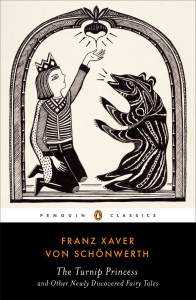
The fruits of this labor of love, of Schönwerth’s (and later Eichenseer’s) hard work, have now been expertly translated, introduced, and commented upon by Maria Tatar in a volume titled The Turnip Princess and Other Newly Discovered Fairy Tales.
READ EXCERPTS: Two Never Before Seen Fairy Tales by the Grimm’s Favorite Folklorist | Flavorwire
Kapow! Stan Lee Is Co-Teaching a Free Comic Book MOOC, and You Can Enroll for Free | Open Culture
“Why did superheroes first arise in 1938 and experience what we refer to as their ‘Golden Age’ during World War II?” “How have comic books, published weekly since the mid-1930’s, mirrored a changing American society, reflecting our mores, slang, fads, biases and prejudices?” “Why was the comic book industry nearly shut down in the McCarthy Era of the 1950’s?” And “When and how did comic book artwork become accepted as a true American art form as indigenous to this country as jazz?”
All of these questions … and more … will be explored in an upcoming MOOC (Massive Open Online Course) co-taught by the legendary comic book artist, Stan Lee. He will be joined by experts from the Smithsonian, and Michael Uslan, the producer of the Batman movies who’s also considered the first instructor to have taught an accredited course on comic book folklore at any university.
The course called The Rise of Superheroes and Their Impact On Pop Culture will be offered through edX, starting on May 5th.
MORE: Kapow! Stan Lee Is Co-Teaching a Free Comic Book MOOC, and You Can Enroll for Free | Open Culture
74 Essential Books for Your Personal Library: A List Curated by Female Creatives | Open Culture
When Open Culture recently published Jorge Luis Borges’ self-compiled list of 74 ‘great works of literature’, commissioned by Argentine publisher Hyspamerica, I, along with many others, saw one glaring issue in the otherwise fantastically diverse list: it included no works by female writers.
Whether intentional or not, the fact that women are excluded from Borges’ noteworthies (and in 1985, no less) means that a vast number of historically and culturally significant books and writings have been overlooked. While this ought not to discredit the works listed in any way, after witnessing the immense popularity of Borges’ list I certainly felt that for his selection to be relevant today it needed to be accompanied by a list of works which had been overlooked due to the gender of their respective authors.
I decided to put a suggestion to a group of international women writers, artists and curators, and we compiled our own list of 74 ‘great works of literature’ — one just as varied, loose and substantial as that of Borges, but made up solely of writers identifying as women or non-gender-binary. Over two days we amassed many suggestions, which I’ve now curated to form the list below. It’s not intended to invalidate the original, but rather to serve as an accompaniment to highlight and encourage a dialogue on gender imbalances in creative and intellectual realms, as well as to provide a balance by actively ‘equalising’ that of Jorge Luis Borges.
SEE THE LIST: 74 Essential Books for Your Personal Library: A List Curated by Female Creatives | Open Culture.
This Beijing Subway Now Has A Library Of Free E-Books For Passengers | Co.Exist
On the subway in Beijing, as in most cities with underground Wi-Fi connections, commuters usually spend their rides mindlessly staring at their phones, scrolling through emails or playing games. But now riders on one metro line have another option: With a scan of a QR code inside the train car, they can access a library of free e-books.
The books are curated by the National Library of China (NLC), which hopes to help make people more likely to read in everyday life. Working with subway operator Beijing MTR, the library launched the new “M Subway Library” in January.
READ MORE: This Beijing Subway Now Has A Library Of Free E-Books For Passengers | Co.Exist | ideas + impact.
 infophile