
Cool Stuff Librarians Do: Librarians Without Borders | BOOK RIOT


When I was little I wanted to be a doctor, and imagined myself sweeping across continents providing invaluable medical assistance as part of Doctors Without Borders. I came to accept that I’m a writer, not a medical professional, but now I have an opportunity to realign those early dreams with my actual life: I’m interning with the coolest group I know of – Librarians Without Borders. Same basic concept, slightly different product.

READ MORE: Cool Stuff Librarians Do: Librarians Without Borders | BOOK RIOT
Internet Archive offers 900 classic arcade games for browser-based play | Ars Technica


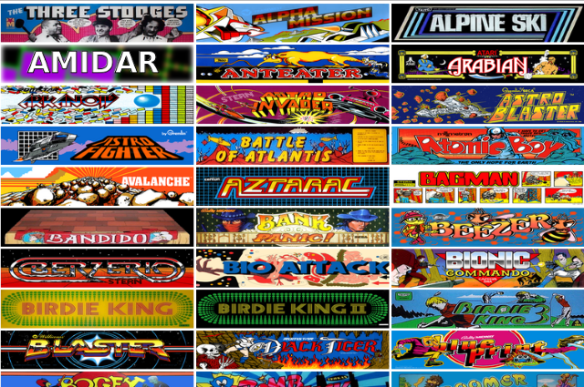
As part of its continuing mission to catalog and preserve our shared digital history, the Internet Archive has published a collection of more than 900 classic arcade games, playable directly in a Web browser via a Javascript emulator.

The Internet Arcade collects a wide selection of titles, both well-known and obscure, ranging from “bronze age” black-and-white classics like 1976s Sprint 2 up through the dawn of the early 90s fighting game boom in Street Fighter II. In the middle are a few historical oddities, such as foreign Donkey Kong bootleg Crazy Kong and the hacked “Pauline Edition” of Donkey Kong that was created by a doting father just last year.

READ MORE: Internet Archive offers 900 classic arcade games for browser-based play | Ars Technica.

29 Moments Any Librarian Knows Too Well | BuzzFeed Books


Oh definitely!  29 Moments Any Librarian Knows Too Well | BuzzFeed Books

​Washington Post Dismisses 500-Page Civil War Nonfiction Book As Girly | Jezebel


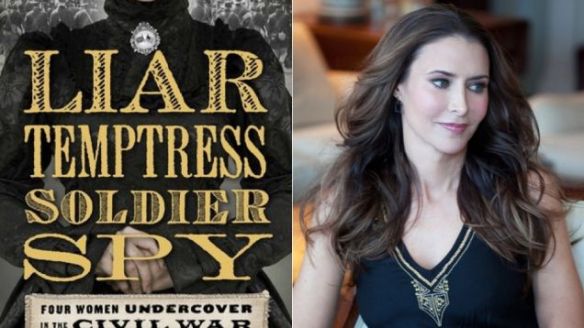
Last month, New York Times bestselling author Karen Abbott published a non-fiction book called Liar, Temptress, Soldier, Spy, with its subject four fascinating women who became spies during the Civil War—Belle Boyd, teenage rebel and “Secesh Cleopatra”; Emma Edmonds, dressed as a soldier, her nom de guerre “Frank”; Rose O’Neal Greenhow, seducer with an espionage ring; Elizabeth Van Lew, wealthy and quietly radical abolitionist.

Liar, Temptress, Soldier, Spy was reviewed at the Washington Post by Jonathan Yardley, a Pulitzer-winning critic known for utter decisiveness…

READ MORE: ​Washington Post Dismisses 500-Page Civil War Nonfiction Book As Girly | Jezebel

Best Documentaries Ever Made | Flavorwire


This week, The Criterion Collection is giving a welcome Blu-ray upgrade to F for Fake, Orson Welles’ 1973 documentary exploration of hoaxes, fakery, and magic. It was one of his last completed films, and one of his few documentaries — and, in true Welles form, he went and made one of the greatest nonfiction films of all time. How great? Well, its re-release is as good a time as any to spotlight the finest documentaries ever made. And just to avoid repetition, we’ll skip the music docs and concert films.

SEE THE LIST: Best Documentaries Ever Made | Flavorwire

The Future of the Book | The Economist


“The digital transformation of the way books are written, published and sold has only just begun.” Essay on The Future of the Book | The Economist. Listen. Scroll. Flip.

Women in Data Science Are Invisible. We Can Change That | WIRED


READ: Women in Data Science Are Invisible. We Can Change That | WIRED

DPLA Community Reps Produce Hackathon Planning Guide, Now Available | DPLA


We’re excited to announce the release of a new Community Reps-produced resource, GLAM Hack-in-a-box, a short guide to organizing and convening a hackathon using cultural heritage data from GLAM organizations Galleries, Libraries, Archives, Museums including DPLA. We hope this guide will serve as a useful resource for those either unfamiliar with or inexperienced in pulling together a hackathon.

via Digital Public Library of America » Blog Archive » DPLA Community Reps Produce Hackathon Planning Guide, Now Available.

Adobe’s e-book reader sends your reading logs back to Adobe—in plain text [Updated] | Ars Technica


Adobe’s Digital Editions e-book and PDF reader—an application used by thousands of libraries to give patrons access to electronic lending libraries—actively logs and reports every document readers add to their local “library” along with what users do with those files. Even worse, the logs are transmitted over the Internet in the clear, allowing anyone who can monitor network traffic such as the National Security Agency, Internet service providers and cable companies, or others sharing a public Wi-Fi network to follow along over readers’ shoulders.

Ars has independently verified the logging of e-reader activity with the use of a packet capture tool. The exposure of data was first discovered by Nate Hoffelder of The Digital Reader, who reported the issue to Adobe but received no reply.

via Adobe’s e-book reader sends your reading logs back to Adobe—in plain text [Updated] | Ars Technica.