In #Sweden, McDonald’s Happy Meals come with #VR goggles | engadget #virtualreality #tech #gadgets #promotions #marketing


Swedish kids (and adults) can get a toy much sweeter than Barbies and Hot Wheels with their Happy Meals this month. Over the weekends of March 5th and March 12th, 14 McDonald’s outlets in Sweden are bundling real, working virtual reality headsets with their Happy Meal boxes. In fact, the boxes themselves were designed to transform into “Happy Goggles.” You just have to cut on the dotted line, fold it a bit, slip in the goggles and your phone to get something similar to Google Cardboard. READ MORE: In Sweden, McDonald’s Happy Meals come with VR goggles | engadget

I’m a #Librarian. Of #tech, not books | LITA Blog #MLIS #librarianship #careers #librarians


When someone finds out I’m a librarian, they automatically think I know everything there is to know about, well, books. The thing is, I don’t. I got into libraries because of the technology.

My career in libraries started with the take off, a supposed library replacement, of ebooks. Factor in the Google “scare” and librar*s  were going to be done forever. Librar*s were frantic to debunk that they were no longer going to be useful, insert perfect time and opportunity to join libraries and technology.

I am a Systems Librarian and the most common and loaded question I get from non-librarians is (in 2 parts), “What does that mean? and What do you do?” READ MORE: I’m a Librarian. Of tech, not books. | LITA Blog

#Data Artist Proves Just How Unique Shakespeare’s 154 Sonnets Really Are | HuffPost #Shakespeare #poetry #analysis #visualization #art


In data artist Nicholas Rougeux’s new series of Shakespeare sonnet signatures, each poem is summarized with its own distinctive scribble — a shorthand that may not help them with Capital One, but allows readers to quickly visualize the individuality of each poem.  “No two are the same — or even similar,” Rougeux noted… READ MORE: Data Artist Proves Just How Unique Shakespeare’s 154 Sonnets Really Are | HuffPost

Wooden Hand-Cranked #Instrument Runs on 2,000 Marbles | Gizmodo #machines #music #coolstuff


After two years of prototyping, tweaking, and building, Martin Molin of the Swedish band Wintergatan finally debuted his enormous musical marble machine. The melody is primarily carried by a vibraphone whose bars are hit by falling marbles, but it also includes small percussion and cymbals, as well as a bass guitar neck. It even has a “breakdown” arm, which is a literal brake that kills the instrument’s flywheel—that huge spinning circle that’s primarily responsible for the marble machine keeping time accurately. Maybe most importantly, the song Martin programmed it to play is actually really freaking great. READ MORE: Wooden Hand-Cranked Instrument Runs on 2,000 Marbles | Gizmodo

How Game #Historians Are Keeping Your Favorite Bits From Being Lost Forever | TechCrunch #gaming #collections #archives #emulation #curation


Since 2013, the Internet Archive has provided access to old console games, arcade titles and even MS-DOS classics like Oregon Trail. Internet Archive curator Jason Scott explained how and why the non-profit preserves history by making sure games from the past aren’t lost as we move on from old hardware and software platforms.

“The thing about computer software history is that it is both adored and ignored,” he said, comparing how we preserve software to how we preserve old film. “For decades, people would throw out floppies containing classic games without a second thought.” While there are museums where you can see old hardware and software as exhibits (Scott called out the Computer History Museum in Mountain View as a particularly good example), these limit access to those who can actually make it to a physical location, which doesn’t take advantage of the fact that software doesn’t have to remain trapped in a particular computer.

By abstracting games away from their old consoles and PCs, the Internet Archive is ensuring that the experience itself can live on through emulation. READ MORE: How Game Historians Are Keeping Your Favorite Bits From Being Lost Forever | TechCrunch


Experimental #Website Lets You Download Amazing #House #Blueprints for #Free | WIRED #residential #home #architecture #opensource #design


Architecture has long had an accessibility problem: You want a bespoke house? You’re gonna have to pony up a lot of money. In the process, good design has become a luxury; a snooty, out-of-reach idea that only the rich have access to, which is actually the exact opposite of what good design should be. But what if architecture behaved more like technology? Can you expand the reach of quality design by applying the same principles behind open source code to architecture? Ask Joana Pacheco, and the answer will be a resounding yes. “We’re trying to bring quality to open source,” Pacheco says. Pacheco, who heads up architecture firm UMA…launched Paperhouses, a platform [bringing] high-quality open source architecture to the masses. READ MORE: Experimental Website Lets You Download Amazing House Blueprints for Free | WIRED

Direct Link: paperhouses.co

IBM’s #supercomputer #Watson will power an #online, #anime #VR game | engadget #gaming #MMPOG #MMPORG #virtualreality


It’s a bit odd that no one’s thought to fuse the virtual-reality, role-playing game centric anime Sword Art Online into a proper VR experience before now, but that’s the future we live in. No worries though, because IBM is using (Japanese) its Watson Cognitive Computing tech and SoftLayer cloud computing for Sword Art Online: The Beginning. It’s a massively multiplayer VR game, of course, and perhaps other details will clear themselves up come a Tokyo-based event running from March 18th to the 20th…

READ MORE: IBM’s supercomputer will power an online, anime VR game | engadget

The Benefits Of #Digital #Drawing | TechCrunch #design #tech #brainstorming #art #creativity


According to a 2015 study of more than 4,000 designers conducted by Subtraction.com and Adobe’s Khoi Vinh, 64 percent of designers still prefer pencil and paper to begin the creative brainstorm process.

Despite this, most companies continue to invest in digital drawing. Apple, Wacom, FiftyThree and others continue to design innovative hardware and apps, such as the iPad Pro and Bamboo Paper, to enhance performance and increase speed while on the go. Are the efforts to bring digital deeper into the creative workflow all in vain?

The answer, as you might suspect, is no. Digital will never be a paper killer, but hardware and apps leveraging the latest technology advances are closing the gap with undeniable benefits in accessibility, efficiency and artistry. READ MORE: The Benefits Of Digital Drawing | TechCrunch

#ProjectEmpathy Shares #Knowledge with Unconnected #Schools | Engadget #education #Internet #free #tech


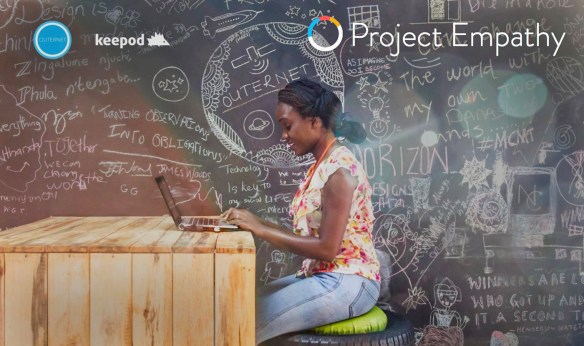
A lot of schools across the globe, especially in developing nations, don’t have computers with access to the internet. Project Empathy aims to address that issue by having classrooms with internet access participate in sharing knowledge with classrooms that don’t. Schools or classes willing to help can buy one of its kits, which are small devices equipped with a 64 GB microSD card, a Raspberry Pi, USB drives and other components. They then have to load the kit with content from the web, like Wikipedia articles or pages from NASA’s websites, that their recipients can tap into for their studies. The program was created by a startup called Outernet, which aims to provide developing nations free, one-way access to web pages via geostationary and Low Earth Orbit satellites. READ MORE: Project Empathy shares knowledge with unconnected schools | Engadget

Gregory Heyworth: How I’m discovering the secrets of ancient #texts | TED.com #historical #manuscripts #maps #libraries #tech #culture


Gregory Heyworth is a textual scientist; he and his lab work on new ways to read ancient manuscripts and maps using spectral imaging technology. In this fascinating talk, watch as Heyworth shines a light on lost history, deciphering texts that haven’t been read in thousands of years. How could these lost classics rewrite what we know about the past? Source: Gregory Heyworth: How I’m discovering the secrets of ancient texts | TED.com