Shanghai Metro offers passengers books to borrow | chinadaily.com.cn


Shanghai’s Metro Line 2 is turning a new page with a library taking literally an online approach.

Passengers will be able to select a book at one station, and return it to any of the other stations with customized bookshelves.

Readers do not have to pay a deposit or any rent for the books and magazines they take. Instead, they are encouraged to donate 1 yuan (16 US cents) to charity at the bookshelf.

“Now you can read a real book, rather than staring at the cellphone through the metro ride,” said Zou

Shuxian, a spokeswoman for the Aizhi bookstore, which initiated the project jointly with Hujiang.com and Shanghai Metro Line 2.

“This will encourage more people to read on the Metro and improve the atmosphere of the whole city,” said Chen Kuang, a spokesman with Shanghai No 2 Metro Co Ltd.

The Chinese Academy of Press and Publication released a survey recently that said the general public between the ages of 18 to 70 read 4.39 books in 2012, much fewer than in Western countries.

The program announced its official kickoff on Aug 18, after a trial operation over a period of months.

It has been a resounding success with office workers. Waiting lines have developed during rush hour.

“Most people returned the books after reading, and many left a coin for our charity initiative,” said a staff member for Aizhi at the Nanjing Road West Station.

“Even if some books are not returned, we believe the overall benefit is worthwhile,” another staff member surnamed Li said.

All the books have green tape on the cover to inform people about the program. “Also to remind people it is borrowed and should be returned,” Li said.

Hujiang.com, an online education provider, and Aizhi, a bookstore chain, joined hands to launch the project last year. It called on people to donate their used books to the 20 Aizhi bookstores at the metro stations.

The program allows Hujiang to publicize its educational program.

The public offered more than 100,000 books in eight months. Many were given to schools in less well-off areas. The rest, and magazines, were used for the program.

The trial operation began near office buildings in Zhangjiang, a high-tech park in Shanghai, and then expanded to the Metro.

“We also have a few shops along Metro Lines 3 and 4, and we hope to expand the service,” she said.

“It is a great idea to have books used rather than leaving them to gather dust,” said Yue Tingting, a PR official with Hujiang.

“You can’t force people to read by regulations, but it is sensible to encourage people to read,” said Huang Yuning, head of the literature department at Shanghai Translation Publishing House.

The digital age has seen book sales decline, but this shows there may be a twist in the tale, said Feng Tao, an editor and colleague of Huang.

In order to encourage more people to read, the General Administration of Press and Publication of China plans to issue a guideline promoting reading.

via Shanghai Metro offers passengers books to borrow | Society | chinadaily.com.cn.
40 maps that explain the world | Washington Post


Maps can be a remarkably powerful tool for understanding the world and how it works, but they show only what you ask them to. Some of these are pretty nerdy, but I think they’re no less fascinating and easily understandable. A majority are original to this blog (see our full maps coverage here), with others from a variety of sources.

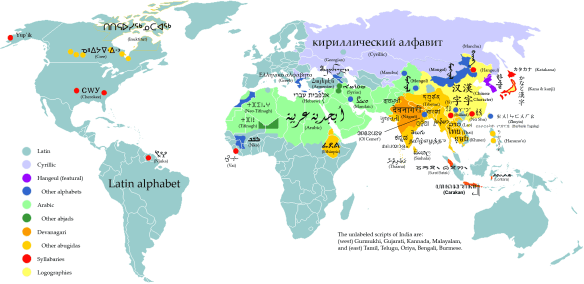
The world's major writing systems

Wikimedia Commons

via 40 maps that explain the world  | Washington Post.

You may also like: 40 Maps They Didn’t Teach You In School | Bored Panda

The 10 Hottest Fields of Science Research | Wired Science


Scientific research is a large and sprawling endeavor, with thousands of laboratories around the world studying their own ultra-specialized piece of a much more significant whole. It’s the logical intersection of reductionist scientific heritage and centuries of technological advances: in order to advance our understanding of the world around us, we must pursue increasingly specific sub-disciplines.

Which is why Thomson Reuters’ scene-scoping study on “100 Key Scientific Research Fronts” is a welcome report for science enthusiasts eager to stay updated on cutting-edge research but lacking the time to read every issue of Science or Nature cover-to-cover.

The list:

  1. Impact of Climate Change on Food Crops
  2. Tectonic Evolution of the Southern Central Asian Orogenic Belt
  3. Transcatheter Aortic Valve Implantation
  4. DNA Methylation Analysis and Missing Heritability
  5. Ocean Acidification and Marine Ecosystems
  6. Enhanced Visible Light Photocatalytic Hydrogen Production
  7. Alkali Doped Iron Selenide Superconductors
  8. Galileon Cosmology
  9. High Energy Rechargeable Lithium Air Batteries
  10. Urban Policy Mobilities and Global Governance Issues

via The 10 Hottest Fields of Science Research – Wired Science.

Links for Recent Pew Research News


Pew: 30% Of U.S. Adults Don’t Have Broadband; 10% Use Smartphones As Sole Internet Access; 20% Have Zilch | TechCrunch – August 26, 2013
Pew Research…releas[ed] the results of a survey that shows how one of the more advanced countries in the world, the U.S., is still not quite there in leading by example: 20% of U.S. adults are still without broadband or smartphones for internet access. And 3% of people in the country still using dial-up connections.

The below link is related the same Pew research results as the article above but provides discussion on a different perspective – the digital divide in America.  See the original Home Broadband 2013 Pew report – August 26, 2013.

Latest Pew Study Shows 70 Percent of U.S. Has Broadband. But Access Is Still Unequal | Wired.com – August 26, 2013
Pew’s results demonstrate that the digital divide is persistent, with close correlations between socioeconomic status and home Internet access. The report is also a reminder that policymakers use the words “high-speed broadband” to include everything other than dialup access, which is far too broad a definition.

Adult Trend Data | Pew Internet 
Latest data about device ownership by American adults up to end-May 2013.

Pew Study: More millennials are living with their parents than ever before | Stephen’s Lighthouse | August 22, 2013
According to a Pew poll, 36 percent of young adults are afflicted with Failure to Launch syndrome.

Teens say they generally rely on themselves to figure out how to manage their privacy online | Stephen’s Lighthouse – August 22, 2013
Teens say they generally rely on themselves to figure out how to manage their privacy online; Still, 70% of teens have at one time sought advice about how to manage their privacy online. See the Pew Internet report from August 15, 2013.

Teens and Mobile Apps Privacy | Pew Internet – August 22, 2013
As teens gain access to mobile devices, they have embraced app downloading. But many teen apps users have taken steps to uninstall or avoid apps over concern about their privacy. Location information is considered especially sensitive to teen girls, as a majority of them have disabled location tracking features on cell phones and in apps because they are worried about others’ access to that information.

Teens Haven’t Abandoned Facebook (Yet) | Pew Internet – August 15, 2013
When we released our “Teens, Social Media and Privacy” report in May, one thread of news coverage focused on teens’ “waning enthusiasm” for Facebook. This theme surfaced during our focus group discussions with teens and stood in contrast to the excitement that was associated with newer platforms like Instagram and Twitter.

50 Things a Geek Should Know [Infographic] | Gizmodo


To be considered a true geek in today’s geek friendly world, you can’t just be smart. You have to dedicate yourself to the right movies and TV shows. You have to be curious about all kinds of computer and technology. You need to know which video games to play, which superhero to root for, which quotes actually matter. But probably most important of all, you need to know how to Internet.

Virtualhosting.com came up with 50 things that every geek should know.

via 50 Things a Geek Should Know | Gizmodo.

The list of things could have been better. Come on…at the very least “knowing what rickrolling is” should have been included.

50 Things A Geek Should Know

Infonista | Alternative Jobs/Career Paths for Former School Librarians


The Wall Street Journal recently ran an article about the high (and increasing) number of public middle and high schools going without professional school librarians in the state of New York. Existing positions were being eliminated, new schools were being created without any librarians on staff. I started a discussion on the LIS Career Options LinkedIn group asking whether this was part of a broader trend across the country. The response: absolutely…

…Since school librarianship is the LIS discipline I know least well, I imagined that there might be many solid transferable skills that individuals could repurpose for new job opportunities. The response: not so much.”

See the full story: Infonista | Alternative Jobs/Career Paths for Former School Librarians.

Student Leadership: Time to get on Board! | Hack Library School


Here’s an MLIS student’s take on getting involved in leadership activities while completing a graduate program.

Student Leadership: Time to get on Board! | Hack Library School.

The Beginner’s Guide to the Cloud | Mashable


“The cloud” is one of those trendy tech terms a lot of people use but can’t clearly define. What is the cloud? When do you encounter it? How can it benefit your business?

If you use any kind of social media or online data drive, you’re already using the cloud; you just may not realize it.

In this beginner’s guide, we break down the who, what, where and why of one of tech’s most abstract terms.

via The Beginner’s Guide to the Cloud | Mashable.

Curious Brings Its “Learn Anything” Marketplace And Video Lesson Library To The iPad | TechCrunch


Perusing the Web, one quickly finds that learning platforms lean toward more academic subjects and mastery — online classes and courses — but what about more practical learning content and instruction? Sure, YouTube is rife with “how-to” videos, but separating the signal from the noise can take a lot of time.

It’s this problem (or opportunity) that led Justin Kitch to launch Curious back in May…Kitch saw an opportunity to capitalize on the rise of video-based education and offer curious minds, hobbyists and lifelong learners a place to peruse and find how-to content on any subject.

Like a combination of Skillshare and Udemy, Curious essentially aims to be a marketplace of how-to videos, allowing those experts and those who want to teach with those eager to learn from them…in a way that’s more targeted, navigable and interactive than YouTube.

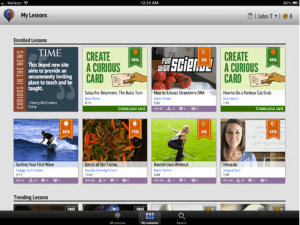
Curious for iPad and Curious on the web.

Curious

via Curious Brings Its “Learn Anything” Marketplace And Video Lesson Library To The iPad | TechCrunch.

This Database Lets You 3D Print and Explore Thousands of Fossils | Gizmodo


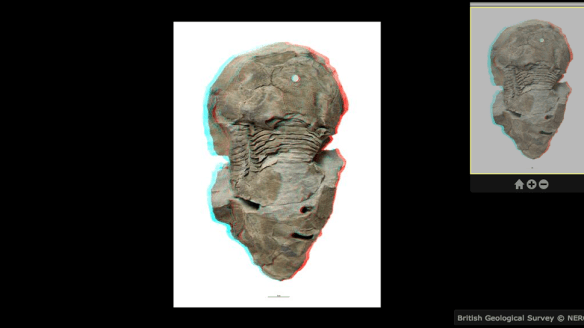
Fossils are three-dimensional objects, but you aren’t really supposed to touch them, and you can’t see their depth and detail very easily over the internet. But a new database of fossils from the British Geological Survey actually has the necessary files for you to 3D print fossils yourself.

The searchable database has thousands of images of fossils you can zoom in on, rotate, and interact with on your screen. And you can bring these old bones and artifacts into the physical realm too, thanks to downloadable .ply and .obj files you can use to 3D print them. You can search by period of time, type of fossil, species, genus, etc. to find all kinds of fossils.

BGS Fossil Database

via This Database Lets You 3D Print and Explore Thousands of Fossils | Gizmodo.