Two Never Before Seen Fairy Tales by the Grimm’s Favorite Folklorist | Flavorwire


In March of 2012, the Guardian announced a major literary and cultural discovery: more than 500 new fairy tales had been unearthed in Germany. The haul of stories was vast, impressively so. It contained in its pages a new world of enchanted animals, magic and romance, legend, otherworldly creatures, parables about nature, and wild exaggeration. But there was something else. These tales had been collecting dust in a bunch of old boxes for more than 150 years. This dating is significant: it confirms that the tales are roughly contemporaneous with those of the Brothers Grimm. To be sure, this was an historic and unprecedented discovery. The woman who made it, a cultural curator and folklorist named Erika Eichenseer, compared the collection to “buried treasure.”

But before Eichenseer found this treasure, before she undertook the truly invaluable work of reading, sorting, and transcribing these tales, she had to discover them in a municipal archive in Regensburg, Germany. And before they were placed in this archive, they were the property of one Franz Xaver von Schönwerth, a high-ranking government official and amateur folklorist of the mid-nineteenth century, who, inspired by the Brothers Grimm, took it upon himself to travel around the Upper Palatinate region of Bavaria, to collect and interview and record the stories he heard from the people there. Schönwerth’s hard work did not go unnoticed. Jacob Grimm, in 1885, declared that “Nowhere in the whole of Germany is anyone collecting [folklore] so accurately, thoroughly and with such a sensitive ear.”

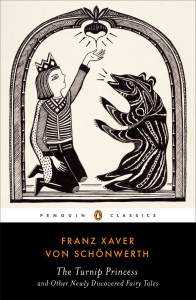
The fruits of this labor of love, of Schönwerth’s (and later Eichenseer’s) hard work, have now been expertly translated, introduced, and commented upon by Maria Tatar in a volume titled The Turnip Princess and Other Newly Discovered Fairy Tales.

READ EXCERPTS: Two Never Before Seen Fairy Tales by the Grimm’s Favorite Folklorist | Flavorwire

Beyond History Books: Trove of Rosa Parks Memorabilia Opens to Public for First Time | Mashable


Rosa Parks was more than just the woman who refused to give up her seat on a segregated bus in 1955. Letters and photos that belonged to the civil rights activist offer new insights into her complexities. Parks legacy has been somewhat simplified by the history books.

Her archive goes on display for the first time on [February 4, 2015] at the Library of Congress, after long legal disputes hid the documents from public view for years. Researchers and the public will have full access to Parks archive of letters, writings, personal notes and photographs for the first time. About 7,500 manuscript items and 2,500 photographs from the civil rights activist, including a pocket-sized Bible, letters from admirers and her Presidential Medal of Freedom, are part of the collection.

READ MORE: Beyond history books: Trove of Rosa Parks memorabilia opens to public for first time | Mashable

X-ray Reveals the Secrets of Burned Vesuvius Scrolls | CNET


Scrolls that were damaged, but not destroyed, in the eruption of Mount Vesuvius may now be read for the first time in nearly two millennia.

READ MORE: X-ray reveals the secrets of burned Vesuvius scrolls | CNET

How An Octogenarian Preserved An Endangered Native American Language | Gizmodo


Marie Wilcox is the last fluent speaker of Wukchumni, one of 130 different endangered Native American languages in the United States that dont have any kind of digital—or analog—legacy.

Over the course of seven years in Californias San Joaquin Valley, she worked with her daughter and grandson to catalog everything she knows about the language. First, she hand-scrawled memories on scraps of paper; then, she hunt-and-pecked on an old keyboard to complete a dictionary and type out legends like “How We Got Our Hands.” Next, she recorded the whole thing on audio for pronunciation—its very specific!—and posterity.

via How An Octogenarian Preserved An Endangered Native American Language | Gizmodo

Definitely recommend watching the video. I am in awe of Marie’s dedication to preserving the Wukchumni language. Amazing, inspiring story!

Library of Congress to Receive Hundreds of Rosa Parks Personal Items | Jezebel


Memorabilia and personal items belonging to late civil rights activist Rosa Parks are set to go on display at the Library of Congress.

READ MORE: Library of Congress to Receive Hundreds of Rosa Parks Personal Items | Jezebel

Sure I could have chosen one of the more conventional blogs to repost this news from but I really appreciate the Jezebel POV (general interest women’s website). It’s worth your time checking out. Of all the blogs I follow, Jezebel is the one that provides the most insightful, critical, controversial…and entertaining…commentary. The authors at Jezebel provide a much needed female perspective on current issues, social and cultural events, fashion, technology, etc. Warning content is highly opinionated and at times NSFW. Grab the Jezebel RSS here.

British Library gives teachers tools to inspire | Books | The Observer


Discovering Literature: Romantics and Victorians from British Library Learning on Vimeo.

While Discovering Literature is an important cultural resource that can be enjoyed by all ages, it has been carefully tailored to appeal to GCSE and A-level students. The British Library’s research among teachers showed that original manuscripts, with their edits and revisions, dodgy grammar and messy handwriting, can be a powerful way of engaging pupils. Contextual material can also be a source of inspiration, and the site is packed with items such as letters, diaries, dictionaries, newspapers and illustrations that illuminate the historical, social and political contexts of classic works.

READ MORE: British Library gives teachers tools to inspire | Books | The Observer.

See Also: The British Library Launches New Online Collection of 1,200 Romantic and Victorian Literary Treasures | InfoDocket

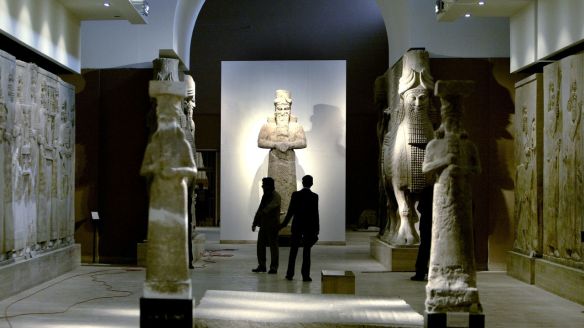
National Museum Of Iraq Reopens As ISIS Threat Casts Dark Shadow | Co.Design


National Museum Of Iraq Reopens As ISIS Threat Casts Dark Shadow | Co.Design | business + design

ISIS, the Sunni militant group wreaking violent havoc in Syria and Iraq, is fast extending its reach, claiming Iraqi cities as far southward as Ramadi. That dark shadow didn’t stop Iraqis in nearby Baghdad, 80 miles to the southeast, from turning out in droves last week for the re-opening of the National Museum of Iraq, closed for over a decade. According to Reuters, the museum was “packed with visitors eager to glimpse relics from happier times.”

READ MORE: National Museum Of Iraq Reopens As ISIS Threat Casts Dark Shadow | Co.Design

Museums And Heritage Sites In Syria Are Under Siege | Co.Design


Museums And Heritage Sites In Syria Are Under Siege | Co.Design | business + design

The civil war devastating Syria and spilling into Iraq has claimed yet another casualty: museums and cultural heritage sites. As evidence of destruction mounts, the international community is moving to action…

…To minimize the damage, U.S. museums are partnering with the Syrian Interim Government’s Heritage Task Force to train local curators and civilians in emergency packing and other practices designed to safeguard cultural treasures.

READ MORE: Museums And Heritage Sites In Syria Are Under Siege | Co.Design | business + design.

These scorpions are probably hiding in your bookcase | SPLOID


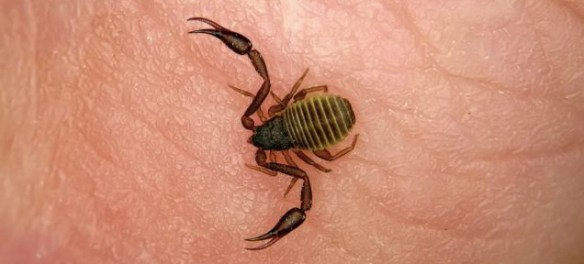
If you have old vintage books, you may have some book scorpions in your bookcase. Actually, you really should want to have them, even if they look scary and gross. Book scorpions protect your old books—they love to munch on the book lice that eat the glue which holds old books together.

A book scorpion or pseudoscorpion is not a true scorpion, hence its name. Theyre often mistaken for bedbugs, in fact, causing many people to kill them, which is obviously a big mistake for your collection of vintage encyclopedias. A book scorpion is also very tiny—too tiny to hurt you, so dont worry about being pinched when you pull out your original signed copy of The Metamorphosis.

READ MORE: These scorpions are probably hiding in your bookcase | SPLOID

The Library of Congress is wrecking CDs to learn how to save them | Engadget


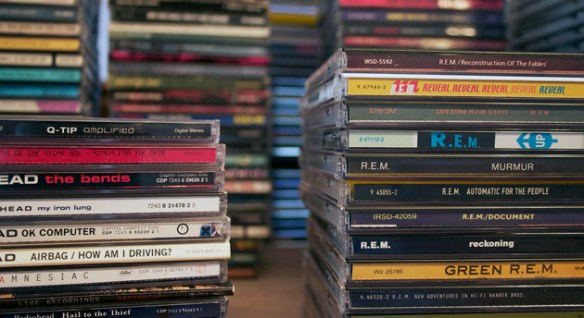
Like it or not, CDs rot over time — your well-worn copy of Soundgarden’s Superunknown might not play anymore. Just how they rot is frequently a mystery, though, which is why the Library of Congress is currently destroying CDs (including those you donate) in hopes of improving its archival techniques. Researchers are using a combination of artificial aging tests and simple observations to see what factors trigger decay, sometimes with surprising results. As the Library tells The Atlantic, data loss varies widely between manufacturing processes, the lasers in CD players and even individual discs; experimenters can subject two identical copies of an album to extreme heat and lose only one of them.

Read More: The Library of Congress is wrecking CDs to learn how to save them | Engadget