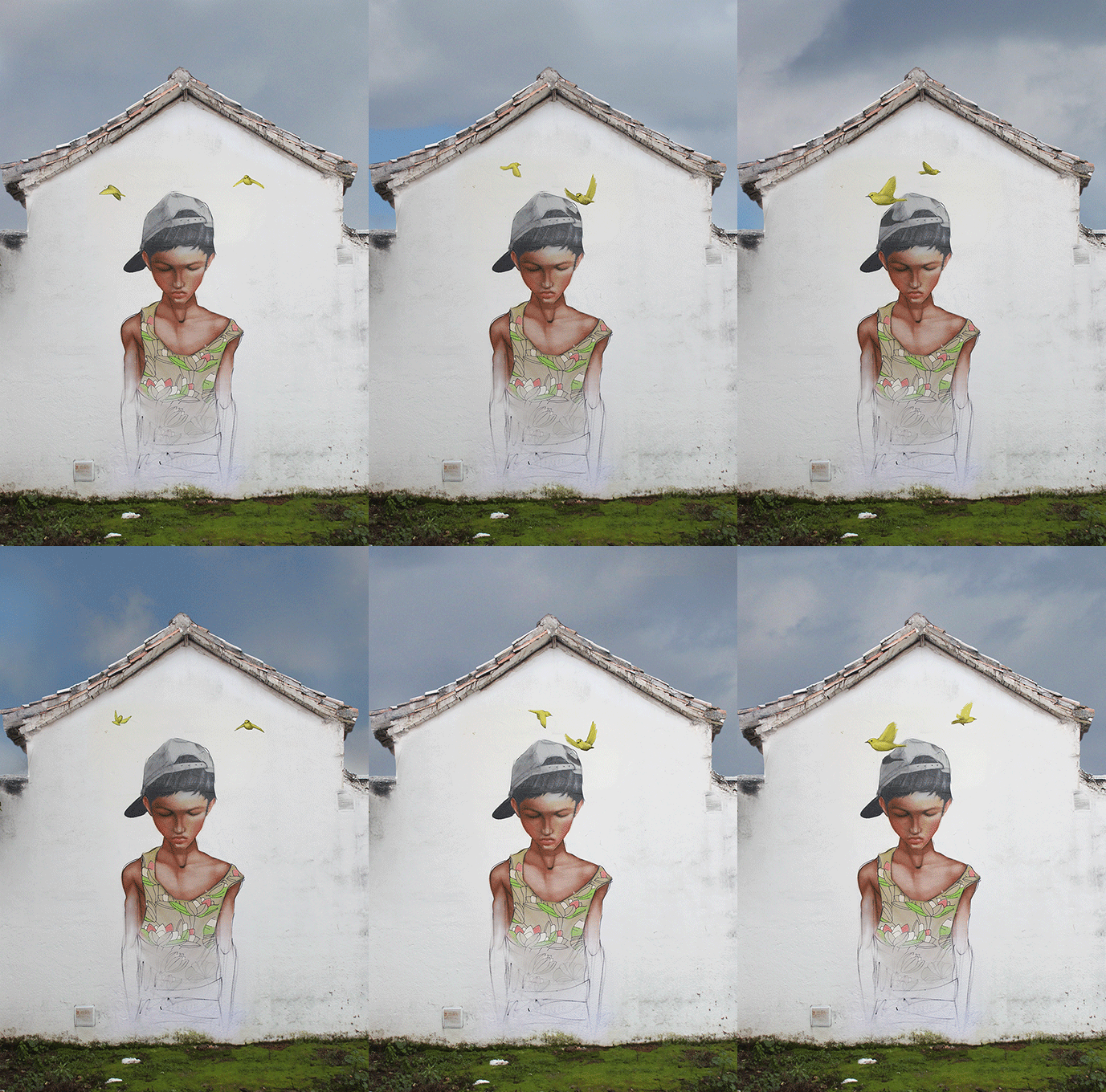
Google Puts Online 10,000 Works of Street Art from Across the Globe | Open Culture


Circling Birdies by Cheko, Granada Spain

Since last we wrote, Google Street Art has doubled its online archive by adding some 5,000 images, bringing the tally to 10,000, with coordinates pinpointing exact locations on all five continents (though as of this writing, things are a bit thin on the ground in Africa). Given the temporal realities of outdoor, guerrilla art, pilgrims may arrive to find a blank canvas where graffiti once flourished.

A major aim of the project is virtual preservation. As with performance art, documentation is key. Not all of the work can be attributed, but click on an image to see what is known. Guided tours to neighborhoods rich with street art allow armchair travelers to experience the work, and interviews with the artists dispel any number of stereotypes. READ MORE: Google Puts Online 10,000 Works of Street Art from Across the Globe | Open Culture.
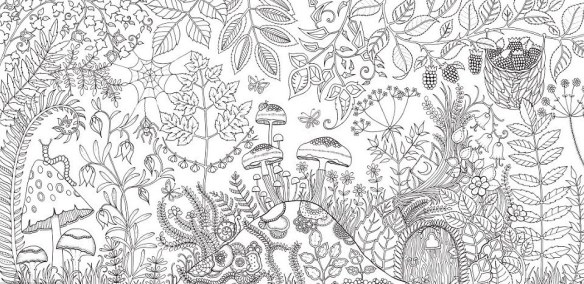
Meet The Woman Who Sold A Million Copies Of Her Coloring Books For Adults | BuzzFeed


Johanna Basford’s first adult coloring book, Secret Garden, was translated into 14 languages, outselling the most popular cookbook in Paris. “I think everyone has a creative spark; they just need the opportunity to let it flourish,” she said. READ MORE: Meet The Woman Who Sold A Million Copies Of Her Coloring Books For Adults | BuzzFeed

Versal Helps Teachers Create Interactive Online Lessons, Partners With Wolfram Alpha | TechCrunch


Versal is a service that allows teachers to build and publish interactive online courses, homework assignments and tutorials. The company launched its service out of beta [March 4, 2015], but maybe more importantly, it also announced a partnership with Wolfram Research. Thanks to this deal with Wolfram Research — which includes Stephen Wolfram joining the Versal board of directors — Versal now allows teachers to embed content from Wolfram into their courses.

READ MORE: Versal Helps Teachers Create Interactive Online Lessons, Partners With Wolfram Alpha | TechCrunch

Artist Takes Old Books and Gives Them New Life as Intricate Sculptures | Open Culture


New York-based artist Brian Dettmer cuts into old books with X-ACTO knives and turns them into remixed works of art. Speaking at TED Youth last November, he told the audience, “I think of my work as sort of a remix …. because I’m working with somebody else’s material in the same way that a D.J. might be working with somebody else’s music.” “I carve into the surface of the book, and I’m not moving or adding anything. I’m just carving around whatever I find interesting. So everything you see within the finished piece is exactly where it was in the book before I began.”

READ MORE: Artist Takes Old Books and Gives Them New Life as Intricate Sculptures | Open Culture.

Google Cardboard Is The Right Virtual-Reality Gadget For Right Now. But What’s Next? | Fast Company


I’d like to try the Cardboard experience to compare to the Oculus Rift. I tried OR at Netspeed 2014, experiencing an under water universe (boring with unwieldy navigation) and a roller coaster (exciting; definitely created a unique, visceral experience that made me want to puke my guts out after). Looking forward to more virtual reality experiences as the tech and devices evolve.

Google Cardboard Is The Right Virtual-Reality Gadget For Right Now. But Whats Next? | Fast Company | Business + Innovation

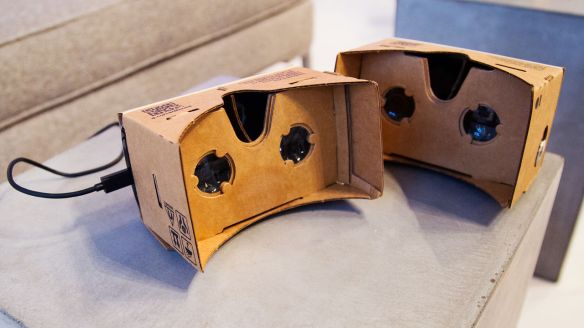
Google Cardboard has come a long way since Android honcho Sundar Pichai introduced it with a sheepish grin six months ago. The smartphone virtual reality viewer, made from folded-up cardboard with a pair of attached lenses—you supply an Android phone to provide computing power and a display—has shipped more than 500,000 units as of early December. (You can build your own Cardboard, or buy a ready-made version from not-quite-official sources for under $30.) Google has now added a Play Store showcase for the best Cardboard apps, and released a software development kit to spur even more VR app creation.

For a project that took mere weeks to throw together, Cardboard has done surprisingly well. But its success also puts it in an awkward position, somewhere between the oddball project that Cardboard appeared to be back in June and the serious business that prompted Facebooks $2 billion acquisition of Oculus VR in February. As virtual reality matures, is Cardboard prepared to mature with it?

READ MORE: Google Cardboard Is The Right Virtual-Reality Gadget For Right Now. But What’s Next? | Fast Company | Business + Innovation.

Indulge Your Inner Child and Lose a Few Hours To This Online Spirograph | Gizmodo


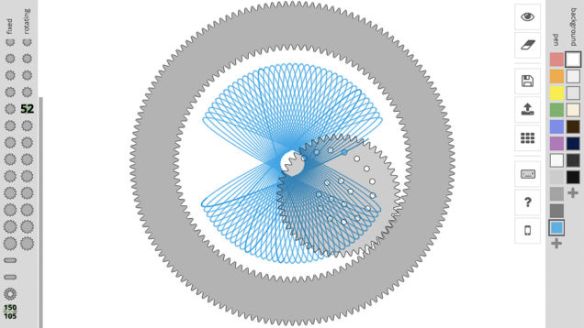
We’ve got computer graphics software thats so powerful it can generate images that make it seem like dinosaurs are back. But they still cant compare to the simple satisfaction you get from making a really complex hypotrochoid or epitrochoid with a marker and some perforated gears. So Nathan Friend was kind enough to build a browser-based Spirograph youre probably going to want to immediately bookmark.

The online Inspirograph, as Nathan calls it, lets you swap in gears of different sizes and choose pretty much any color your computers screen can display. And while you dont get that highly satisfying feeling of pen on paper as you make endless loops, its impossible to screw up your design on this version, unless you accidentally refresh the page.

via Indulge Your Inner Child and Lose a Few Hours To This Online Spirograph | Gizmodo

The Natural Moss on This Wooden Bookcase Is Preserved Forever in Resin | Gizmodo


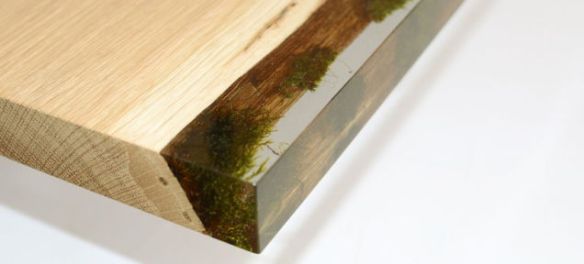
Your usual piece of wooden furniture—cut, sanded, painted— bears little resemblance to the tree it came from. So to create the Undergrowth bookcase, Italian design duo Alcarol deliberately took the opposite tack, preserving the unhewn edges of their lumber—moss and lichen and all.

The oak wood itself comes from logs found in the undergrowth of the Dolomite mountains in Italy. Once cut into planks, the woods natural mossy edges were cast in resin, a technique often used to make moss jewelry. Alcarol then stacked three planks together to create a bookcase, each shelf decorated with what looks like a tiny terrarium.

MORE PICS: The Natural Moss on This Wooden Bookcase Is Preserved Forever in Resin | Gizmodo

10 free tools for creating infographics | Creative Bloq


For all the importance we place on text, its an indisputable fact that images are processed in the brain faster than words. Hence the rise and rise of the infographic which, at its best, transforms complex information into graphics that are both easy to grasp and visually appealing. The only problem is, infographics that look like they were simple to make are often anything but. Creating something beautiful and instantly understandable in Photoshop is often beyond the limits that time allows. Which is why its occasionally useful to use a quick and dirty infographics tool to speed up the process. We’ve selected our favourites here. They’re all free, or offer free versions.

READ: 10 free tools for creating infographics | Infographic | Creative Bloq.

24 Of Designs Most Important Principles, Animated | Co.Design


Although not anyone can be a designer, everyone who wants to can learn the elements of visual design: contrast, transparency, hierarchy, randomness, and so on. In fact, it doesnt even take all that long. Just watch this 50-second video. Animated by Toronto-based art director and motion designer Matt Greenwood, this video walks you through 24 of the most important visual design principles, ranging from rhythm to texture to color. It wont teach you everything you need to know to be a designer, but its a good start.

via 24 Of Designs Most Important Principles, Animated | Co.Design | business + design

The Genesis of Genius [Bronte Mini Books] | Harvard Gazette


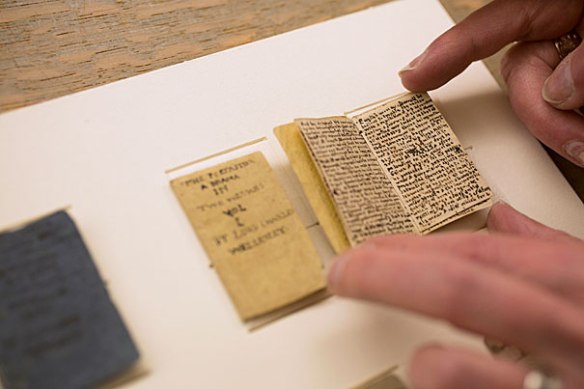
Flames of childhood passion often die. How many astronauts and ballerinas are among us? Yet some talent is so profound that even early efforts signify genius. The tiny, hand-lettered, hand-bound books Charlotte and Branwell Brontë made as children surely qualify. Measuring about 2.5 by 5 centimeters, page after mini-page brims with poems, stories, songs, illustrations, maps, building plans, and dialogue. The books, lettered in minuscule, even script, tell of the “Glass Town Confederacy,” a fictional world the siblings created for and around Branwell’s toy soldiers, which were both the protagonists of and audience for the little books.

READ MORE: The genesis of genius | Harvard Gazette.