
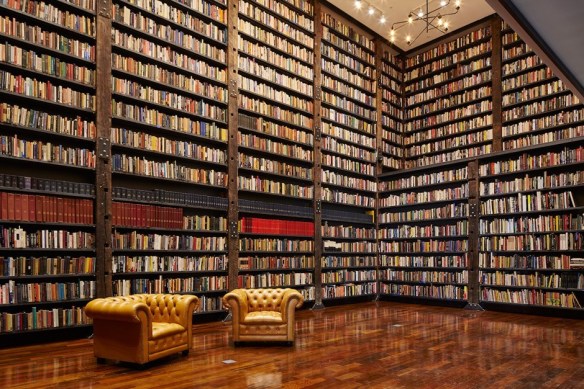
Chicago Artist Theaster Gates and the Stony Island #Art Bank | CityLab #crowdfunding #community #buildings #historic #archives


Chicago’s first-ever Architecture Biennial served as a staging ground for wild pavilions, exhibits, and installations. The fair also coincided with the debut of a major new artwork: the Stony Island Art Bank. Theaster Gates bought the Prohibition-era Stony Island Trust & Savings Bank building from the city of Chicago for $1. Yes, there was a catch: The artist had to raise the $3.7 million it would take to rehabilitate the building and put it to new use. Gates did the thing that you’re never supposed to do with a historic building: He started pulling it apart, piece by piece. READ MORE: Chicago Artist Theaster Gates and the Stony Island Art Bank | CityLab

I Love the #Victorian #Era. So I Decided to Live In It. | Vox #research #studies #culture #society #historians #OffGrid #lifestyle


My husband and I study history, specifically the late Victorian era of the 1880s and ’90s. Our methods are quite different from those of academics. Everything in our daily life is connected to our period of study, from the technologies we use to the ways we interact with the world. READ MORE: I love the Victorian era. So I decided to live in it. | Vox

You May Also Like:  

How #Autistic People Helped Shape the Modern World | WIRED #autism #learning #disabilities


THE CENTERS FOR Disease Control and Prevention estimates that one in 68 children in the US are on the autism spectrum, a number that stands in staggering contrast to a 1970 study that put the figure at one in 14,200. Some people believe we’re in the middle of an autism epidemic. But autism has always been part of the human experience, as journalist (and WIRED contributor) Steve Silberman shows in his new book, NeuroTribes: The Legacy of Autism and the Future of Neurodiversity. It’s only recently, he argues, that we have become properly aware of it. We spoke to Silberman about how the modern world came to recognize autistic people and how autistic people helped shape the modern world. READ MORE: How Autistic People Helped Shape the Modern World | WIRED.

You May Also Like:

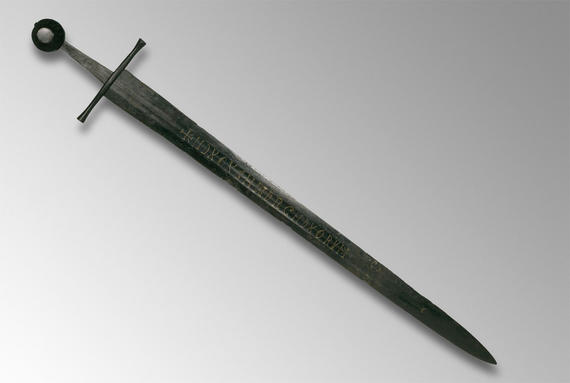
British Library Asks for Help Deciphering Medieval Sword | CNET #libraries #museums #language


Image Credit: The British Library

A sword on display at the British Library has an 800-year-old mystery engraved on its blade. Dating back to between 1250 and 1330 AD, the sword was discovered in the east of England, in the River Witham near Lincoln, in the 19th century. The sword is a particularly fine double-edged steel weapon of English design. It was most likely forged in Germany and belonged to a wealthy man or a knight.


The hilt is cross-shaped, which is normal for swords from this period of the Middle Ages, and is heavy enough to have cloven a man’s head in twain if swung with sufficient strength.

But the sword, on loan to the library from the British Museum, does have a couple of highly unusual features. Down the centre of the blade, it has two grooves known as fullers, where most blades only have one. On one side, it also bears an inscription:

+NDXOXCHWDRGHDXORVI+

It’s not the presence of the inscription that has researchers nonplussed, but its content: Experts don’t know what the inscription means. READ MORE: British Library asks for help deciphering a medieval sword | CNET.

#Sex Talk in #Literature: How It’s Changed Over 200 Years | Flavorwire #books #research


Sex Talk in Literature: How It’s Changed Over 200 Years | Flavorwire

A British health website, DrEd.com, delved into the entire corpus of literature, both fiction and nonfiction, to explore the way certain words having to do with “venereal” matters have appeared, faded, or been associated with new companion words over the last two centuries. READ MORE: Sex Talk in Literature: How It’s Changed Over 200 Years | Flavorwire.

Student Finds Old Parchment In University Library, Turns Out It’s Probably The World’s Oldest Quran | HuffPost #Quran #libraries #artifacts #religion


http://embed.live.huffingtonpost.com/HPLEmbedPlayer/?segmentId=55aff7fd02a76081990002ef&autoPlay=false
A Ph.D. student who stumbled upon several ancient pieces of paper hidden in another book may have inadvertently discovered pages from the world’s oldest Quran, researchers at the University of Birmingham in England announced Wednesday.

Radiocarbon dating estimates the pages, likely made of sheep or goat skin, are 1,370 years old, the BBC reports. The testing is more than 95 percent accurate, meaning the parchment is probably from the era of Prophet Muhammad, who is thought to have lived between the years 570 and 632. READ MORE: Student Finds Old Parchment In University Library, Turns Out It’s Probably The World’s Oldest Quran | Huffington Post.

How a Museum Restores a Beautiful Painting from Hundreds of Years Ago | SPLOID #art #paintings #museums #restorations


Charles Le Brun’s painting of Everhard Jabach and His Family was finished in 1660. Now that it’s 2015 and hanging in the Metropolitan Museum of Art, my favorite museum in New York, it was in need of a little bit of, um, reviving. The Met guides us through as it restores the giant piece of art and shows the steps the artwork needed to shine again. READ MORE: How a museum restores a beautiful painting from hundreds of years ago | SPLOID

African American Family Records from Era of Slavery to Be Available Free Online | The Guardian #genealogy #archives


Millions of African Americans will soon be able to trace their families through the era of slavery, some to the countries from which their ancestors were snatched, thanks to a new and free online service that is digitizing a huge cache of federal records for the first time.

Handwritten records collecting information on newly freed slaves that were compiled just after the civil war will be available for easy searches through a new website, it was announced on Friday.

The records belong to the Freedmen’s Bureau, an administrative body created by Congress in 1865 to assist slaves in 15 states and the District of Columbia transition into free citizenship. READ MORE: African American family records from era of slavery to be available free online | Life and style | The Guardian.

Feast Your Eyes on This Beautiful Linguistic Family Tree | Mental Floss #languages #linguistics


When linguists talk about the historical relationship between languages, they use a tree metaphor. An ancient source (say, Indo-European) has various branches (e.g., Romance, Germanic), which themselves have branches (West Germanic, North Germanic), which feed into specific languages (Swedish, Danish, Norwegian). Lessons on language families are often illustrated with a simple tree diagram that has all the information but lacks imagination. There’s no reason linguistics has to be so visually uninspiring. Minna Sundberg, creator of the webcomic Stand Still. Stay Silent, a story set in a lushly imagined post-apocalyptic Nordic world, has drawn the antidote to the boring linguistic tree diagram.

READ MORE: Feast Your Eyes on This Beautiful Linguistic Family Tree | Mental Floss.

Why Do Presidents Get Their Own #Libraries? | Atlas Obscura #POTUS #museums


In May, the Obama Foundation announced that Chicago will be the future location of the Barack Obama Presidential Center, which will include a library and museum. The center will become the 14th institution in the National Archives and Records Administration’s presidential library system, which includes centers dedicated to all presidents from Herbert Hoover onwards.

Over the years, millions of public and private dollars and ostensibly, man hours, have been spent curating these institutions. Which begs the question: why?

Franklin D. Roosevelt began this tradition when, in 1939, he decided to hand over his personal and presidential records to the federal government when leaving office. Two years later, the Franklin D. Roosevelt Presidential Library and Museum was built in Hyde Park, New York to house these records. READ MORE: Why Do Presidents Get Their Own Libraries? | Atlas Obscura.