Great Web Tools | edtechteacher.org


In order to help educators integrate technology effectively, we have compiled a list of technology tools focused on learning goals consistent with the CRCD [collect-relate-create-donate] framework. Unlike other lists that promote “cool tools,” yet leave teachers wondering about purposeful educational integration, our list is driven by specific learning goals that promote critical-thinking, creativity, collaboration, and community-mindedness. We hope you will find our list useful.

What are your Learning Goals?

  1. I want my students to be able to create web based timelines.
  2. I want my students to create web based mind maps / graphic organizers.
  3. I want my students to publish their writing online for others to read.
  4. I want real-time, online discussion with my students.
  5. I want my students to search and evaluate web sites.
  6. I want to create guided research activities for my students.
  7. I want to connect my students to other students around the world.
  8. I want my students to create online portfolios.
  9. I want my students to create books, magazines, posters, or newsletters online.
  10. I want my students to record or edit audio.
  11. I want to use an interactive whiteboard effectively with my students.
  12. I want my students to create and edit maps.
  13. I want my students to draw or create comics on the Internet.
  14. I want to create tests, quizzes, and games online.
  15. I want my students to organize, bookmark and edit their research online.
  16. I want to find or create rubrics for multimedia projects.
  17. I want to connect to other teachers to share ideas and resources.

A comprehensive resource recommending a variety of tech according to each learning goal, as listed above. This is also a great resource for anyone looking for unique tech tools related to the activities listed.

techtools

via Great Web Tools | edtechteacher.org.

Links for Recent Pew Research News


Pew: 30% Of U.S. Adults Don’t Have Broadband; 10% Use Smartphones As Sole Internet Access; 20% Have Zilch | TechCrunch – August 26, 2013
Pew Research…releas[ed] the results of a survey that shows how one of the more advanced countries in the world, the U.S., is still not quite there in leading by example: 20% of U.S. adults are still without broadband or smartphones for internet access. And 3% of people in the country still using dial-up connections.

The below link is related the same Pew research results as the article above but provides discussion on a different perspective – the digital divide in America.  See the original Home Broadband 2013 Pew report – August 26, 2013.

Latest Pew Study Shows 70 Percent of U.S. Has Broadband. But Access Is Still Unequal | Wired.com – August 26, 2013
Pew’s results demonstrate that the digital divide is persistent, with close correlations between socioeconomic status and home Internet access. The report is also a reminder that policymakers use the words “high-speed broadband” to include everything other than dialup access, which is far too broad a definition.

Adult Trend Data | Pew Internet 
Latest data about device ownership by American adults up to end-May 2013.

Pew Study: More millennials are living with their parents than ever before | Stephen’s Lighthouse | August 22, 2013
According to a Pew poll, 36 percent of young adults are afflicted with Failure to Launch syndrome.

Teens say they generally rely on themselves to figure out how to manage their privacy online | Stephen’s Lighthouse – August 22, 2013
Teens say they generally rely on themselves to figure out how to manage their privacy online; Still, 70% of teens have at one time sought advice about how to manage their privacy online. See the Pew Internet report from August 15, 2013.

Teens and Mobile Apps Privacy | Pew Internet – August 22, 2013
As teens gain access to mobile devices, they have embraced app downloading. But many teen apps users have taken steps to uninstall or avoid apps over concern about their privacy. Location information is considered especially sensitive to teen girls, as a majority of them have disabled location tracking features on cell phones and in apps because they are worried about others’ access to that information.

Teens Haven’t Abandoned Facebook (Yet) | Pew Internet – August 15, 2013
When we released our “Teens, Social Media and Privacy” report in May, one thread of news coverage focused on teens’ “waning enthusiasm” for Facebook. This theme surfaced during our focus group discussions with teens and stood in contrast to the excitement that was associated with newer platforms like Instagram and Twitter.

Announcing National Learn to Code Day! | Ladies Learning Code


Ladies Learning Code is excited to announce our latest initiative designed to promote technology education in Canada: National Learn to Code Day!

On September 21, 2013 over 450 learners across Canada will attend simultaneous HTML & CSS workshops in nine cities across the country, plus hundreds more will join us for our first-ever online workshop! Learn more about our adult in-person and online Code Day workshops here, and more about our Kids Learning Code National “Learn to Code” Day workshops here.

via Announcing National Learn to Code Day! | Ladies Learning Code.

Ladies Learning to Code

Mapping Creative Spaces Around The World | Co.Exist


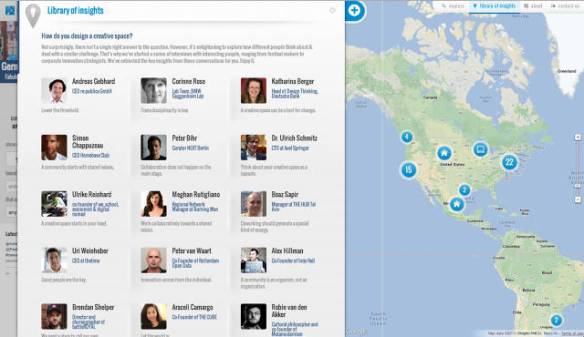
If you’re looking for a creative space–a place to work that truly fosters collaboration, a place to learn new skills, a community of like-minded artists and entrepreneurs–you probably look on Yelp or do a Google search. That won’t yield much. These spaces are scattered across Yelp categories, and a Google search for “creative spaces” shows just a smattering of local spots. That’s what Berlin-based consulting studio ignore gravity discovered while researching creative spaces around the world.

So the studio pulled together data on hundreds of creative spaces and presented them in the Creative Space Explorer, a tool that lets users pinpoint creative spaces on a global map–and add their own. ” We define ‘creative space’ as an enviro that consciously is set up to trigger collaboration in a creative way,'” explains Max Krüger, one of the creators of Creative Space Explorer.

See the full article: Mapping Creative Spaces Around The World | Co.Exist | ideas + impact.

Mapping Creative Spaces Around The World | Co.Exist | ideas + impact

Free e-book: Hanging Out, Messing Around, Geeking Out| Tame The Web


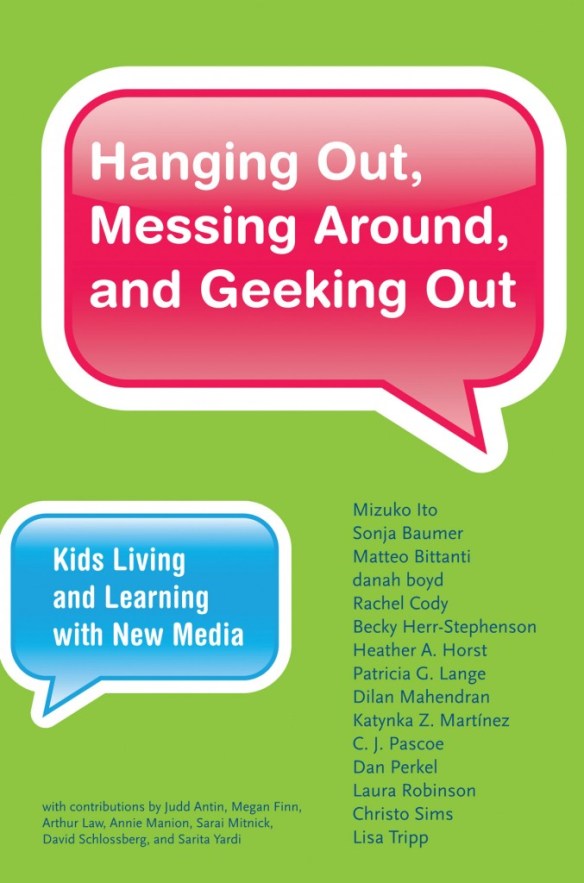
Free e-book: Hanging Out, Messing Around, Geeking Out | Tame The Web

Full title: Hanging Out, Messing Around, Geeking Out: Kids Living and Learning New Media.

From the series forward: This book series is founded upon the working hypothesis that those immersed in new digital tools and networks are engaged in an unprecedented exploration of language, games, social interaction, problem solving, and self-directed activity that leads to diverse forms of learning. These diverse forms of learning are reflected in expressions of identity, how individuals express independence and creativity, and in their ability to learn, exercise judgment, and think systematically.

Direct link to the pdf here.

Hanging Out, Messing Around, Geeking Out

The Science Behind How We Learn New Skills | LifeHacker


Learning new skills is one of the best ways to make yourself both marketable and happy, but actually doing so isn’t as easy as it sounds. The science behind how we learn is the foundation for teaching yourself new skills. Here’s what we know about learning a new skill.

See the full article: The Science Behind How We Learn New Skills | LifeHacker.

Five [Six] Free Online Tools to Learn Another Language | Gizmodo


Five [Six] Free Online Tools to Learn Another Language | Gizmodo

  1. LiveMocha
  2. FSI Language Courses
  3. Duolingo
  4. Internet Polyglot
  5. Lang-8

See also: LaMP Teaches You a Foreign Language via Movie and YouTube Subtitles | LifeHacker. LaMP can be installed on Windows computers or accessed online.

Taking Embedded Librarianship To the Next Level | ALA TechSource


Taking Embedded Librarianship To the Next Level | ALA TechSource

A Computer To Teach You Not To Act Like A Computer | Co.Exist


Technology enthusiasts who spend their days playing with computers and robots often have the amount of social graces of the machines they’re programming. So it’s either a brilliant or incredibly off-base intervention that an MIT graduate student has designed computer software to attempt to teach the socially-maladjusted how to be more sociable, via a Siri-like virtual conversation coach.

The program, called My Automated Conversation Coach (MACH), “uses a computer-generated onscreen face, along with facial, speech, and behavior analysis and synthesis software, to simulate face-to-face conversations,” according to a press release. “It then provides users with feedback on their interactions,” for example, how good was their eye contact, which words did they emphasize, how did their voice rise and fall.

via A Computer To Teach You Not To Act Like A Computer | Co.Exist: World changing ideas and innovation.

Joyce Valenza’s Picks from the Top 25 Websites for Teaching and Learning | The Digital Shift


Teacher librarian Joyce Valenza reflects on the 2013 Best Websites for Teaching & Learning, the highly anticipated list chosen annually by the American Association of School Librarians (AASL).

See the complete post: Joyce Valenza’s Picks from the Top 25 Websites for Teaching and Learning | The Digital Shift.