Jaron Lanier Discusses Big Data, Privacy at NYPL LIVE Event | The Digital Shift


The original developers of network technology wanted to democratize access to information, but while networks have succeeded in improving access, the ways in which governments and corporations are now gathering and using personal data has been an unfortunate consequence, argued author and computer science pioneer Jaron Lanier during a LIVE from the New York Public Library (NYPL) event on October 10. In a wide-ranging interview with NYPL’s Director of Public Programs Paul Holdengräber, Lanier also discussed the role that libraries play as people find it increasingly difficult to keep information about themselves private.

Read the full story: Jaron Lanier Discusses Big Data, Privacy at NYPL LIVE Event | The Digital Shift.
Gates, Zuck, Dorsey chip in to teach 10M students coding | CNET News


While computer programming and coding are becoming more common K-12 class options, these subject matters are still a mystery to many students. A nonprofit called Code.org is trying to change that by enlisting a star-studded entourage of techies to help with its new “Hour of Code” campaign.

The goal of Hour of Code is to introduce computer programming to 10 million K-12 students in the US during Computer Science Education Week. The event happens December 9 to 15[, 2013].

Joining the cause are several individuals, such as long-time philanthropist Microsoft Chairman Bill Gates, Facebook CEO Mark Zuckerberg, Twitter co-founder Jack Dorsey, and LinkedIn co-founder Reid Hoffman. Companies are also supporting the initiative, including Google, Microsoft, Amazon, Apple, Yahoo, and others.

via Gates, Zuck, Dorsey chip in to teach 10M students coding | Internet & Media | CNET News

Also See: Gates, Zuckerberg Back Code.org’s Mission To Bring Computer Science To Every School | FastCompany

Technology Adoption by Lower Income Populations | Pew Research Center


Aaron Smith, Senior Researcher at the Pew Research Center’s Internet Project, discusses the Project’s latest research about internet usage, broadband adoption, and the impact of mobile connectivity among lower-income populations.

The Future Of Storytelling Is About To Get Wild | ReadWrite


Many of us go about our lives constantly surrounded by screens, immersed in various “stories”: movies, TV shows, books, plot-driven video games, news articles, advertising, and more. Whether we realize it or not, we’re creating new behaviors, routines, mindsets, and expectations around what we watch, read or play—which in turn presents new challenges and opportunities for creators and marketers.

In other words, while the fundamentals of good storytelling remain the same, technology is changing how stories can be told. But what does that mean exactly?

Since last year, Latitude, a strategic insights consultancy, has been conducting an ongoing Future of Storytelling initiative to understand what audiences want for the long haul. Below are eight predictions for the future of storytelling based on what we found. (More information about Latitude’s multi-phase research project is available here.)

  1. Stories Come Out Of The Screen, Into The Physical World
  2. Characters Will Become Connections
  3. Stories Will Unfold From Different Vantage Points
  4. Stories Will Be Told 24/7
  5. Storytelling Goes Bottom-Up
  6. Stories Will Make The World A Better Place
  7. Videos Will Offer One-Click Storefronts
  8. Passive Or Active Experience—It’ll Be Your Choice

Read: The Future Of Storytelling Is About To Get Wild | ReadWrite.

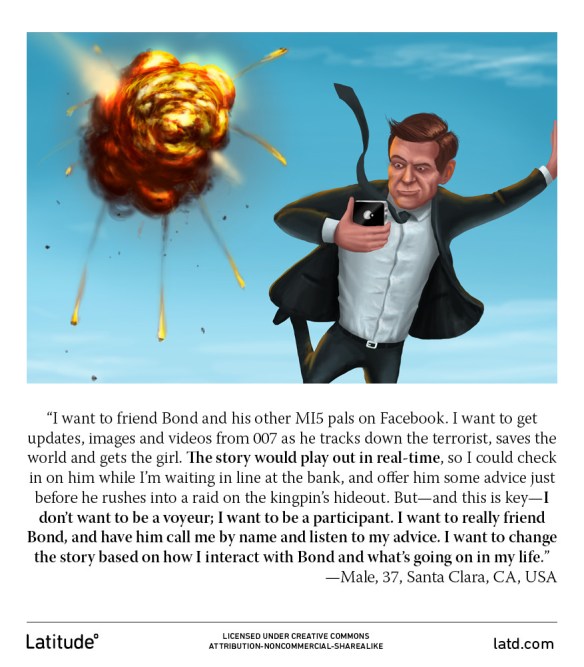
Latitude - Characters Will Become Connections

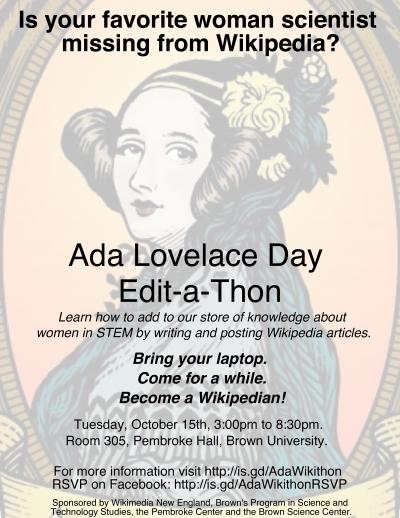
Wiki editing session at Brown University recognizes women in science | Brown University


For generations, including this one, women in science have remained underrepresented and underrecognized. On Oct. 15, 2013, from 3 p.m. to 8:30 p.m, people who want to change that can gather at a Wikipedia “edit-a-thon” to increase the representation of women in science and technology. The event marks Ada Lovelace Day, named for the 19th-century female scientist who pioneered computational programming.

Read: Wiki editing session at Brown University recognizes women in science | Brown University News and Events

Ada Lovelace Day Edit-a-Thon

MIT’s Self-Assembling Robots Offer Whiffs of Optimus Prime | Wired.com


Read the story: MIT’s Self-Assembling Robots Offer Whiffs of Optimus Prime | Wired Design | Wired.com

Top 100 Tools for Learning 2013 | Jane Hart | Centre for Learning and Performance Technologies


The Ultimate Who-To-Follow Guide for Tweeting Librarians, Info Pros, and Educators | Ellyssa Kroski – OEDB.org


Wondering about who you should be following on Twitter to keep up with the steady stream of updates in Libraryland?  Well, here’s a list of lists!  This quick guide will give you 30 great lists of librarians, instructors, and information professionals that you’ll want to follow on Twitter as well as tweeting authors’ accounts and people and publications to follow to gain tech insights.  Check out each of these and start subscribing!!

See the list: The Ultimate Who-To-Follow Guide for Tweeting Librarians, Info Pros, and Educators | Ellyssa Kroski – OEDB.org.

This really is the ultimate guide to LIS professionals on Twitter! I would add to the other categories:

Book Lovers

  • Shelf Awareness @ShelfAwareness
  • The Bookseller @thebookseller
  • Huffington Post Books  @HuffPostBooks
  • Publishers Weekly @PublishersWkly
  • Book Riot ‏ @BookRiot

News & Technology

  • The Modern MLIS @themodernmlis
  • MIT Tech Review @techreview
  • Buzz Feed @BuzzFeed
  • TEDTalks Updates @tedtalks
  • PCMag @PCMag
  • Flavorwire ‏ @flavorwire
  • TIME Techland ‏ @Techland
  • Gizmodo ‏ @Gizmodo
  • Harvard Biz Review ‏@HarvardBiz
  • Fast Company @FastCompany

Top Tech Gear of 2013 [Infographic] | Finances Online™

Image


Top Tech Gear of 2013

GitHub For Beginners: Don’t Get Scared, Get Started [PART 1 of 2] | ReadWrite


It’s 2013, and there’s no way around it: you need to learn how to use GitHub. 

Why? Because it’s a social network that has completely changed the way we work. Having started as a developer’s collaborative platform, GitHub is now the largest online storage space of collaborative works that exists in the world. Whether you’re interested in participating in this global mind meld or in researching this massive file dump of human knowledge, you need to be here.

Read: GitHub For Beginners: Don’t Get Scared, Get Started  [PART 1 of 2] | ReadWrite.