Groundbreaking Brain Atlas Maps Whole Brain at Cellular Level | Discovermagazine.com


Researchers [in Germany and Canada] have for the first time built a 3D model of a human brain showing structural detail down to the cellular level.

This ultra high-resolution atlas, dubbed “BigBrain,” aims to show the architecture of the brain at various levels—from the cortex’s layers and columns to its microcircuits and cells.

See the full article:  Groundbreaking Brain Atlas Maps Whole Brain at Cellular Level – D-brief | Discovermagazine.com.

How to Create an Instagram Video in 7 Simple Steps | Mashable


How to Create an Instagram Video in 7 Simple Steps | Mashable

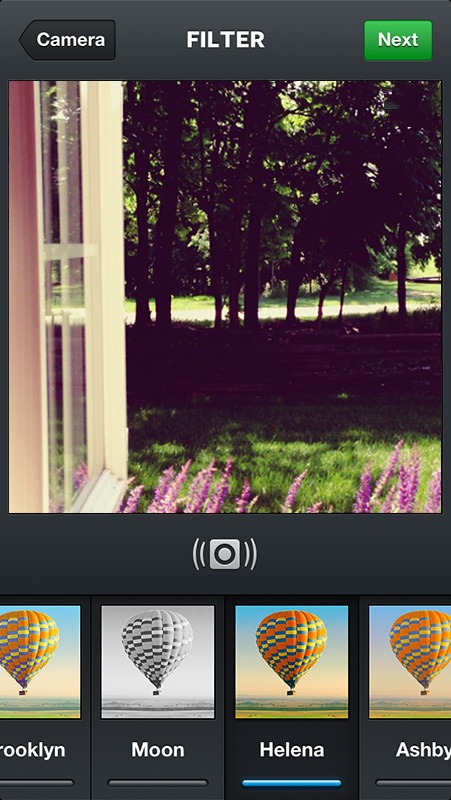
See the article for the step-by-step guide, with pictures! Its Instagram…so guess what!…of course you can filter(ize), frame and caption your videos for that personal touch. Instagram will record from 3s to 15s.

Instagram Video

You may also  like:

30 Twitter Accounts to Follow for Technology News and Insights | Ellyssa Kroski – OEDB.org


30 Twitter Accounts to Follow for Technology News and Insights Ellyssa Kroski – OEDB.org

Categorized into either people or publications.

12 Ideas About The Future Of Media (From New York Times, Digg, and The New School) ⚙ Co.Labs


For the full article: 12 Ideas About The Future Of Media (From New York Times, Digg, and The New School) ⚙ Co.Labs ⚙ code + community

Ideas discussed include:

  1. The medium is (part of) the message
  2. Content windowing–are you kidding?
  3. Readers are filters
  4. Where’s the value lie?
  5. The new news team
  6. Misunderstandings are inevitable for innovators
  7. The challenge for media now is volume
  8. Build creative technology teams
  9. Transparency is the ultimate recruiting tool
  10. Community breaks stories
  11. Look to the East for consumption habits
  12. Renaissance of the maker

Funding Library Projects on Kickstarter and Indiegogo


Do you love libraries? Are you philanthropic or just want to support? How about funding a Kickstarter or Indiegogo library project? These projects have a multiple donation levels to accommodate whatever one can afford. Libraries are contending with increasingly constrained budgets, funding, and staffing shortages, as well as aging infrastructure. These funding platforms offer another avenue for libraries to use to fund their creative, educational and infrastructure projects with your help.

On Kickstarter you could help fund: 

LIBRARY FOR ALL: a digital library for the developing world

Unlocking knowledge to those living in poverty by providing access to ebooks and other digital content in low bandwidth communities. Library For All was founded for those who have little or no access to books in developing countries.

When Rebecca McDonald moved to Haiti after the 2010 earthquake, she wasn’t a career humanitarian. Her most recent job was overseeing construction projects for Australia’s Department of Public Works. But while construction management might seem a useful set of skills in a country where so much had been destroyed, McDonald was moved by something else.

“Most schools have less than 30 books and these books are so precious they are not allowed to leave the school. Imagine if the entire span of knowledge available to you was just 30 books!” she wrote on her blog.

Meanwhile, she had access to all the world’s knowledge on her Kindle. It was the seed for the charitable project for which she is now fundraising on Kickstarter: Library for All. Via Creating A Digital Library For Bookless Students | FactCompany.

On Indiegogo you could help fund:

Park Slope North – Helen Owen Carey – Child Development Center Library Project

The Park Slope North (Helen Owen Carey) Child Development Center (PSN-CDC) is a nonprofit preschool serving the needs of families from a diverse range of socioeconomic and cultural backgrounds in Brooklyn and beyond, with funding provided by the Administration for Children’s Services supporting approximately 50 percent of the student body.

This year, the Parents’ Advisory Committee (PAC), in conjunction with the center’s new director, are creating a new library and multipurpose space. Teachers and students will use the new library for literacy-based and dramatic activities in addition to housing the school’s ever-growing collection of children’s books.

Libraries, librarians and stakeholders can come up with unique funding project ideas such as Peter Brantley’s suggestion for a new library publication:

Shelf-talkers: Kickstarting a new library journal | PWxyz Blog

It’s time for librarians to develop our own journalism. The basis of the American Library Association – individual membership vs. institutional affiliation – evidences the affinity for an in-community approach. A new library publication – call it Shelf Talkers – could be supported through librarian subscriptions, rather than vendor dollars, to assure complete editorial independence, lowering the risks of special interests. 

Shelf Talkers – or whatever we wanted to call it – could run with an editor-in-chief, an operations manager, and a small cadre of staff reporters. Additional contributors from the library world – one of the most literate and expressive communities around – could fill out a publication which need not worry itself with “issues” or “volumes” or printed matter. Its reach would be global, as would its contribution base – an inherent advantage of a networked publication.
10 Private Social Networks for Discreet Interaction | Mashable


If you want to trim down your social networking, or if you would rather not friend your Aunt Josephine or your boss on Twitter and Facebook, consider switching to a more private network.

via 10 Private Social Networks for Discreet Interaction | Mashable.

The private social networks recommended include:

  1. Everyme
  2. 23Snaps
  3. Notabli
  4. Nextdoor
  5. Yammer
  6. Couple
  7. Path
  8. FamilyWall
  9. Edmodo
  10. Photocircle

I Still Haven’t Switched My RSS Reader


I’ve been following the news for months about the Google Reader shutdown…and Digg has being counting down the days. I suppose I have been in the mindset of “ignore it and it will go away.” Unfortunately not. Google Reader meets all my needs and I’m reluctant to change. Google Reader being shutdown in the first place is incomprehensible to me. I saw this post from MIT Technology Review about the usefulness of Google Reader in countering censorship in Iran. The service will leave somewhat of a vacuum and have consequences we may have not yet realized. I’m not sure the promotion of of social and moving users to Google+ will see significant dividends long-term and it certainly has not engendered good will towards the company. Personally, Google’s moves that past few years have been very off-putting.

I have also been waiting…and waiting…for the Digg replacement, which is now in beta. One of my issues with the switch is that I’m an organizing fiend. I have many folders and tags and hundreds of subscriptions. I don’t want to lose that data. I don’t care about colour  or fancy social sharing features. Functionality and a clean, simple interface, is of utmost importance. So RSS readers like Pulse and Flipboard are too image intensive for my needs as a RSS power user.

Occasionally I like to read posts on my iPad, so I use the mobile app Byline but there are synching issues (I dislike having to “Mark as Read” posts in both services for all new posts). Although there are many RSS iOS apps out there (and I have tried most), this one handles all those folders and tags the best and you can easily and quickly swipe through posts.

I will be choosing either Feedly or the Digg Reader as my new RSS reader. I’m leaning toward the Digg replacement, as it would be useful to combine my need for power RSS with Digg’s social bookmarking features. Those who need to still need to switch you may want to use Google Takeout to export your data for backup.

Here’s some news Google Reader alternatives that are worth reading if, like me, you still haven’t switched and are waiting to the bitter end:

Cultivate Your Creativity With These 4 Fair Use Libraries | Mashable


Looking for creative content that is also free can be taxing. And when overused, Creative Commons becomes a bore of stock photos and MIDI jingles. Especially when it comes to fair use music, sometimes you just want something more refined and less 8-bit.

via Cultivate Your Creativity With These 4 Fair Use Libraries | Mashable.

The article discusses:

  • Moby Gratis
  • Internet Archive
  • UbuWeb
  • Free Music Archive
  • Open Culture

Who Owns Hackathon Inventions? | Alan Steele – Harvard Business Review


I recently served as a mentor at a hackathon and came away shaking my head. In hackathons, teams compete intensively, typically for just a day or two, to create software (and sometimes hardware) solutions. What struck me was that most of the participants — young, tech-savvy programmers, engineers, and others — seemed largely uninformed or unconcerned about intellectual property. Participants tend to come from many different organizations, and often view hackathons as recreational social events, so perhaps they can be forgiven for not focusing on IP. But the companies they come from need to pay attention — or risk losing valuable IP.

See the full article at: Who Owns Hackathon Inventions? | Alan Steele – Harvard Business Review


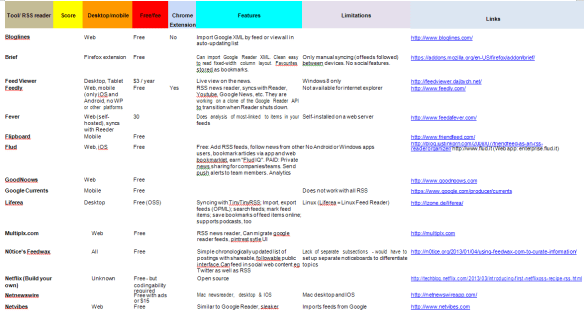
Google Reader Replacements [Comparison] | The Search Principle: views are my own


Google reader replacements | The Search Principle: Views are my own.

Comparison Chart. Digg not included.

Reader Replacements