
Why Do Presidents Get Their Own #Libraries? | Atlas Obscura #POTUS #museums


In May, the Obama Foundation announced that Chicago will be the future location of the Barack Obama Presidential Center, which will include a library and museum. The center will become the 14th institution in the National Archives and Records Administration’s presidential library system, which includes centers dedicated to all presidents from Herbert Hoover onwards.

Over the years, millions of public and private dollars and ostensibly, man hours, have been spent curating these institutions. Which begs the question: why?

Franklin D. Roosevelt began this tradition when, in 1939, he decided to hand over his personal and presidential records to the federal government when leaving office. Two years later, the Franklin D. Roosevelt Presidential Library and Museum was built in Hyde Park, New York to house these records. READ MORE: Why Do Presidents Get Their Own Libraries? | Atlas Obscura.
Is It Really Possible to Learn to Speed Read? | Gizmodo #reading


Ninety-five percent of college educated individuals read at a rate between 200-400 words per minute according to extensive research done by University of Massachusetts Amherst professor Dr. Keith Rayner. However, there exists a small, but rather vocal subset of people who insist that they can read several times faster than this using various speed reading techniques.

With very little searching, you’ll also find many-a-company claiming that after going through their program or using their app regularly, you can easily read even as many as 1,000 words per minute. Tim Ferriss of Four Hour Work Week fame offers a method for increasing speed in reading for free on his website, claiming with this method, you’ll see an average increase in reading speed of about 386% in just three hours of practice.

So is any of this really possible? READ MORE: Is It Really Possible to Learn to Speed Read? | Gizmodo

The Future Of #Museums Is Reaching Way Beyond Their Walls | Co.Exist #AMNH


The American Museum of Natural History has always been one of the most popular destinations in New York City. With about 5 million visitors a year, an increase from 3 million in the 1990s, it—along with the nearby Metropolitan Museum of Art—is among the top 10 most-visited museums in the world.

Even with this influx of people coming to its doorstep, however, the museum is now equally focused on drawing a crowd beyond its campus.

“In the old days, a visit to a museum like ours would be a one-off. You come, you visit you go home,” says Futter. “Now people have a relationships with us very often before they get here. They come, and [their visit] is like a giant exclamation point—and then they return home and continue to engage with us wherever they are.”

AMNH today is a sprawling outreach institution that is using apps, social media, and educational programs to slowly grow its reach. READ MORE: The Future Of Museums Is Reaching Way Beyond Their Walls | Co.Exist | ideas + impact.

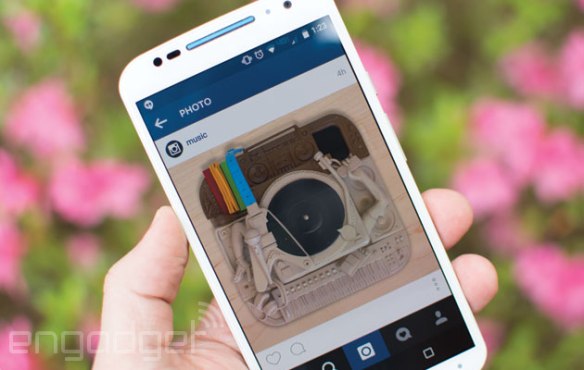
Instagram dives into curated content with a dedicated music account | Engadget


Instagram uses its official account to promote notable snapshots on the social network, and has been doing so for quite some time. But now, the filter-driven app will serve up a daily look at music “around the globe.” Through the @music stream, the folks behind the software will highlight music photographers, designers working on album art, instrument makers and fans in addition to current stars and emerging talent. It’ll even offer 15-second lessons from time to time. Musicians are a big part of Instagram’s user base, where artists can share updates and connect with fans, so it makes sense that the subject would get its own channel.

READ MORE: Instagram dives into curated content with a dedicated music account | Engadget

Play Lego Worlds, A New Minecraft Competitor From Lego, Right Now | TechCrunch #LEGOWorlds #Minecraft


When Minecraft came out, I heard a lot of people describe as sort of like virtual Lego. Now, there’s a game for which that description is even more apt: Lego Worlds, an open world building game that lets users create using virtual Lego bricks, and interact with the world as a customizable minifigure avatar. READ MORE: Play Lego Worlds, A New Minecraft Competitor From Lego, Right Now | TechCrunch.

So you want to be a Data Visualization Librarian? | hls #librarians #dataviz #MLIS


So you know that you want to be a librarian, but have you thought about specializing in a certain field? Maybe you have an interest in emerging technologies or you want to work with researchers and students across the disciplines? Data visualization is a hot topic in librarianship, and specializations in data analytics and visualization is an exciting area of growth in the profession. I sat down with four visualization specialists who work within the University of Michigan Library system to get an idea of what their jobs entail.

READ MORE: So you want to be a Data Visualization Librarian? | hls.

This robot learns new skills just like a human | Mashable #robots


A robot is only as smart as its programming. Learning on the go has been the sole purview of living things.

That was, until a team of scientists at UC Berkeley programmed a robot to learn simple tasks through trial and error, just like humans do.

The robot itself, a Willow Garage PR-2, is not new. But researchers applied a relatively new form of artificial intelligence, known as Deep Learning, to give it a kind of primitive learning ability.

With it, the robot or BRETT, (Berkeley Robot for the Elimination of Tedious Tasks) can use visual and sensory information about itself, its environment and the objects before it. It uses them like LEGO, building little neural networks of information, basically figuring out how to do something (how to put two real-life blocks together, say, or put a ring on a peg).

READ MORE: This robot learns new skills just like a human | Mashable

Capitalizing on Your Skill Set as an Information Professional | Easter Digangi | Slideshare #MLIS


via Capitalizing on Your Skill Set as an Information Professional | Easter Digangi | Slideshare

Tony Fadell: The first secret of design is … noticing | TED.com #design


As human beings, we get used to “the way things are” really fast. But for designers, the way things are is an opportunity … Could things be better? How? In this funny, breezy talk, the man behind the iPod and the Nest thermostat shares some of his tips for noticing — and driving — change.

Link to Transcript

via Tony Fadell: The first secret of design is … noticing | Talk Video | TED.com.

▶ MACBETH – OFFICIAL TEASER TRAILER | YouTube #film #Shakespeare


via ▶ MACBETH – OFFICIAL TEASER TRAILER – YouTube.