Understanding Video Games [Free Course] | University of Alberta


Understanding Video Games is an 11-lesson course teaching a comprehensive overview of analytical theory pertaining to video game media. Video games are a globally entrenched entertainment medium that entertains, informs and challenges us. These games are defined by, and define our modern culture. In this course, students will learn how to study games and engage in informed discussions about them. Ultimately, this course is about understanding the literacy of video games.  Understanding Video Games was created with the help of world renowned video game developer, BioWare Corp, located in Edmonton, Alberta.

Read More: Understanding Video Games | University of Alberta.
Fans Create Database of Over 200,000 Jeopardy Questions | Center for Data Innovation


Reddit users have created a machine-readable data set of over 200,000 Jeopardy questions. The data, which the dataset’s creators scraped from fan-created question repository J!-Archive, contains each question’s answer, along with category, dollar value, air date, and other data.

READ MORE: Fans Create Database of Over 200,000 Jeopardy Questions | Center for Data Innovation

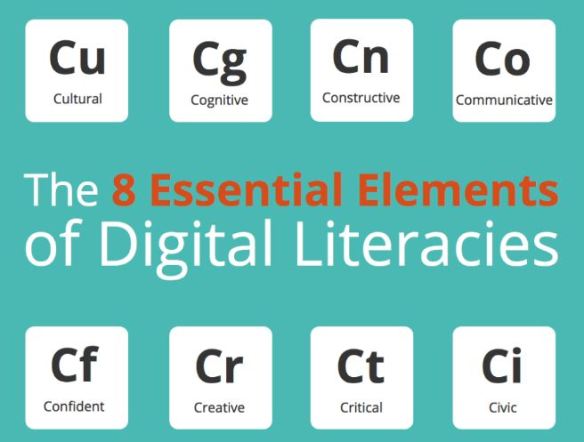
20 Things Educators Need To Know About Digital Literacy Skills | InformED


Teaching digital literacy is about more than just integrating technology into lesson plans; it’s about using technology to understand and enhance modern communication, to locate oneself in digital space, to manage knowledge and experience in the Age of Information.

These are vague descriptions, as are most of the descriptions you’ll find of digital literacy in blog posts and journal articles online. What teachers need, more than a fancy synopsis of how digital publication affects the meaning of a text, is a practical and applicable guide to helping students think productively about the digital world.

[These are] the top do’s and don’ts we’ve come across–in research and in our own experience–when it comes to making students digitally literate. The post reviews 5 Teaching Practices That Destroy Digital Literacy (e.g. criticizing digitalk) and 15 Habits to Cultivate in Your Students (e.g. get used to multiple literacies).

READ: 20 Things Educators Need To Know About Digital Literacy Skills | InformED

Top 30 Applications of Google Glass in Education [Interactive Infographic] | OpenColleges


The future is now. With Google Glass, teachers and students alike can display information in a smartphone-like hands-free format, while interacting with the Internet via natural language voice commands. With limitless possibilities at its fingertips, the education community can build closer working relationships with students, and allow children to get more involved with their learning experience. Open Colleges takes a look at how Google Glass might be used in education.

Click the link to EXPLORE all the possibilities illustrated within this interactive infographic: Top 30 Applications of Google Glass in Education  | OpenColleges


How Google Glass might be used in Education – An infographic by the team at Open Colleges

Absolutely fabulist: The computer program that writes fables | CNET


Forget a thousand monkeys at a thousand typewriters, researchers have created a computer program that writes fables by itself.

It might be a long way from “A Tale of Two Cities”, but researchers at Australia’s University of New South Wales have developed a computer program that is capable of writing its own fables.

The Moral Storytelling System, known as MOSS, has been developed by Margaret Sarlej, a PhD candidate at the School of Computer Science and Engineering at UNSW, led by Australian Research Fellow and artificial intelligence expert Dr Malcolm Ryan.

While humans are capable of creating simple or complex stories without a second thought, Sarlej said this is a skill that computers can’t easily emulate.

READ MORE: Absolutely fabulist: The computer program that writes fables | CNET.

Tech sector struggling with gender diversity says key is to involve girls | Toronto Star


Tech companies have long been criticized for their lack of female employees, especially in management and engineering roles. In the last few years, however, the industry has taken note of the gender disparity and it is slowly changing.

READ: Tech sector struggling with gender diversity says key is to involve girls | Toronto Star

Nearly 100 percent of libraries offer tech training and STEM programs, study finds | DistrictDispatch


According to a new study from the American Library Association ALA, nearly 100 percent of America’s public libraries offer workforce development training programs, online job resources, and technology skills training. Combined with maker spaces, coding classes, and programs dedicated to entrepreneurship and small business development, libraries are equipping U.S. communities with the resources and skills needed to succeed in today’s – and tomorrow’s – global marketplace.

READ: Nearly 100 percent of libraries offer tech training and STEM programs, study finds | DistrictDispatch

Free Live Webinars for Librarians [July 2014]| OEDB.org


Librarians are lifelong learners.  And we’re always on the look out for exciting professional development opportunities.  Fortunately for us, there are a great many amazing, free webinars being offered each month from a variety of sources, there’s bound to be something for everyone.

READ MORE: Free Live Webinars for Librarians | OEDB.org.

13 Essential Lessons Little Women Can Teach You About Living Well | HuffPost Books


13 Essential Lessons Little Women Can Teach You About Living Well

Louisa May Alcott’s Little Women, a two-volume novel following the four March sisters through their adolescence and young adulthood, was first published in the late 1860s. Almost 150 years later, the book remains remarkably popular; in fact, the unassuming tale is one of the ten most beloved books in America, according to a poll released recently by Harris International…

…Modern readers would not be alone in finding Little Women a bit fusty. The author herself notoriously described her children’s stories as “moral pap for the young.” She wrote the books not for artistic reasons, but to pay the bills. Yet it can’t be denied that her stories have spoken to generations of readers. Maybe because there are some genuinely good lessons for living in there — as well as some sneaky progressivism, endearing characters, and funny stories of everyday life. All in all, Little Women may not be perfect, but most of us could learn a great deal about how to live today from this old-fashioned novel…

READ: 13 Essential Lessons Little Women Can Teach You About Living Well | HuffPost Books

High-tech gloves can teach you Braille even if you’re distracted | Engadget


It looks like a team of Georgia Tech researchers is in the business of making wondrous, high-tech gloves — their most recent one, for instance, can teach you Braille even if youre doing something else. Similar to the piano-teaching glove they designed years ago, this new pair has vibrating motors on each knuckle that buzz in different patterns to correspond with preset Braille phrases.

Read More: High-tech gloves can teach you Braille even if you’re distracted | Engadget