
Could this be a new chapter in the way we interact with one another? Shaheryar Malik has left stacks of books from his own library at popular destinations all over New York City. He doesn’t stick around to see if anyone takes one of his books, nor does he re-visit his stacks. Instead he leaves a bookmark with his email address printed on it inside each book, in the hopes that he’ll hear back from whomever decided to pick that book up. READ MORE: Mysterious Stacks Of Books In NYC Are Connecting Strangers From Around The World | HuffPo
Category Archives: Librarianship
Rare example of lost #language found on stone hidden 2500 years ago | Ars Technica #languages #historical #archives #Archeology #artifacts #writing
At a dig outside Florence, a group of researchers have unearthed a massive stone tablet, known as a stele, covered in Etruscan writing. The 500-pound stone is 4 feet high and was once part of a sacred temple display. But 2500 years ago it was torn down and used as a foundation stone in a much larger temple. READ MORE: Rare example of lost language found on stone hidden 2500 years ago | Ars Technica
11 #Shakespeare Tragedies Mapped Out with Network Visualizations | Open Culture #dataviz #data #visualizations #analysis #plays #books
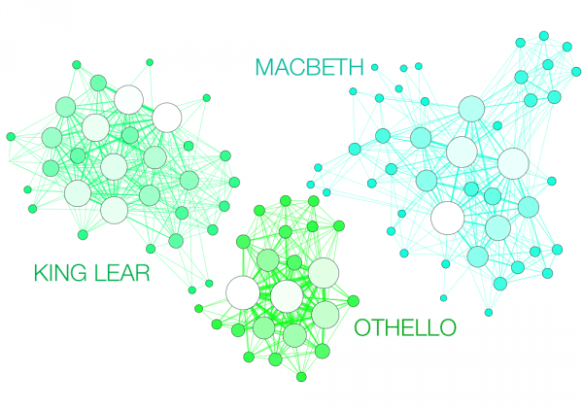
Every story has its architecture, its joints and crossbeams, ornaments and deep structure. The boundaries and scope of a story, its built environment, can determine the kind of story it is, tragedy, comedy, or otherwise. And every story also, it appears, generates a network—a web of weak and strong connections, hubs, and nodes. Take Shakespeare’s tragedies. We would expect their networks of characters to be dense, what with all those plays’ intrigues and feasts. And they are, according to digital humanities, data visualization, and network analysis scholar Martin Grandjean, who created the charts you see here: READ MORE: 11 Shakespeare Tragedies Mapped Out with Network Visualizations | Open Culture
Library Offers Homeless People Mental Health Services, And It’s Working | HuffPo #mentalhealth #libraries #outreach #homeless
Of the 5,000 people who visit the San Francisco Public Library every day, about 15 percent of them are homeless, PBS reported. After years of watching this underserved demographic float through to get Internet access, a restroom and often, just refuge from the cold, the library realized it was in an auspicious position to stage effective interventions.
So, in 2009, the library hired Leah Esguerra, who is believed to be the nation’s first psychiatric social worker to be employed full time at a library, SFGate reported. Since the program started, about 150 homeless people have received permanent housing, and another 800 have enrolled in social and mental health services, according to PBS. READ MORE: Library Offers Homeless People Mental Health Services, And It’s Working | HuffPo
First-ever Tor node in a Canadian library | Boing Boing #privacy #libraries #intellectualfreedom #rights #censorship #anonymity #Internet #Canada
Library workers at Western University’s Graduate Resource Centre in London, Ontario, had a workshop from Alison Macrina, the library organiser whose Library Freedom Project won a battle with the US DHS over a library in New Hampshire that was offering a Tor exit node as part of a global network that delivers privacy, censorship resistance, and anonymity to all comers. Western’s librarians were so taken by Macrina’s presentation that they’ve turned on Canada’s first library-based Tor node. There is no clear law in Canada about libraries and Tor, and Macrina and the Western library folks say they’re spoiling for a fight. READ: First-ever Tor node in a Canadian library | Boing Boing
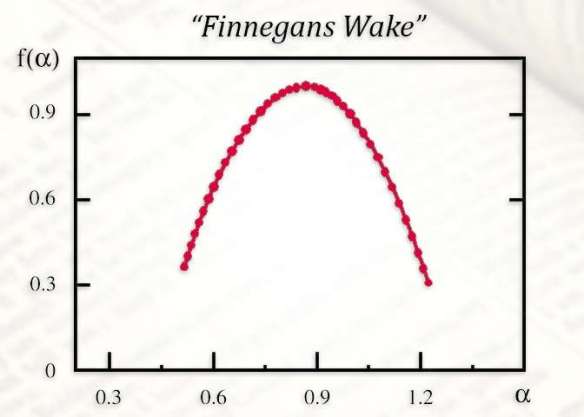
Scientists Discover That James Joyce’s Finnegans Wake Has an Amazingly Mathematical Multifractal Structure | Open Culture #literature #books #math #analysis
Rediscovered Manuscript Shows How Isaac Newton Dabbled In Alchemy | Gizmodo #manuscripts #science #books #libraries #archives #historical #isaacnewton
The 17th century manuscript, which was handwritten by Isaac Newton, describes a procedure for making mercury—a substance that alchemists thought could turn lead into gold. Sir Isaac Newton Image: Godfrey Kneller As reported in Chemistry World, the US Chemical Heritage Foundation has purchased the document, which languished in a private collection for decades. The newly surfaced manuscript was authored by an American chemist but handwritten and owned by Isaac Newton.
Source: Rediscovered Manuscript Shows How Isaac Newton Dabbled In Alchemy
The Harvard #Library That Protects The World’s Rarest #Colors | Co.Design #collections #libraries #art #pigments #science
One of the coolest collections I have ever heard of!
The most unusual colors from Harvard’s storied pigment library include beetle extracts, poisonous metals, and human mummies. READ MORE: The Harvard Library That Protects The World’s Rarest Colors | Co.Design | business + design
We Might Finally Be Able to Read Ancient Scrolls Damaged By Vesuvius Eruption | Gizmodo #manuscripts #science #libraries #archeology
Pompeii has the best press, but the eruption of Mount Vesuvius in 79 AD also buried the town of Herculaneum. Charred scrolls were recovered from the town library in 1752, and Italian scientists just discovered it might be possible to use X-ray technology to read them. Their findings were published recently in the Proceedings of the National Academy of Sciences. READ MORE: We Might Finally Be Able to Read Ancient Scrolls Damaged By Vesuvius Eruption | Gizmodo
Good news for #bookworms: 6 scientific reasons #reading is good for you | PresentNation #books #science #research #health #wellness
Could a chapter a day keep the doctor away? READ: Good news for bookworms: 6 scientific reasons reading is good for you | PresentNation
 infophile