This $13,000 vacuum-powered brewer aims to make the perfect cup of tea | Engadget


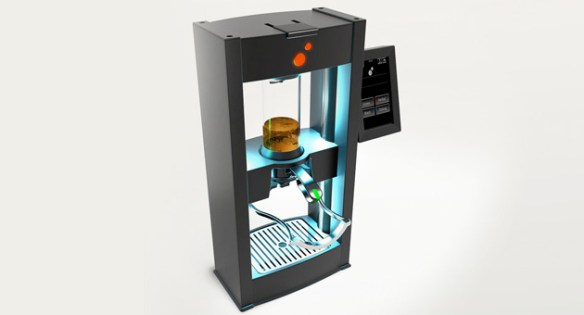
Here at Engadget HQ, most of us are used to the concept of heating a kettle or catching water from the office cooler in order to make a cup of tea. For true leaf aficionados, a more elaborate setup may be required, and that’s where the Bkon Craft Brewer comes in. Using Reverse Atmospheric Infusion (RAIN) technology, the unit’s vacuum process extracts “the optimal flavor elements” of loose-leaf tea, though it can also be used for coffee and even infused cocktails. The machine is efficient too, cranking out a cup in less than a minute and over 60 per hour — all while storing up to 200 presets. You know, once you fine-tune those recipes and ratios. To keep things tidy at the end of each cycle, the brew chamber cleans itself so you won’t have to, however Sprudge reports that the price tag will tick around $13,000 when it arrives.

Read more: This $13,000 vacuum-powered brewer aims to make the perfect cup of tea | Engadget

Secure OS Tails Emerges From Beta | PCMag.com


If you want to give super-secure, relatively anonymous computing a shot, then the operating system used by famed NSA leaker Edward Snowden might be for you. The Amnesic Incognito Live System, otherwise known as Tails, has officially jumped out of beta and into version 1.0.

Read more: Secure OS Tails Emerges From Beta | News & Opinion | PCMag.com.

Why the Smart Reading Device of the Future May Be … Paper | WIRED


Paper books were supposed to be dead by now. For years, information theorists, marketers, and early adopters have told us their demise was imminent. Ikea even redesigned a bookshelf to hold something other than books. Yet in a world of screen ubiquity, many people still prefer to do their serious reading on paper.

Count me among them. When I need to read deeply—when I want to lose myself in a story or an intellectual journey, when focus and comprehension are paramount—I still turn to paper. Something just feels fundamentally richer about reading on it. And researchers are starting to think there’s something to this feeling.

READ MORE: Why the Smart Reading Device of the Future May Be … Paper | Science | WIRED.

jim golden animates vintage devices for ‘relics of technology’ | designboom


portland-based photographer jim golden delivers a hearty dose of nostalgia in his series ‘relics of technology’, comprising animated gifs and still life images. geometrically placed in a palette of vintage tones, the documented objects are society’s ‘technological’ media devices from the past, brought to life in a collection of moving images

See all the images: jim golden animates vintage devices for relics of technology | designboom

Nod Bluetooth Ring Controls All Your Smart Devices | Mashable


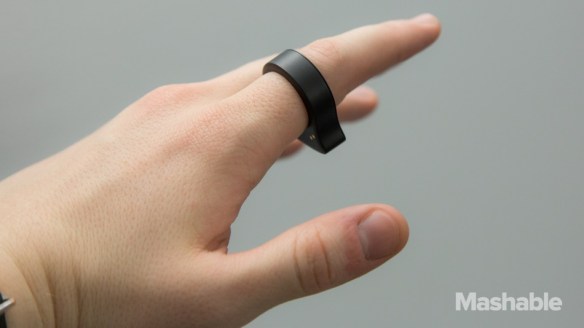
As our primary computing environment gradually shifts from the desktop to mobile, so too will our interface needs. To that end, a group engineers in Mountain View, Calif. believe that they have the solution for the next phase of interfaces, and it comes in the form of a ring.

The Nod ring is a Bluetooth-enabled gesture controller that connects to your smartphone to accomplish a number of input and controller tasks all by using natural motions with your finger.

In addition extending the capabilities of your smartphone, the ring can also be connected to other smart devices, such as a smart television and other Internet-connected devices like the Nest. If a device doesn’t have Bluetooth capability, you can connect the ring to your smartphone, which will then connect to the device via Wi-Fi. Read more: Nod Bluetooth Ring Controls All Your Smart Devices | Mashable

This is How the Vatican Will Digitize Millions of its Documents | Mashable


Digitizing the Vatican’s 40 million pages of library archives will take 50 experts, five scanners and many, many years before the process comes to a close.

The Vatican Library was founded in 1451 and has around 82,000 manuscripts, some of which date back about 1,800 years. It will work in tandem with NTT Data, a Japanese IT firm, to convert the first batch of 3,000 manuscripts. It is expected to take four years to digitize the initial round, though some of those documents will be online toward the end of 2014.

via This is How the Vatican Will Digitize Millions of its Documents | Mashable

An Amazing Discovery: Andy Warhol’s Groundbreaking Computer Art | WIRED


An Amazing Discovery: Andy Warhol’s Groundbreaking Computer Art | Design | WIRED

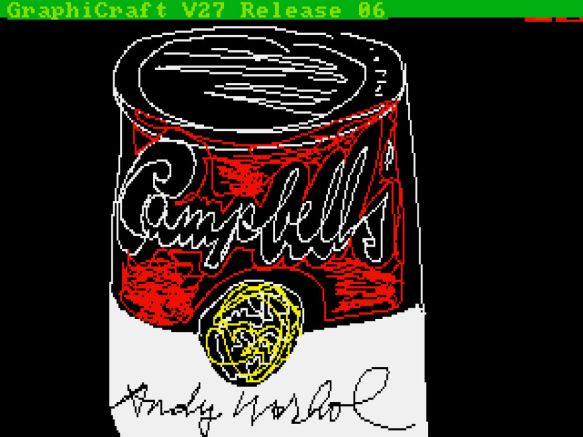
Back in the mid-1980s, Andy Warhol made a series of digital artworks on an Amiga 1000, a personal computer created by Commodore International. The artist, tapped by the company to be a spokesperson for the computer’s multimedia capabilities, created a few public pieces as part of a marketing campaign, but it was unknown if he had made any digital artworks on his own time.

Decades later, we now know he did. Stashed away on dozens of unlabeled floppy disks was a treasure trove of never-before-seen Warhol works that were slowly deteriorating. A multi-year, collaborative effort between a team of artists, museum professionals and the Carnegie Mellon Computer Club unearthed 28 works of art and a host of 1980s graphics software that Warhol used to create these digital pieces. Read more: An Amazing Discovery: Andy Warhol’s Groundbreaking Computer Art | Design | WIRED.

3D Printer Creates Magazine Cover Smaller Than A Grain of Salt | The Escapist


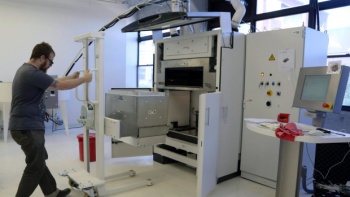
McGill University’s new 3D printer could produce 2000 copies of the same object before you’d finally spot them without a microscope.

If you thought the tech industry had a strange habit of miniaturizing everything, know that the print industry is now fully capable of catching up in that department. Canadian researchers at McGill University recently put a new microscopic 3D printer through its paces by producing a 0.011 by 0.014 millimeter National Geographic Kids cover, along with a map of Canada measured in micrometers. Obviously these images are impossible to view normally and could only be seen with the aid of a screen projecter. In fact, the magazine printout is so miniscule that if you made 2000 copies, you’d have just enough to cover a single grain of salt.

Read more: 3D Printer Creates Magazine Cover Smaller Than A Grain of Salt | The Escapist.

MIT’s FingerReader Helps The Blind Read With A Swipe Of A Digit | TechCrunch


At MIT’s Media Labs, researchers Roy Shilkrot, Jochen Huber and others are working on the “FingerReader,” a ring-like device that straps itself around your finger and reads printed text out loud with a synthesized voice, thanks to a mounted camera and heavily modified open source software. Read more: MIT’s FingerReader Helps The Blind Read With A Swipe Of A Digit | TechCrunch.

Why Vinyl Is the Only Worthwhile Way to Own Music | Gizmodo


The renaissance of the long play record isn’t just an anecdotal trend. Even as physical record sales decline, people are buying more vinyl than they have in decades. In 2013, sales increased 31-percent to about 6 million units year-over-year. It’s not a single-year bump either, either. Sales have climbed to 6 million from after having been at about a million in 2007…The “why” behind it, though, is a little more elusive. People don’t have to buy vinyl, and yet, they’re increasingly choosing to do so. It seems that in a world where CDs are obsolete, and digital files are intangible, the vinyl record still has a physical value that gives you your money’s worth. If the music industry wants to survive, it better pay attention to why people are buying records.

Read more: Why Vinyl Is the Only Worthwhile Way to Own Music | Gizmodo