Digitize Your Large-Format Film At A Fraction Of The Price With This DIY Scanner ⚙ Co.Labs


With a bit of elbow grease and a DSLR, a few large-format-film-buff hackers have built a rig to scan in photos at a much higher resolution than your average desktop scanner.

The DIY DSLR lightbox has been around for a few years, but only for traditional 35mm film, the dominant format for film and still photography. This new model is specifically for large-format film, from the popular 4″x5″ format (which is 16 times the size of a 35mm frame–and thus has 16 times the resolution) up to 8″x10″, after which it reaches “ultra large” format resolution.

via Digitize Your Large-Format Film At A Fraction Of The Price With This DIY Scanner ⚙ Co.Labs ⚙ code + community.

Robert Darnton: The Library in the Digital Age…08.30.13 | The Proverbial Lone Wolf Librarian’s Weblog


Robert Darnton: The Library in the Digital Age…08.30.13 | The Proverbial Lone Wolf Librarian’s Weblog

Power Tools | Roy Tennant – The Digital Shift


Excerpt of article content specific to libraries:

Tools in a digital library context often provide similar benefits, although they tend to be different in nature. I would say that a basic tool for any digital librarian is likely a computer running a LAMP stack:

L = Linux
A = Apache web server
M = MySQL
P = A “P” programming language such as Perl or Python

With that, there is very little you can’t do. Well, that is, once you install the dependencies of whatever else you’re wanting to run. But you get the idea. It’s a basic platform from which much else is made possible. It’s an essential tool set.

Some of the other digital library tools in my repertoire include:

Swish-e – I’ve used this indexing software since the mid-90s, and haven’t seen a reason to change. With it, I’ve set up and maintained a variety of web sites that function as if they are database-supported but in fact are simply flat XML files that are indexed using Swish-e (see, for example, FreeLargePhotos.com).

XSLTProc – Sure, there are many options for XML processing out there and I won’t attempt to defend this particular decision except to say that it is easy to use and does what I need it to do (process XSLT stylesheets against specified XML files). Again, it underpins a number of my web sites.

Nano – You can stop laughing now. Seriously. Stop laughing. I mean it. Nano is a simple text editor (before it was Pico, which was what the PINE linemode email system used for message editing). I use it to do simple editing tasks in text files and programs on the server. I know it isn’t nearly as cool emacs, or even vi, but hey, it’s what I’m used to.

Tools are power. They give you capabilities you would not have without them.

via Power Tools | Roy Tennant – The Digital Shift.
10 Futuristic Libraries | Ellyssa Kroski – OEDB.org


See the list: 10 Futuristic Libraries | Ellyssa Kroski – OEDB.org

Dalian Public Library

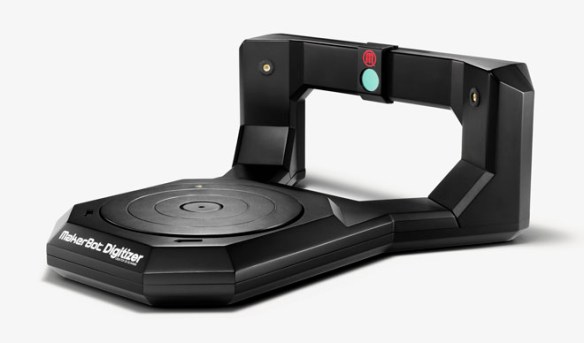
MakerBot Digitizer Will Clone All Your Stuff Using a Turntable and Lasers | Wired.com


See the post: MakerBot Digitizer Will Clone All Your Stuff Using a Turntable and Lasers | Gadget Lab | Wired.com

MakerBot Digitizer Will Clone All Your Stuff Using a Turntable and Lasers | Gadget Lab | Wired.com

E-Books Could Be The Future Of Social Media | Co.Labs


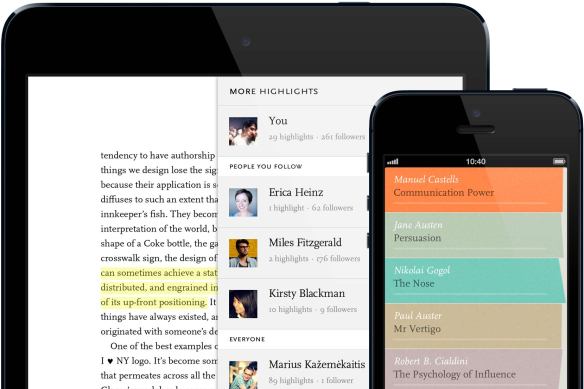
In the future, e-books will act just like social networks. We’ll use them on our phones, share and comment right inside e-reader apps, and publishers will use our data to help them make better marketing decisions. If you think digital reading is exploding now, just wait.

The article examines a new reading app called Readmill, which makes “each and every book its own self-contained social network.” See the full story: E-Books Could Be The Future Of Social Media ⚙ Co.Labs ⚙ code + community.

E-Books Could Be The Future Of Social Media ⚙ Co.Labs ⚙ code + community

Image Attribution: Readmill

GLBTI Fiction: Opening the Fiction Closet | Library Journal


Prior to World War II, GLBTI literature was hidden, with knowledge of its existence largely known only to members of the community, who shared texts among themselves. Occasionally a work of fiction would find its way into general circulation, but the books typically resorted to coded inferences of desire or served as warnings against the danger and immorality of homosexuality. This pattern continued until the 1969 Stonewall riot, which is largely accepted as the beginning of the GLBTI rights movement. The last three decades of the 20th century saw the establishment of GLBTI presses, bookstores, awards, and reading and book clubs, as well as literary festivals, writers’ conferences, and professional organizations. The closet was open, and the GLBTI community had found its voice.

Collection development and readers’ advisory (RA) staff can take advantage of a unique opportunity for professional growth by acquainting themselves with the widely dispersed sources of information about GLBTI literature. The task of identifying worthy contemporary purchases is best accomplished by consulting awards and recommended reading lists.

See the full article (which includes a longish list of recommended GLBTI fiction): via GLBTI Fiction: Opening the Fiction Closet | Library Journal.

So, You Want to be a Law Librarian? | Letters to a Young Librarian


So, You Want to be a Law Librarian?, by Janelle Beitz and Mari Cheney | Letters to a Young Librarian

An interview with two academic law librarians.

Google Translate adds African languages | theguardian.com


Google is planning to add Somali, Igbo, Hausa, Yoruba and Zulu to its list of language options on Google Translate, the search engine giant’s free automatic translation service.

A post published [on August 27, 2013] on the Google Africa page on Google+ called on users to evaluate the translation quality of the five languages. After assessing passages that are translated into English and vice versa, users can rate them as Excellent, Good, Fair or Poor.

via Google Translate adds African languages | World news | theguardian.com.