GitHub For Beginners: Commit, Push And Go [PART 2 of 2] | ReadWrite


In Part 1 of this two-part GitHub tutorial, we examined the main uses for GitHub and began the process of signing up for a GitHub account and creating our own local repository for code. Now that these steps have been accomplished, let’s add the first part of your project now by making your first commit to GitHub.

Read: GitHub For Beginners: Commit, Push And Go [PART 2 of 2] | ReadWrite

Related: GitHub For Beginners: Don’t Get Scared, Get Started [PART 1 of 2] | ReadWrite

Adobe Gets Hacked, Product Source Code And Data For 2.9M Customers Likely Accessed | TechCrunch


Now this is interesting and worrying. Source code being accessed is a very big deal, especially the company being Adobe. Subversive response to the move to subscription-based cloud services perhaps?? Hijacking code to exploit vulnerabilities…insert viruses…gain access to even more data. Very worrisome.

Article in Full from TechCrunch

“Uh oh — Adobe has just disclosed that one of their servers has been hacked.

While their investigations are still ongoing, Adobe has shared a few details on what they believe could have been accessed and obtained in the hack — and it’s a big one.

From what Adobe has shared so far, it sounds like the hackers had access to encrypted data for as many as 2.9 million customers. While Adobe stresses that the data is encrypted and that they “do not believe the attackers removed decrypted credit or debit card numbers”, that data — encrypted or not — is definitely not something they want out in the wild.

Adobe has yet to disclose how that data was encrypted, so it’s currently unclear just how secure it is.

Meanwhile, it also appears that the hackers may have been able to access the source code for at least three of Adobe’s products: Acrobat, ColdFusion, and ColdFusion Builder. This goes hand in hand with a report from Brian Krebs this morning, who noted that he and a fellow researcher had discovered at least 40GB of Adobe source code available on a hacking group’s private server.

Beyond the obvious business implications of having your otherwise locked down source code floating around in the wild, there are potentially massive security concerns here. Once you’ve got the source code for an application in hand, it becomes much easier to dig up the stealthy lil’ security screw ups that might otherwise go unnoticed. Combine this new potential for big zero-day exploits with the many, many millions of Adobe Acrobat (Adobe’s official PDF reader) installs around the world, and this all starts to get pretty worrisome.”

via Adobe Gets Hacked, Product Source Code And Data For 2.9M Customers Likely Accessed | TechCrunch.

GitHub For Beginners: Don’t Get Scared, Get Started [PART 1 of 2] | ReadWrite


It’s 2013, and there’s no way around it: you need to learn how to use GitHub. 

Why? Because it’s a social network that has completely changed the way we work. Having started as a developer’s collaborative platform, GitHub is now the largest online storage space of collaborative works that exists in the world. Whether you’re interested in participating in this global mind meld or in researching this massive file dump of human knowledge, you need to be here.

Read: GitHub For Beginners: Don’t Get Scared, Get Started  [PART 1 of 2] | ReadWrite.

Join us on National Learn to Code Day September 21st! | Ladies Learning to Code


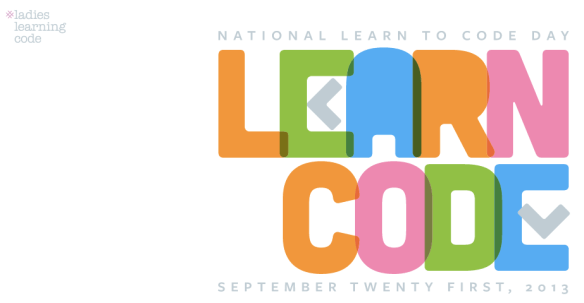
In less than a week Ladies Learning Code is hosting the first annual National “Learn to Code” Day!

On September 21, 2013 over 450 learners across Canada will attend simultaneous HTML & CSS workshops in nine cities across the country, plus more will join us for our first-ever online workshop! 

On National “Learn to Code” Day, we’ll teach our ever-popular Intro to HTML & CSS workshop – by the end of the day, you will have created your very own beautiful one-page website like this one! Even better, you’ll learn highly valuable skills that you’ll be able to continue developing at home, at work or at school.

Join us on National Learn to Code Day September 21st!

via Join us on National Learn to Code Day September 21st! | Ladies Learning to Code!

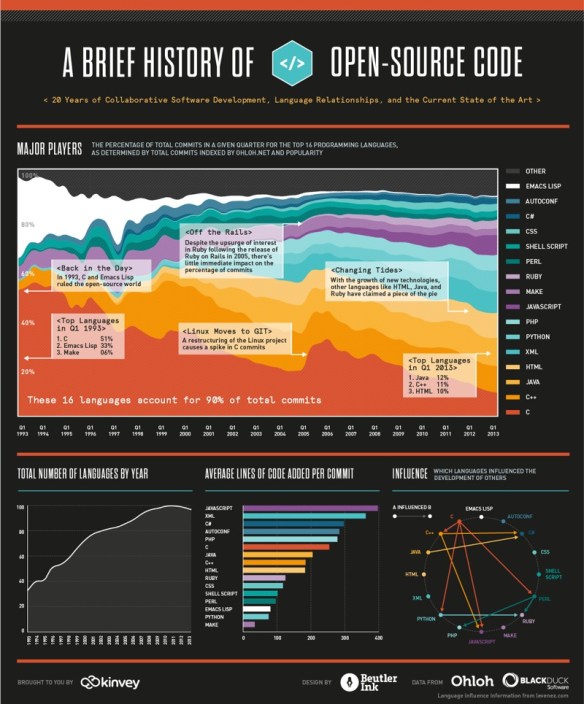
A Visual History Of The Last 20 Years Of Open Source Code | ReadWrite


We were able to visualize the percentage of total commits in a given quarter for the top 16 programming languages from 1993 until today. We hope you’ll find this image—a provocative pattern of dips and spikes—to be as interesting as we do. It truly shows how dynamic the world of programming is. We’ve also included a few graphs on other interesting data points: total number of languages by year, average lines of code per commit, and tracking which languages influenced the development of others.

Visual History Of The Last 20 Years Of Open Source Code

via A Visual History Of The Last 20 Years Of Open Source Code | ReadWrite.

CodeBender.CC Makes It Crazy Easy To Program Your Arduino Board From Your Browser | TechCrunch


The official Arduino IDE is a dour piece of software designed for uploading code to the ubiquitous and super-cool micro controller. It is a standalone, non-networked app that isn’t very pretty to look at. But what if you want to share code and upload programs right from your browser? That’s where CodeBender.cc comes in.

CodeBender is a browser-based IDE that supports uploading to nearly any Arduino board. You can use the program to copy sample code, browse code uploaded by other users, and even store private snippets. Because it is collaborative you can clone bits of code and use it in your own projects and there is even a curated list of cool snippets.

Full Post: CodeBender.CC Makes It Crazy Easy To Program Your Arduino Board From Your Browser | TechCrunch.

You may also like: 10 Arduino Projects That Blow Our Mind | Stephen’s Lighthouse | The Modern MLIS

The Smithsonian Just Added a Chunk of Code to Its Permanent Collection | Gizmodo


Great to see an organization swoop in, so to speak, to preserve a defunct application, then go a step further and open the source code to developers. Hope to see this happen more often.

The Smithsonian’s Cooper-Hewitt design museum in New York just acquired the source code to an iPad app called Planetary from its now-defunct developer. Code is officially art now.

Planetary, as you can see in the video above, is basically a fancy music visualizer. The app’s source code was donated to the Cooper-Hewitt, which promptly open-sourced the code in hopes that people will use its visualization methods for other applications. Beyond the original lines of code, the museum has made a commitment to preserving the offshoots of the open-source project, and to nurturing their development. Planetary’s source has also been printed out in machine-readable OCR-A font on archival stock. Apparently, posterity demands a physical paper record that’s a little less fleeting than a digital archive.

See the full story: The Smithsonian Just Added a Chunk of Code to Its Permanent Collection | Gizmodo.

Announcing National Learn to Code Day! | Ladies Learning Code


Ladies Learning Code is excited to announce our latest initiative designed to promote technology education in Canada: National Learn to Code Day!

On September 21, 2013 over 450 learners across Canada will attend simultaneous HTML & CSS workshops in nine cities across the country, plus hundreds more will join us for our first-ever online workshop! Learn more about our adult in-person and online Code Day workshops here, and more about our Kids Learning Code National “Learn to Code” Day workshops here.

via Announcing National Learn to Code Day! | Ladies Learning Code.

Ladies Learning to Code

How a Lone Coder Cloned Google Reader | Gizmodo


When Google Reader announced it was shutting down a few months ago, most of us stamped our feet, panicked, and went running into the arms of another RSS reader. But Matt Jibson is different. Unlike most of us, he can crunch code. So he built a Google Reader of his very own own.

And last week, the effort paid off. Last Thursday, just weeks before Google was set to pull the plug, Jibson flipped on the lights to Go Read, his open-source response to Google abandonment. He posted the project on Hacker News and his code on GitHub. 

See the full article: via How a Lone Coder Cloned Google Reader | Gizmodo.

go read rss reader

Ladies Learning to Code (Calgary Edition) – Intro to JavaScript


There is another Ladies Learning to Code event in Calgary. This one is an Introduction to JavaScript. The event costs $54.49, which I think is very reasonable. Register here. The event space is in Hillhurst, an area affected by the #yycflood. As invites were sent yesterday, I’m assuming the location is not damaged.

Ladies Learning to Code (Calgary Edition)