Reviews Snapchat, Pheed, PicsArt, Tumblr, and Vine. Read: 5 sites teens flock to instead of Facebook | MarketWatch
You may also like: Snapchat Ceo Evan Spiegel Talks Sexts And Growth | AP

Reviews Snapchat, Pheed, PicsArt, Tumblr, and Vine. Read: 5 sites teens flock to instead of Facebook | MarketWatch
You may also like: Snapchat Ceo Evan Spiegel Talks Sexts And Growth | AP

Image Credit: oysterbooks.com
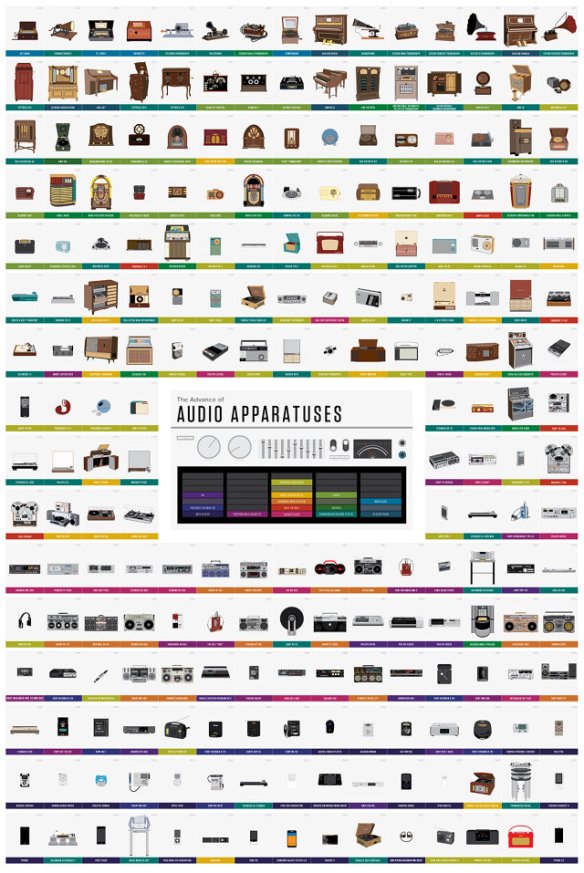
A prominent sci-fi writer once told me that, as prescient as they’d been, he and his peers had missed one big tech trend: Miniaturization. And they really did miss it. Because as you examine Pop Chart Lab’s latest mega print of 219 sonic devices across history, The Advance of Audio Apparatuses, it’s obvious that technology has been getting smaller for a long time.
Read more: Infographic: The History Of Audio Equipment | Co.Design | business + design.
Kinsa wants to change how we glean information about our health, starting with the world’s most common medical device.
Quotable: “There’s a bigger picture: Like the Scanadu Scout, Kinsa is part of a larger tapestry of data companies, fitness wearables, and health gadgets that want to empower us to start owning our own data. Sensors give us on-demand insights into our health, whereas a doctor’s office means tests and a wait time for a phone call.”
Read: This Tech-Enabled Thermometer Tracks More Than Just A Fever | Co.Design | business + design.

The New Library Patron from Pew Research Center’s Internet & American Life Project
Lee Rainie, Director of the Pew Research Center’s Internet & American Life Project, will discuss the Project’s new research about library patrons and non-patrons: who they are, what their information needs are, what kind of technology they use, and how libraries can meet the varying needs of their patrons.
Photo and Video Sharing Grow Online | Pew Internet
A new study by the Pew Research Center’s Internet Project shows that 54% of internet users have posted original photos or videos to websites and 47% share photos or videos they found elsewhere online. Also: AFP: Smart phones boost photo, video sharing: study and from TIME: One Stat that Explains Why Instagram Is Adding Ads.
Tablet and E-reader Ownership Update | Pew Internet
The number of Americans ages 16 and older who own tablet computers has grown to 35%, and the share who have e-reading devices like Kindles and Nooks has grown to 24%. Overall, the number of people who have a tablet or an e-book reader among those 16 and older now stands at 43%.
1 in 7 Americans is offline. Why? It’s complicated | Kathryn Zickuhr, Pew Research | CNBC
Pew Data on News Consumption: Millennials Lead the Shift to Web Use | ContentBlogger
Mobile Health in Context: How Information is Woven Into Our Lives from Pew Research Center’s Internet & American Life Project
The latest infographic from Netbiscuits highlights the importance of brand awareness of the tablet platform and the vast differences between how developed and developing markets use their devices.
For brands, it is becoming increasingly important to deliver great tablet experiences to their customers. And with 46% of users admitting to defecting to competitor website after a bad tablet experience, there was never a better time for brands to begin incorporating tablets into their web strategy.

via Tablets: the fastest growing technology in history | Netbiscuits.
You’d think that given how pervasive the internet is, we’d be stuck with the fundamental architecture it uses: servers that many devices connect to for their information fix. But a team of Cambridge University scientists wants to shake things up—and remove servers altogether.
A project named Pursuit aims to make the internet faster, safer and more social by implementing a completely new architecture. The system does away with the need for computers to connect directly to servers, instead having individual computers being able to copy and re-publish content on receipt. That would allow other computers to access data—or, at least, fragments of data—from many locations at once.
Wearable devices are predominantly technical fascinations at the moment, but they have widespread market potential — if misconceptions can be set straight.
The 8 myths discussed:
Read: 8 myths about wearable tech | Business Tech – CNET News.
The original post is lengthy but worth the read, as it includes some discussion about censorship and creative user protest on the GoodReads platform.
With 20 million members (a number some have noted is close to the population of Australia) and a reputation as a place where readers meet to trade information and share their excitement about books, the social networking site Goodreads has always appeared to be one of the more idyllic corners of the Internet. The site sold to Amazon for an estimated $190 million this spring, and Goodreads recommendations and data have been integrated into the new Kindle Paperwhite devices, introducing a whole new group of readers to the bookish community.
But if, at a casual glance, the two companies — Goodreads and Amazon — seem to be made for each other, look again. A small but growing faction of longtime, deeply involved Goodreads members are up in arms about recent changes to the site’s enforcement of its policies on what members are permitted to say when reviewing books, and many of them blame the crackdown on the Amazon deal. They’ve staged a protest of sorts, albeit one that’s happening mostly out of the public eye. Their charge is censorship and their accusation is, in the words of one rebel, that Goodreads and Amazon want “to kill the vibrant, creative community that was once here, and replace it with a canned community of automaton book cheerleaders.”
Read the rest of the story: How Amazon and Goodreads could lose their best readers | Salon.com
 infophile