The Smithsonian Just Added a Chunk of Code to Its Permanent Collection | Gizmodo


Great to see an organization swoop in, so to speak, to preserve a defunct application, then go a step further and open the source code to developers. Hope to see this happen more often.

The Smithsonian’s Cooper-Hewitt design museum in New York just acquired the source code to an iPad app called Planetary from its now-defunct developer. Code is officially art now.

Planetary, as you can see in the video above, is basically a fancy music visualizer. The app’s source code was donated to the Cooper-Hewitt, which promptly open-sourced the code in hopes that people will use its visualization methods for other applications. Beyond the original lines of code, the museum has made a commitment to preserving the offshoots of the open-source project, and to nurturing their development. Planetary’s source has also been printed out in machine-readable OCR-A font on archival stock. Apparently, posterity demands a physical paper record that’s a little less fleeting than a digital archive.

See the full story: The Smithsonian Just Added a Chunk of Code to Its Permanent Collection | Gizmodo.

11 Amazing Historical Snapshots From One of the World’s Best Archives | Gizmodo


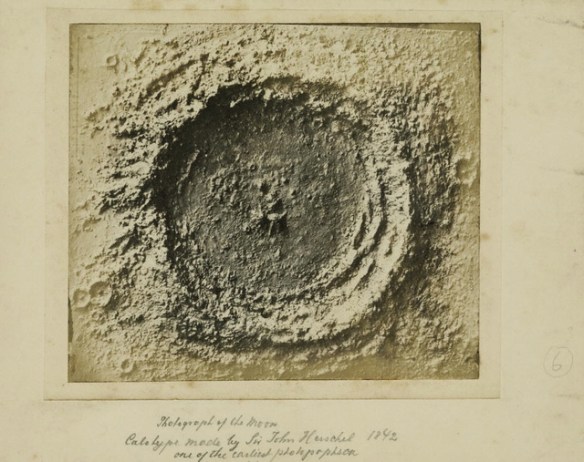
The J. Paul Getty Museum is home to troves of fascinating historical artifacts. And last week, the museum [announced] a project to give the public unfettered access to it. The Open Content Program makes 4,600 high-resolution images available for free and for any use whatsoever. 

Moon Crater

Unknown (photographer) , Moon Crater, late 1850s, Salted paper print from a Collodion negative.

See the full story:  11 Amazing Historical Snapshots From One of the World’s Best Archives | Gizmodo.

See also: Open Content, An Idea Whose Time Has Come | James Cuno | The Getty Iris

The Digital Museum Where Outdated Apps Can Live Forever | Gizmodo


There’s a crew of hero historians [and librarians!!] out there slurping up the Internet for posterity in case we want to see it later, but what about all the apps? Well now there’s a place for them too. Parts of them, at least.

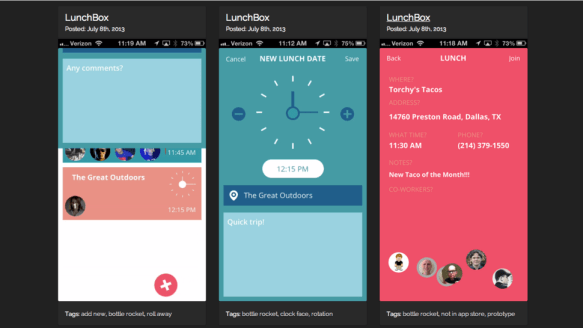
Capptivate.co was put together by Alli Dryer of Bottle Rocket Apps, and serves as the realitely new resting place for apps of old. The site doesn’t index full copies of the apps, or provide any of their functionality, but instead it hosts a distinct kind of snapshot: a little five-second video that showcases each’s signature look and feel.

via The Digital Museum Where Outdated Apps Can Live Forever | Gizmodo.

Caaptivate.co

The Millions | Save the Languages


Researchers at Comanche Nation College and Texas Tech University are creating a digital archive to reconstruct the Comanche language before its 25 remaining speakers die out. Meanwhile, researchers from Moscow State University and the Russian Academy of Sciences have recorded audio and video footage of twenty isolated Alaskans who speak a unique form of the Russian language. (Bonus: An Australian researcher recently uncovered a whole new Aboriginal dialect.) via The Millions | Save the Languages.

Worldwide National Library Catalogs | OEDB.org


National libraries are tasked with the centuries-long responsibility of preserving books and documents that keep a country’s history and heritage safe through war, disaster, and the passage of time. They’re also responsible for sharing these vast and valuable documents with citizens of the country, and the world.

National libraries are the absolute best resource for finding publications within any given country. This is thanks to legal deposit, legislation in many countries that requires publishers to provide the national library with a copy of each publication. In some countries, this even includes digital publications.

Through national library catalogs, you can search all of the publications within a country. Many national libraries also offer extensive digital collections, offering online researchers access to documents of historical importance, official publications, even images and video.

via Worldwide National Library Catalogs – OEDB.org.

The post provides a comprehensive list of Worldwide National Library Catalogs, including 3 from Canada. 

In The Rijksmuseum’s Digital Archive, Old Masterworks Inspire New Designs | Co.Design


Amsterdam’s famed Rijksmuseum recently emerged triumphant from a decade-long renovation project. In addition to the extensive on-site overhaul that transformed the 125-year-old institution into an LED-lit, chronologically arranged journey through art history IRL, the reopening also marked the debut of the Rijksstudio, an incredible online resource that allows virtual visitors to explore hi-res versions of a staggering 125,000 works.

via In The Rijksmuseum’s Digital Archive, Old Masterworks Inspire New Designs | Co.Design: business + innovation + design

The Rijksstudio has a cool discovery tool called Master Matcher. You answer 5 questions which match you with items from the archive of 125.000 masterpieces in the Rijksmuseum.

Inside the Internet Archive’s Real-World Home | Mashable


The Internet Archive is a massive, ambitious effort to digitize the full spectrum of human knowledge. A documentary from Deepspeed Media goes inside the archive to reveal what that looks like in practice. See the full article here: Inside the Internet Archive’s Real-World Home | Mashable.

Actipedia. An Database of Creative Activism.


Actipedia is an open-access, user-generated database of creative activism. It’s a place to read about, comment upon, and share experiences and examples of how activists and artists are using creative tactics and strategies to challenge power and offer visions of a better society via Actipedia.

Actipedia

Closure of fisheries’ libraries called ‘a ‘disaster’ for science | Canada.com


Closure of fisheries’ libraries called ‘a ‘disaster’ for science | Canada.com

Quotables

“Seven DFO libraries across Canada are to close by the fall, including two that have been amassing books and technical reports on the aquatic realm for more than a century.”

“It is information destruction unworthy of a democracy,” said Peter Wells, an ocean pollution expert at Dalhousie University in Halifax, who describes the closing of the libraries as a “national tragedy.”

“It will likely be a decade or more before all DFO’s technical reports are all digitized and available online, the librarian said.  But most of the reference books and materials in the DFO libraries – like Russia’s fishing monograms – cannot be digitized by the department because of copyright restrictions.”

“Wells see the library closures as more evidence of the way the federal government is “eviscerating” aquatic science by cutting jobs and eliminating programs, labs and services. “Libraries cannot simply be replaced by digitized collections,” he said.”