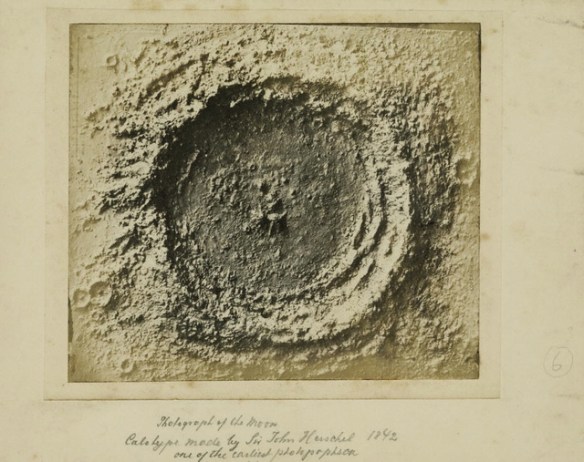
35 Free Live Webinars for Librarians in October | Ellyssa Kroski – OEDB.org


The Fall is full of opportunities for learning new skills and techniques. Here are 35 free professional development sessions that will be held live online this month.

On my list:

  • 8. Grantseeking Basics
  • 13./23. Social Media Networks: Enhancing Community Engagement Amongst People with Disabilities
  • 15. How to Hire IT Staff for Your Library

See: 35 Free Live Webinars for Librarians in October | Ellyssa Kroski – OEDB.org.

Why Free Software Is More Important Now Than Ever Before | Richard Stallman | Wired.com


It is now 30 years since I launched the campaign for freedom in computing, that is, for software to be free or “libre” (we use that word to emphasize that we’re talking about freedom, not price). Some proprietary programs, such as Photoshop, are very expensive; others, such as Flash Player, are available gratis — either way, they subject their users to someone else’s power.

Much has changed since the beginning of the free software movement: Most people in advanced countries now own computers — sometimes called “phones” — and use the internet with them. Non-free software still makes the users surrender control over their computing to someone else, but now there is another way to lose it: Service as a Software Substitute, or SaaSS, which means letting someone else’s server do your own computing activities.

Both non-free software and SaaSS can spy on the user, shackle the user, and even attack the user. Malware is common in services and proprietary software products because the users don’t have control over them. That’s the fundamental issue: while non-free software and SaaSS are controlled by some other entity (typically a corporation or a state), free software is controlled by its users.

Why does this control matter? Because freedom means having control over your own life.

If you use a program to carry out activities in your life, your freedom depends on your having control over the program. You deserve to have control over the programs you use, and all the more so when you use them for something important in your life.

Read the full story: Why Free Software Is More Important Now Than Ever Before | Richard Stallman | Wired.com

YouTube Launches Free Audio Library With 150 Royalty-Free Tracks | TechCrunch


YouTube currently offers more than 150,000 audio tracks on its site that video producers can use as background music for their videos. Those tracks, however, can’t be downloaded or remixed, which makes it hard to use them in creative ways. For users who want to do a bit more with their background music, however, YouTube today is expanding this library with a selection of 150 new royalty-tracks. The music in this new YouTube Audio Library can be downloaded, remixed and used for free forever.

YouTube Audio Library

via YouTube Launches Free Audio Library With 150 Royalty-Free Tracks | TechCrunch.

Toronto Public Library now offers free digital magazines | BlogTO


The Toronto Public Library has just given another reason to love having a library card, and to enjoy this benefit you won’t even need to leave your house. TPL has partnered with leading digital newsstand provider Zinio to give members access to digital magazines for free.

Read the full story: Toronto Public Library now offers free digital magazines | BlogTO.

The HLS Guide to Library School | Simple Book Production


This ebook contains some new content but mostly posts that have appeared previously on the blog. It is not necessarily a compilation of the best of Hack Library School or even indicative of the breadth of our content; instead, we have selected content based on the most practical advice we could give to others to–you guessed it–hack library school. We’ve divided the content into three main sections: Before Library School, During Library School, and After Library School. Within these sections, you will also find sub-sections intended to help organize the content meaningfully.

See more: The HLS Guide to Library School | Simple Book Production.

The Hack Library School blog is a great resource for library school students. They posts interviews with LIS professionals on employing and interviewing LIS graduates. There are also posts by guest editors. Here’s a direct link to the pdf of the free eBook.

Hack Library School Guide to Library School (PDF)

Google Wants To Power The Online Learning Revolution With MOOC.org | Fast Company


EdX, the not-for-profit online learning initiative founded by Harvard and MIT, today announced a partnership with Google to jointly develop their open-source learning platform, known as Open EdX. The core edX offerings currently consist of a few dozen free “Massive Open Online Courses,” or MOOCs, from top-flight university partners like MIT, Harvard, and Berkeley–but the Open EdX vision goes far beyond that.

Google and edX will build out and operate MOOC.org, which will come online early next year. The site aims to be to online courses more or less what WordPress is to publishing: A free, open-source way for universities, institutions, businesses, and individuals to build and host courses in the cloud on any topic and in any format for a global audience.

via Google Wants To Power The Online Learning Revolution With MOOC.org | Fast Company | Business + Innovation.

Related:

PCMag.com | News & Opinion — Harvard, MIT to Offer Free Online Classes | The Modern MLIS, May 2, 2012

32 Free Library Webinars in September | Ellyssa Kroski – OEDB.org


32 free webinars that are relevant for librarians and information professionals.

via 32 Free Library Webinars in September | Ellyssa Kroski – OEDB.org.

‘Most Amazing, Stupendously Clever’ Little Free Library of the Day | Shelf Awareness


Checking in at Little Free Library’s Facebook page is always fun, but a post yesterday was so mesmerizing that even the LFL folks couldn’t resist exclaiming: “Is this the most amazing, stupendously clever, epic, mechanically excellent (?!) and stunningly cool Little Free Library ever? It’s a kinetic sculpture! A neighborhood art piece! Destined for the Museum of Modern Art? The Walker? The Guggenheim? Have you ever seen anything this fab?”

via ‘Most Amazing, Stupendously Clever’ Little Free Library of the Day | Shelf Awareness for Wednesday, September 4, 2013 | Shelf Awareness.

Shanghai Metro offers passengers books to borrow | chinadaily.com.cn


Shanghai’s Metro Line 2 is turning a new page with a library taking literally an online approach.

Passengers will be able to select a book at one station, and return it to any of the other stations with customized bookshelves.

Readers do not have to pay a deposit or any rent for the books and magazines they take. Instead, they are encouraged to donate 1 yuan (16 US cents) to charity at the bookshelf.

“Now you can read a real book, rather than staring at the cellphone through the metro ride,” said Zou

Shuxian, a spokeswoman for the Aizhi bookstore, which initiated the project jointly with Hujiang.com and Shanghai Metro Line 2.

“This will encourage more people to read on the Metro and improve the atmosphere of the whole city,” said Chen Kuang, a spokesman with Shanghai No 2 Metro Co Ltd.

The Chinese Academy of Press and Publication released a survey recently that said the general public between the ages of 18 to 70 read 4.39 books in 2012, much fewer than in Western countries.

The program announced its official kickoff on Aug 18, after a trial operation over a period of months.

It has been a resounding success with office workers. Waiting lines have developed during rush hour.

“Most people returned the books after reading, and many left a coin for our charity initiative,” said a staff member for Aizhi at the Nanjing Road West Station.

“Even if some books are not returned, we believe the overall benefit is worthwhile,” another staff member surnamed Li said.

All the books have green tape on the cover to inform people about the program. “Also to remind people it is borrowed and should be returned,” Li said.

Hujiang.com, an online education provider, and Aizhi, a bookstore chain, joined hands to launch the project last year. It called on people to donate their used books to the 20 Aizhi bookstores at the metro stations.

The program allows Hujiang to publicize its educational program.

The public offered more than 100,000 books in eight months. Many were given to schools in less well-off areas. The rest, and magazines, were used for the program.

The trial operation began near office buildings in Zhangjiang, a high-tech park in Shanghai, and then expanded to the Metro.

“We also have a few shops along Metro Lines 3 and 4, and we hope to expand the service,” she said.

“It is a great idea to have books used rather than leaving them to gather dust,” said Yue Tingting, a PR official with Hujiang.

“You can’t force people to read by regulations, but it is sensible to encourage people to read,” said Huang Yuning, head of the literature department at Shanghai Translation Publishing House.

The digital age has seen book sales decline, but this shows there may be a twist in the tale, said Feng Tao, an editor and colleague of Huang.

In order to encourage more people to read, the General Administration of Press and Publication of China plans to issue a guideline promoting reading.

via Shanghai Metro offers passengers books to borrow | Society | chinadaily.com.cn.
11 Amazing Historical Snapshots From One of the World’s Best Archives | Gizmodo


The J. Paul Getty Museum is home to troves of fascinating historical artifacts. And last week, the museum [announced] a project to give the public unfettered access to it. The Open Content Program makes 4,600 high-resolution images available for free and for any use whatsoever. 

Moon Crater

Unknown (photographer) , Moon Crater, late 1850s, Salted paper print from a Collodion negative.

See the full story:  11 Amazing Historical Snapshots From One of the World’s Best Archives | Gizmodo.

See also: Open Content, An Idea Whose Time Has Come | James Cuno | The Getty Iris