Kapow! Stan Lee Is Co-Teaching a Free Comic Book MOOC, and You Can Enroll for Free | Open Culture


“Why did superheroes first arise in 1938 and experience what we refer to as their ‘Golden Age’ during World War II?” “How have comic books, published weekly since the mid-1930’s, mirrored a changing American society, reflecting our mores, slang, fads, biases and prejudices?” “Why was the comic book industry nearly shut down in the McCarthy Era of the 1950’s?” And “When and how did comic book artwork become accepted as a true American art form as indigenous to this country as jazz?”

All of these questions … and more … will be explored in an upcoming MOOC (Massive Open Online Course) co-taught by the legendary comic book artist, Stan Lee. He will be joined by experts from the Smithsonian, and Michael Uslan, the producer of the Batman movies who’s also considered the first instructor to have taught an accredited course on comic book folklore at any university.

The course called The Rise of Superheroes and Their Impact On Pop Culture will be offered through edX, starting on May 5th.

MORE: Kapow! Stan Lee Is Co-Teaching a Free Comic Book MOOC, and You Can Enroll for Free | Open Culture
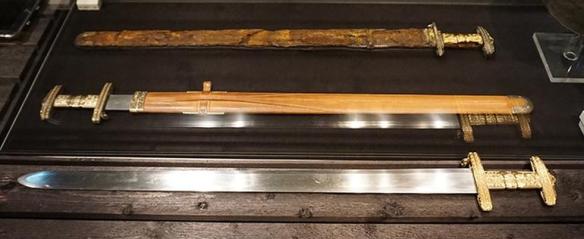
3D printing produces a perfect replica of a sixth-century sword | CNET


A damaged sixth-century sword in a museum in Norway has been perfectly reproduced as new through 3D printing.

READ MORE: 3D printing produces a perfect replica of a sixth-century sword | CNET.

How An Octogenarian Preserved An Endangered Native American Language | Gizmodo


Marie Wilcox is the last fluent speaker of Wukchumni, one of 130 different endangered Native American languages in the United States that dont have any kind of digital—or analog—legacy.

Over the course of seven years in Californias San Joaquin Valley, she worked with her daughter and grandson to catalog everything she knows about the language. First, she hand-scrawled memories on scraps of paper; then, she hunt-and-pecked on an old keyboard to complete a dictionary and type out legends like “How We Got Our Hands.” Next, she recorded the whole thing on audio for pronunciation—its very specific!—and posterity.

via How An Octogenarian Preserved An Endangered Native American Language | Gizmodo

Definitely recommend watching the video. I am in awe of Marie’s dedication to preserving the Wukchumni language. Amazing, inspiring story!

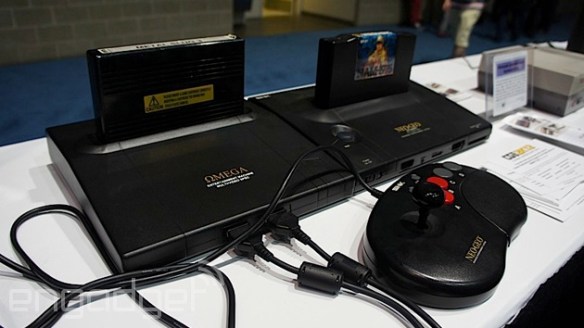
The Videogame History Museum has found a home in Frisco, Texas | Engadget


Making a pilgrimage to the Videogame History Museum has been tough so far; most of its collection is in storage, and what little you do see has been going on cross-country tours. Pretty soon, though, it will have a permanent public display. A Frisco, Texas community board has approved a deal to give the Museum a 10,400 square foot location inside the citys Discovery Center by this April.

READ MORE: The Videogame History Museum has found a home in Frisco, Texas | Engadget

British Library gives teachers tools to inspire | Books | The Observer


Discovering Literature: Romantics and Victorians from British Library Learning on Vimeo.

While Discovering Literature is an important cultural resource that can be enjoyed by all ages, it has been carefully tailored to appeal to GCSE and A-level students. The British Library’s research among teachers showed that original manuscripts, with their edits and revisions, dodgy grammar and messy handwriting, can be a powerful way of engaging pupils. Contextual material can also be a source of inspiration, and the site is packed with items such as letters, diaries, dictionaries, newspapers and illustrations that illuminate the historical, social and political contexts of classic works.

READ MORE: British Library gives teachers tools to inspire | Books | The Observer.

See Also: The British Library Launches New Online Collection of 1,200 Romantic and Victorian Literary Treasures | InfoDocket

Library of Congress cooks CDs in quest to save them | CNET


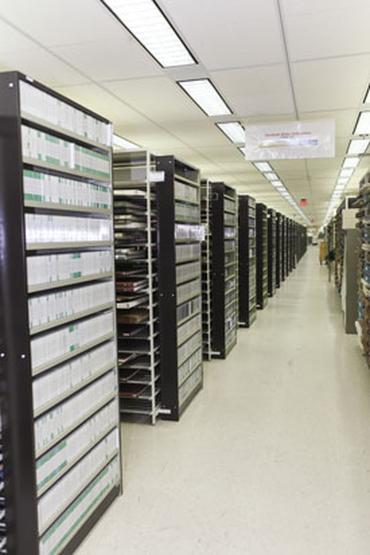
CDs may not be the first thing to come to mind when you think of the Library of Congress, but it houses more than 500,000. The extensive collection includes everything from music to maps and labs where researchers are destroying CDs to learn how to preserve them, CBS News Jim Axelrod reports.

In 1982, Billy Joels album “52nd Street” was the first commercial compact disc to be released. Since then, hundreds of billions of CDs have been sold worldwide. Once the latest music technology, the CD is now a collectors item, replaced by digital downloads. But those who built up music libraries in the 80s and 90s may wonder how long will those discs work? Fenella France, chief of preservation research and testing at the Library of Congress, is hoping to figure that out.

READ MORE: Library of Congress cooks CDs in quest to save them | CNET

Who Painted This 300-Year-Old Guidebook to Every Imaginable Color? | Gizmodo


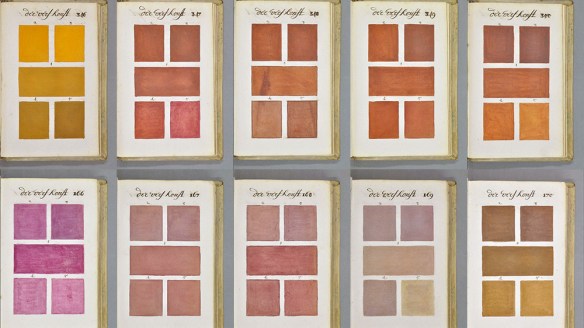
More than two centuries before Pantone divided the visible spectrum into six-digit color codes, a mysterious Dutch artist crafted this extraordinary guide to painting in watercolor. Hundreds of subtly varying colors were mixed by hand for this one-of-a-kind, encyclopedic volume. READ MORE: Who Painted This 300-Year-Old Guidebook to Every Imaginable Color?  | Gizmodo

Why Researching Our Ancestors Has The Power To Change Lives | Fast Company


Back in 2010, when Dana Saxon decided that she wanted to trace her family’s lineage, her expectations were low. “I thought, for people who survived slavery, there’d be little public information,” she says. What happened next “blew her mind”–and led to the creation of Ancestors Unknown, an international nonprofit that is bringing the past to the most impressionable among us: young students.

Saxon discovered that public archives had not completely ignored the existence of the enslaved, who legally were considered the same as property. While putting together the puzzle of her family’s past, she had an epiphany: “There were so many ancestors waiting to be discovered, waiting to be appreciated for what they did to help get us to where we are today,” she says. Knowing that most school curriculums do not include the names and contributions of people from the African Diaspora, she “wanted to find a way to help young people place themselves and their ancestors in the larger context of history.”

READ MORE: Why Researching Our Ancestors Has The Power To Change Lives | Fast Company | Business + Innovation

The Mission of Ancestors Unknown… “To inspire the personal and academic success of students throughout the world by introducing them to their unknown ancestors.”

The History Of Graphic Design, In Icons | business + design


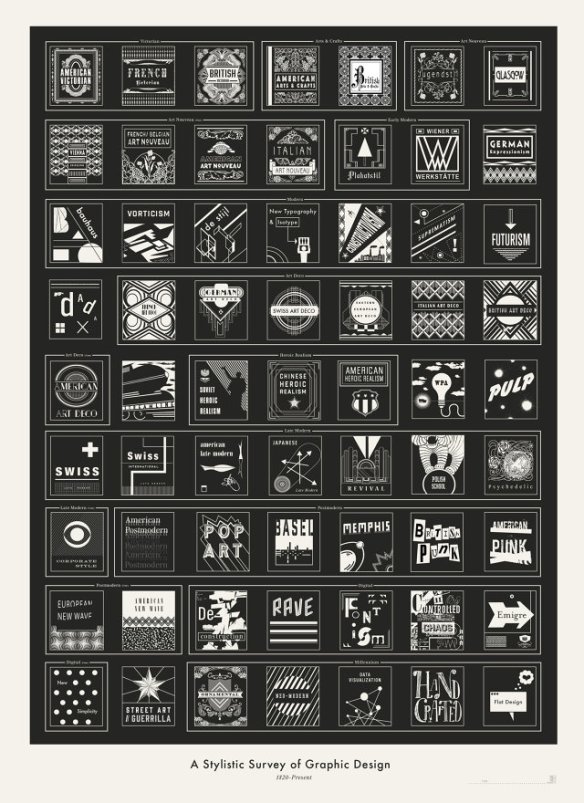
Pop chart lab’s latest poster pays homage to the most important eras in graphic design. Read More: The History Of Graphic Design, In Icons | Co.Design | business + design

The History Of Graphic Design, In Icons | Co.Design | business + design

77,000 Images of Tapestries and Italian Monuments Join the Open Content Program | The Getty Iris


The Getty Research Institute has just added more than 77,000 high-resolution images to the Open Content Program from two of its most often-used collections.

The largest part of the new open content release—more than 72,000 photographs—comes from the collection Foto Arte Minore: Max Hutzel photographs of art and architecture in Italy. Foto Arte Minore represents the life’s work of photographer and scholar Max Hutzel (1911–1988), who photographed the art and architecture of Italy for 30 years. In recent years, the interdisciplinary use of these photographs has exposed their historiographic significance and their unrealized research potential.

Read more: 77,000 Images of Tapestries and Italian Monuments Join the Open Content Program | The Getty Iris.