Want people to trust you? Try apologising for the rain | BPS Research Digest


If you want people to see you as trustworthy, try apologising for situations outside of your control such as the rain or a transport delay. That’s the implication of a new study by researchers at Harvard Business School and Wharton School, University of Pennsylvania.

Read: Want people to trust you? Try apologising for the rain | BPS Research Digest.

You may also like: Why It Might Be Helpful to Apologize for Something That’s Not Your Fault | HBR

The Best (and Worst) Countries to Be a Woman | Harvard Business Review


The Best (and Worst) Countries to Be a Woman | Sarah Green | Harvard Business Review

Article in Full

The World Economic Forum has just come out with their latest data on global gender equality, and the short version could well be this old Beatles lyric: “I’ve got to admit it’s getting better. A little better, all the time. (It can’t get more worse.)”

I talked with Saadia Zahidi, a Senior Director at the WEF and their Head of Gender Parity and Human Capital. Yes, it’s getting better. Out of the 110 countries they’ve been tracking since 2006, 95 have improved and just 14 have fallen behind (a single country, Sweden, has remained the same). But that’s partly because in some places, there was nowhere to go but up.

And not everyone has improved at the same rates, or for the same reasons.

For instance, in Latin America, several countries surged ahead as more women were elected to political office. That was a trend in Europe, too – much of the improvement in Europe’s scores was due not to women’s increased workforce participation, but instead to the increasingly female face of public leadership. Although those numbers are still very low overall, increasingly women are being appointed (and somewhat more rarely, elected) to public office. “Looking at eight years worth of data, a lot of the changes are coming from the political end of the spectrum, and to some extent the economic one. So much of the [workforce] talent is now female, you would expect the changes to be on the economic front but that’s not what’s happening,” said Zahidi.

And sometimes equality is just another word for poverty. For instance, look at Malawi. They’re one of three sub-Saharan countries where women outstrip men in the workforce, with 85% of women working compared with 80% of men. (The other two are Mozambique and Burundi.) These are low-skilled, low-income professions — just 1% of each gender attends college, and Malawi is one of the world’s poorest countries. This is a bleak contextual picture… and yet Malawi is number one in the world in terms of women’s participation in the labor force.

Then there’s the Philippines. They’re ranked fifth in the world on gender parity because even though they rank 16th the world in terms of the percentage of women working, “the quality of women’s participation is high,” says Zahidi. Women make up 53% of senior leaders, the wage gap is relatively low, and they’ve had a female head of state for 16 out of the last 50 years – which, among other factors, makes them 10th in the world in terms of women’s political empowerment. They’ve also largely closed the gap on health and education. They, too, are a reminder that the WEF’s data tracks gender gaps – not development.

But there are a few lessons to be learned from the wealthy Nordic countries at the top of the heap. “The distance between them and the countries that follow them is starting to grow larger because of the efforts they’ve made,” says Zahidi, crediting their progressive policies on parental leave and childcare as examples of the infrastructure that makes it easier for women to participate in the workforce. When the WEF began doing this survey eight years ago, no countries were cracking the 80% mark in terms of women’s parity with men (where a perfect score is 100%). Now, some countries at the top of the list are up to 86%.

“Change can be much faster – or much slower – depending on the actions taken by leaders.”

I asked Zahidi about the across-the-board improvements. Were countries and companies learning from one another? Or were they each proceeding on their own? “This is not something that there’s generally been a lot of exchange on,” she conceded, “But one of the the things the World Economic Forum is trying to do is create that exchange.” They’ve developed a repository of best practices detailing how other companies and countries have overcome their gender gaps. Nowhere are women fully equal across all the realms the WEF tracks — health, education, the economy, and politics.

“To accelerate change, you need to have that sharing of information between companies,” she says. “Thus far, [progress] may not have been based on information exchange but it will have to be in the future — if we want to avoid reinventing the wheel.”

Where does your own country fit in? Take a look at the graphic below. The thick in the background shows the overall equality score – the 2006 score is in gray, and the 2013 improvement is indicated in light blue. (Countries that worsened or stayed the same are only in gray; countries that were not tracked in 2006 are only blue.) The narrow, darker blue line in the foreground indicates how much the country’s relative ranking has changed in the last seven years. Some countries have surged ahead, pushing other countries down on the list.

Gender_Parity_365_R

Leaders Needed at Rural Libraries, by Natalie Binder | Letters to a Young Librarian


Leaders Needed at Rural Libraries, by Natalie Binder | Letters to a Young Librarian

Post in Full

You’ve always wanted to work in a public library. You believe in service, citizenship, and community. You value relationships; when you imagined being a librarian, you imagined participating in local government and getting to know your patrons by name. You want to make a big impact—not just in your career, but in people’s lives. You want to be a generalist, not a specialist. You want to have a great quality of life on a librarian’s salary. And when you started library school, you wanted to be a traditional, book-based, community librarian, but it seems like those jobs are either disappearing or impossible to get.
If that sounds like you, you may be a rural librarian at heart—which is great news, because rural libraries need you. These jobs rarely appear on listservs or job boards, but the “graying” of the profession is very real in rural libraries. Many rural libraries have a long-serving librarian (or staff) who will be retiring soon. And since rural libraries are often quite small, you can quickly rise to an influential leadership role and have a strong say in how these small libraries meet the challenges of the future.
I’ve worked in a rural library since before library school—four years this month—and I love my job. Every day I go to work knowing that I will make an impact on someone’s life. Every day something terrific, exciting, or funny happens at my library, and though I am not in administration, I always feel like my contributions and ideas are appreciated and valued. There are many other benefits to rural librarianship. While salaries are generally low, a dollar goes much further in rural communities than it does in urban or academic communities, and affordable housing is rarely an issue. You can probably afford to live much closer to a beach, farm, or lovely national park than you imagine. If the library is adequately staffed, working conditions are also good. Rural libraries enjoy strong community support, and small staffs often work together to ensure flex time is available for things like childcare and family events. Rural libraries are usually quite safe—while no public library is conflict-free, your patrons are more likely to bring you homegrown vegetables than complaints.
Best of all, rural libraries serve as true community centers, where far-flung and diverse groups can come together. A rural library often serves as a small town’s largest meeting room, its only Internet hotspot, the only local, affordable entertainment for adults and children, and an access point for badly needed social services. My library serves as the physical “office” for employment services, child welfare and legal aid.
Of course, no type of library is for everyone. Rural libraries are generalist libraries. As a rural librarian you will frequently be called to do things your master’s degree never prepared you for, from running a farmer’s market to repairing a child’s shoe. If you’re interested in doing something quite specialized or academic, it’s probably best to begin your job search elsewhere. If you need to be surrounded by other young academics, or enjoy a lot of social activities, then you probably won’t enjoy the quiet and isolation of a rural community. If you’re married, it can be a challenge for your spouse to find work in town.
Finally, in small towns there is little division between your personal life and your work life. Your patrons, co-workers, Friends group, Board of Directors, and government leaders are also your friends and neighbors. Sometimes it feels like you’re never off the job! For this reason, it’s very important to move slowly, get community buy-in, and be prepared to backtrack on big changes. That can be a challenge if you’re fresh out of library school and eager to change the world.
I have seen too many “new directors” leave or lose their rural jobs because of avoidable conflicts among stakeholders. It’s great to have vision and ambition, but if you’re more combative than cooperative, you’ll have a hard time achieving your goals in a small town. Even if your library seems like a mess that you were hired to fix (or “bring up to date”), plan to spend a full year or more listening and learning before you try to change the system. When you become a librarian at a rural library, you’re also joining small, stable team of prominent citizens and community leaders whose support you’ll need for years or even decades. Make those relationships a priority, and always take the long view in any conflict.
If that sounds like a challenge you’re up to, then you can begin your rural job hunt locally. No matter where you live, you’re probably not far from a small library system. Check county job boards, or see if there’s a volunteer position available. Ask if you can shadow a librarian or staff member for a day or two. These jobs are not usually widely advertised. Take your time and get to know the rural libraries and communities around you. Even if you decide to look elsewhere for a permanent job, you’ll be in for a fun, rewarding and educational experience.
Natalie Binder is a librarian at a small library in rural Florida. She is a graduate of Florida State University’s College of Communication and Information. She is also the founder and moderator of #libchat, a Twitter chat for librarians and library school students. She can be found on Twitter @nvbinder.

10 Things Extraordinary Bosses Give Employees | Inc.com


Good bosses care about getting important things done. Exceptional bosses care about their people. Good bosses have strong organizational skills. Good bosses have solid decision-making skills. Good bosses get important things done.

Exceptional bosses do all of the above–and more. Sure, they care about their company and customers, their vendors and suppliers. But most importantly, they care to an exceptional degree about the people who work for them.

Article discusses the following 10 things:

  1. Autonomy and independence.
  2. Clear expectations.
  3. Meaningful objectives.
  4. A true sense of purpose.
  5. Opportunities to provide significant input.
  6. A real sense of connection.
  7. Reliable consistency.
  8. Private criticism.
  9. Pubic praise.
  10. A chance for a meaningful future.

via 10 Things Extraordinary Bosses Give Employees | Inc.com.

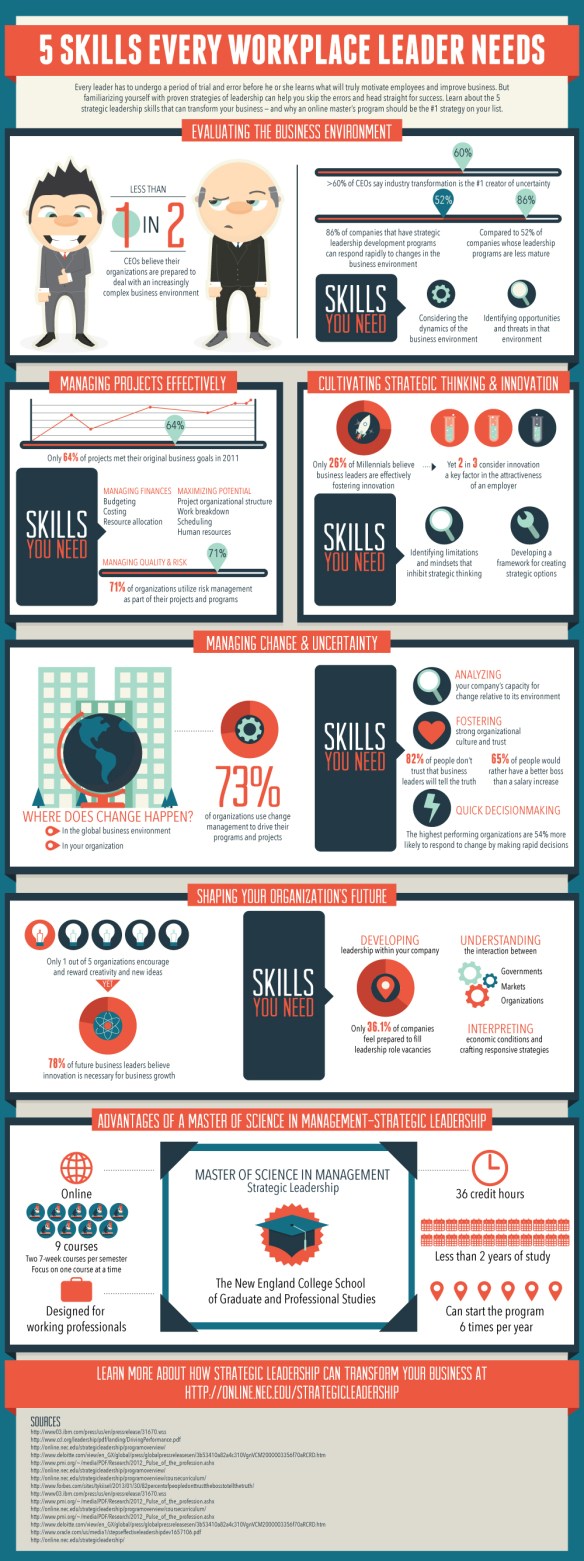
5 Skills Every Workplace Leader Needs [Infographic] | DashBurst


Read the full story: 5 Skills Every Workplace Leader Needs [Infographic] | DashBurst

  1. Constantly Evaluating the Business Environment
  2. Managing Projects Efficiently
  3. Cultivating Strategic Thinking and Innovation
  4. Managing Change and Uncertainty
  5. Shaping Your Organization’s Future

5 Skills Leaders Need

What Multitasking Does To Your Brain | Fast Company


In case we needed another reason to close the 15 extra browser tabs we have open, Clifford Nass, a communication professor at Stanford, has provided major motivation for monotasking: according to his research, the more you multitask, the less youre able to learn, concentrate, or be nice to people.

Read: What Multitasking Does To Your Brain | Fast Company | Business + Innovation.

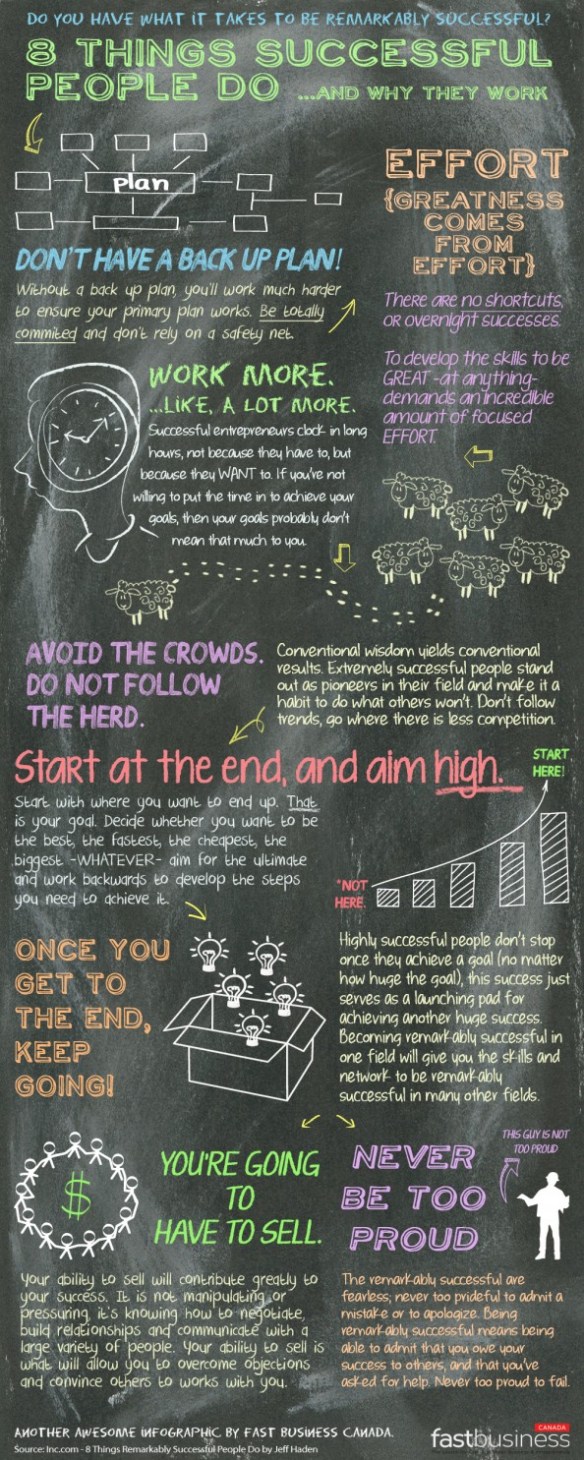
8 things successful people do, and why they work [Infographic] | Visual.ly


8 things successful people do, and why they work  [Infographic] | Visual.ly

8 things successful people do

Classic Leadership Skills You Should Apply to Your Social Life | LifeHacker


What makes a great leader makes a great friend. Nobody wants to think of their social life as a business that needs management, but many of the best leadership techniques can apply to our lives outside of work. Here’s a look at some people who have set good examples in their respective professions, and how you can apply those things to your daily social life.

Read the full story: Classic Leadership Skills You Should Apply to Your Social Life | LifeHacker.

11 Simple Concepts to Become a Better Leader | Stephen’s Lighthouse


By David Kerpen (CEO, Likeable Local, NY Times Best-Selling Author & Keynote Speaker)  via LinkedIn

FULL POST
11 Simple Concepts to Become a Better Leader

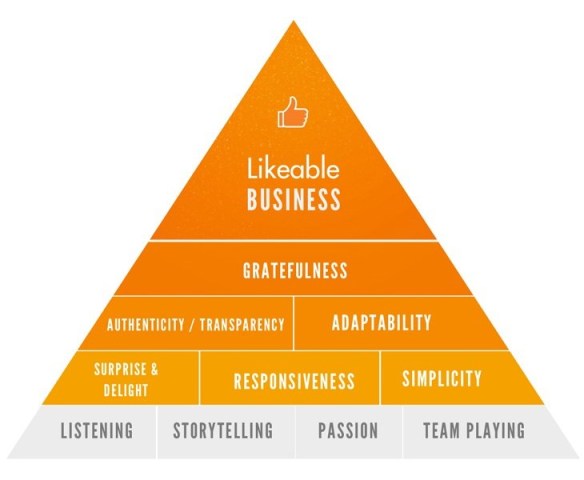
Being likeable will help you in your job, business, relationships, and life. I interviewed dozens of successful business leaders for my last book, to determine what made them so likeable and their companies so successful. All of the concepts are simple, and yet, perhaps in the name of revenues or the bottom line, we often lose sight of the simple things – things that not only make us human, but can actually help us become more successful. Below are the eleven most important principles to integrate to become a better leader:

1. Listening

“When people talk, listen completely. Most people never listen.” – Ernest Hemingway

Listening is the foundation of any good relationship. Great leaders listen to what their customers and prospects want and need, and they listen to the challenges those customers face. They listen to colleagues and are open to new ideas. They listen to shareholders, investors, and competitors. Here’s why the best CEO’s listen more.

2. Storytelling

“Storytelling is the most powerful way to put ideas into the world today.” -Robert McAfee Brown

After listening, leaders need to tell great stories in order to sell their products, but more important, in order to sell their ideas. Storytelling is what captivates people and drives them to take action. Whether you’re telling a story to one prospect over lunch, a boardroom full of people, or thousands of people through an online video – storytelling wins customers.

3. Authenticity

“I had no idea that being your authentic self could make me as rich as I’ve become. If I had, I’d have done it a lot earlier.” -Oprah Winfrey

Great leaders are who they say they are, and they have integrity beyond compare. Vulnerability and humility are hallmarks of the authentic leader and create a positive, attractive energy. Customers, employees, and media all want to help an authentic person to succeed. There used to be a divide between one’s public self and private self, but the social internet has blurred that line. Tomorrow’s leaders are transparent about who they are online, merging their personal and professional lives together.

4. Transparency

“As a small businessperson, you have no greater leverage than the truth.” -John Whittier

There is nowhere to hide anymore, and businesspeople who attempt to keep secrets will eventually be exposed. Openness and honesty lead to happier staff and customers and colleagues. More important, transparency makes it a lot easier to sleep at night – unworried about what you said to whom, a happier leader is a more productive one.

5. Team Playing

“Individuals play the game, but teams beat the odds.” -SEAL Team Saying

No matter how small your organization, you interact with others every day. Letting others shine, encouraging innovative ideas, practicing humility, and following other rules for working in teams will help you become a more likeable leader. You’ll need a culture of success within your organization, one that includes out-of-the-box thinking.

6. Responsiveness

“Life is 10% what happens to you and 90% how you react to it.” -Charles Swindoll

The best leaders are responsive to their customers, staff, investors, and prospects. Every stakeholder today is a potential viral sparkplug, for better or for worse, and the winning leader is one who recognizes this and insists upon a culture of responsiveness. Whether the communication is email, voice mail, a note or a tweet, responding shows you care and gives your customers and colleagues a say, allowing them to make a positive impact on the organization.

7. Adaptability

“When you’re finished changing, you’re finished.” -Ben Franklin

There has never been a faster-changing marketplace than the one we live in today. Leaders must be flexible in managing changing opportunities and challenges and nimble enough to pivot at the right moment. Stubbornness is no longer desirable to most organizations. Instead, humility and the willingness to adapt mark a great leader.

8. Passion

“The only way to do great work is to love the work you do.” -Steve Jobs

Those who love what they do don’t have to work a day in their lives. People who are able to bring passion to their business have a remarkable advantage, as that passion is contagious to customers and colleagues alike. Finding and increasing your passion will absolutely affect your bottom line.

9. Surprise and Delight

“A true leader always keeps an element of surprise up his sleeve, which others cannot grasp but which keeps his public excited and breathless.” -Charles de Gaulle

Most people like surprises in their day-to-day lives. Likeable leaders underpromise and overdeliver, assuring that customers and staff are surprised in a positive way. There are a plethora of ways to surprise without spending extra money – a smile, We all like to be delighted — surprise and delight create incredible word-of-mouth marketing opportunities.

10. Simplicity

“Less isn’t more; just enough is more.” -Milton Glaser

The world is more complex than ever before, and yet what customers often respond to best is simplicity — in design, form, and function. Taking complex projects, challenges, and ideas and distilling them to their simplest components allows customers, staff, and other stakeholders to better understand and buy into your vision. We humans all crave simplicity, and so today’s leader must be focused and deliver simplicity.

11. Gratefulness

“I would maintain that thanks are the highest form of thought, and that gratitude is happiness doubled by wonder.” -Gilbert Chesterton

Likeable leaders are ever grateful for the people who contribute to their opportunities and success. Being appreciative and saying thank you to mentors, customers, colleagues, and other stakeholders keeps leaders humble, appreciated, and well received. It also makes you feel great! Donor’s Choose studied the value of a hand-written thank-you note, and actually found donors were 38% more likely to give a 2nd time if they got a hand-written note!

The Golden Rule: Above all else, treat others as you’d like to be treated

By showing others the same courtesy you expect from them, you will gain more respect from coworkers, customers, and business partners. Holding others in high regard demonstrates your company’s likeability and motivates others to work with you. This seems so simple, as do so many of these principles — and yet many people, too concerned with making money or getting by, fail to truly adopt these key concepts.

via 11 Simple Concepts to Become a Better Leader | Stephen’s Lighthouse.

Student Leadership: Time to get on Board! | Hack Library School


Here’s an MLIS student’s take on getting involved in leadership activities while completing a graduate program.

Student Leadership: Time to get on Board! | Hack Library School.