High-tech gloves can teach you Braille even if you’re distracted | Engadget


It looks like a team of Georgia Tech researchers is in the business of making wondrous, high-tech gloves — their most recent one, for instance, can teach you Braille even if youre doing something else. Similar to the piano-teaching glove they designed years ago, this new pair has vibrating motors on each knuckle that buzz in different patterns to correspond with preset Braille phrases.

Read More: High-tech gloves can teach you Braille even if you’re distracted | Engadget

Sarah Lewis: Embrace the Near Win | TED.com


At her first museum job, art historian Sarah Lewis noticed something important about an artist she was studying: Not every artwork was a total masterpiece. She asks us to consider the role of the almost-failure, the near win, in our own lives. In our pursuit of success and mastery, is it actually our near wins that push us forward?

Sarah Lewis: Embrace the near win | Talk Video | TED.com

A Brilliantly Simple Design Transforms Old Boxes Into School Desks And Bags | Co.Exist


Most schools in rural India can’t afford basic supplies like desks, and most of the students attending them can’t afford backpacks. The Bombay-based nonprofit Aarambh worked with designers to come up with an ingenious solution to both problems: Their simple stencil transforms old cardboard boxes into a convertible desk and school bag.

READ MORE: A Brilliantly Simple Design Transforms Old Boxes Into School Desks And Bags | Co.Exist | ideas + impact.

The Best Leaders Are Humble Leaders | Harvard Business Review


In a global marketplace where problems are increasingly complex, no one person will ever have all the answers. That’s why Google’s SVP of People Operations, Lazlo Bock, says humility is one of the traits he’s looking for in new hires. “Your end goal,” explained Bock, “is what can we do together to problem-solve. I’ve contributed my piece, and then I step back.” And it is not just humility in creating space for others to contribute, says Bock—it’s “intellectual humility. Without humility, you are unable to learn.”

A recent Catalyst study backs this up, showing that humility is one of four critical leadership factors for creating an environment where employees from different demographic backgrounds feel included. In a survey of more than 1500 workers from Australia, China, Germany, India, Mexico, and the U.S., we found that when employees observed altruistic or selfless behavior in their managers — a style characterized by 1 acts of humility, such as learning from criticism and admitting mistakes; 2 empowering followers to learn and develop; 3 acts of courage, such as taking personal risks for the greater good; and 4 holding employees responsible for results — they were more likely to report feeling included in their work teams. This was true for both women and men.

READ MORE: The Best Leaders Are Humble Leaders | Jeanine Prime, and Elizabeth Salib | Harvard Business Review.

$1 Million in 1 Day: Reading Rainbow Kickstarter Earns Pot of Gold | Mashable


You did it, Internet readers. In just half a day, LeVar Burton’s Reading Rainbow campaign to raise $1 million on crowdfunding website Kickstarter has reached its seven-figure goal.

The money from nearly 23,000 donors will be used to bring Burton’s cult TV classic to a new generation of readers by building a web version for families at home, creating a classroom version for teachers and providing free access to it for schools in need.

The online campaign, fueled by buzz generated on social media, surpassed $1 million shortly before 8 p.m. ET on Wednesday. Burton, the creator and host of PBS’ series Reading Rainbow from 1983 to 2006, launched the Kickstarter project earlier in the day.

Read More: $1 Million in 1 Day: Reading Rainbow Kickstarter Earns Pot of Gold | Mashable

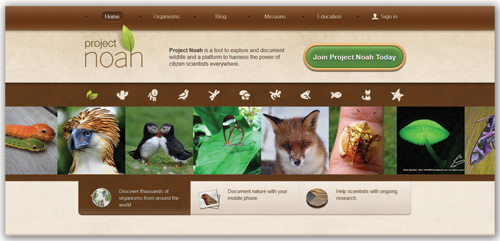
Apps for Outdoor Learning | The Digital Shift


With spring in the air, students typically clamor to get outside—and teachers would often like to follow. April is an ideal time of year to explore outdoor learning opportunities, and these apps and sites can lead the way. READ MORE: Apps for Outdoor Learning | Cool Tools | The Digital Shift.

I would also recommend the Encyclopedia of Life’s Tools & Resources page for more tools to enhance outdoor educational activities.

Librarians as Instructional Designers: Strategies for Engaging Conversations for Learning | The Unquiet Librarian


School, academic, and public librarians often cite collaborative partnerships as one of the greatest challenges of the profession—how do we invite collaboration, how do we nurture and sustain those partnerships, and how might those efforts translate into additional endeavors?  Identifying common goals and cultivating trust are two fundamental building blocks in this process, but libraries and librarians being sensitive to the needs of the community, whether it is an individual, group, or organization, is also paramount.

Read more: Librarians as Instructional Designers: Strategies for Engaging Conversations for Learning | The Unquiet Librarian.

What Teens, Screens and Digitally Divided Attention Spans Mean for Learning [Infographic] | The LAMP


What Teens, Screens and Digitally Divided Attention Spans Mean for Learning

What Teens, Screens and Digitally Divided Attention Spans Mean for Learning [Infographic] | The LAMP

5 Reasons to Teach Kids To Code [Infographic] | Kodable


5 Reasons to Teach Kids To Code | Kodable

5 reasons to tech kids to code

How Professors Are Using Social Media (INFOGRAPHIC) | HuffPost


Article in Full

Professors aren’t so different from the regular populace when it comes to their views on social media.

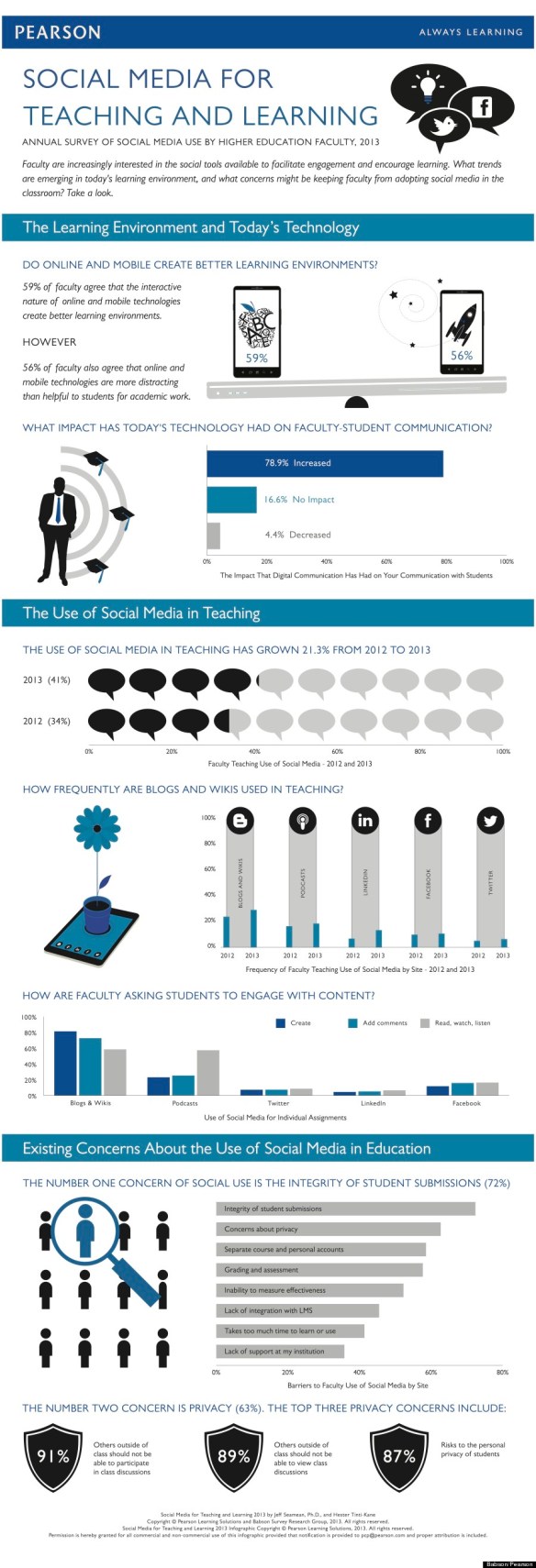
Just over 70 percent used social media in their personal lives, a survey released last week by Babson Survey Research Group andPearson found. This figure mirrors usage among the general population, according to the Pew Research Center.

Babson and Pearson surveyed 8,000 faculty members from all disciplines in higher education for their report, “Social Media for Teaching and Learning.”

Faculty personally choose to use Facebook more than any other type of social media outlet, according to the report, but were more likely to use blogs and wikis for classroom assignments.

Less than half of faculty — 41 percent — use social media as a tool in class, but that’s up from 33.8 percent in last year’s survey.

“Faculty are not only expanding their use of social media, but also becoming more sophisticated in their use,” Jeff Seaman, co-director of the Babson Survey Research Group, said in a statement. “We see steady growth in adoption year over year; however, there are still great concerns that we hear from every age group, and that holds educators back from full adoption in their teaching.”

Faculty cited “integrity of student submissions” and privacy as their main concerns with social media use. Privacy was a large concern among previous surveys of the general population as well.
Social Media for Teaching and Learning