Coldplay Announces Lyrics Scavenger Hunt in Libraries Worldwide| Radio.com


The good news? Coldplay fans can read the lyrics to the band’s new album before it hits stores. The bad news? They’ll have to find them, first.

The band announced today (April 28) they will hide handwritten lyric sheets of Ghost Stories from frontman Chris Martin in nine libraries across the world, creating a scavenger hunt for fans to discover.

Clues to each sheet’s location will be dispensed on Coldplay’s Twitter account. Once a page is found, a photo of it will be uploaded for others to see.

Additionally, one of the envelopes containing the lyrics also includes a ticket for a free trip to London to see the band’s July 1 performance at the Royal Albert Hall.

via Coldplay Announces Lyrics Scavenger Hunt in Libraries Worldwide | Radio.com

Queens Library Tests Job Application Kiosk with Real-Time Video | The Digital Shift


Building on the success of its existing job search and job training programs, the Queens Library recently began testing a new touch-screen job search kiosk at its central branch in Jamaica, Queens. The kiosk is driven by Apploi, a mobile app launched in April 2013 by recruitment software and services provider Innovate CV, and is fully funded and serviced by InnovateCV subsidiary Jobs4Five. Queens Library patrons can create a “passport” profile with essential resume information; search for job openings using a variety of filters including location, company, industry, posting date, keywords, or job titles; and record video responses to questions provided by specific employers, which are then included as part of their application. The kiosks can also be used for real-time video interviews.

Applicants and employers “don’t have to wait a week or two weeks for an interview” after submitting an application. “They can do it right then and there,” explained Joanne King, director of communications for Queens Library.

Read more: Queens Library Tests Job Application Kiosk with Real-Time Video | The Digital Shift.

Going to the Library Can Make You as Happy as a Pay Raise, Study Claims | Bustle


Apparently, libraries provide patrons with a happiness that money can’t buy. Or at least nothing less than almost two grand in cash. According to a recent study commissioned by the U.K.’s Department for Culture, Media, and Sport, the act of going to the library induces joy equivalent to that brought on by a £1,359 ($1,878) pay raise.

The study was conducted in an attempt to measure which activities have the most positive impact on an individual’s wellbeing. Visiting a library scored among the top joy-generating activities, alongside dancing and swimming, giving us yet another reason to hang-out at our local library.

Read more: Going to the Library Can Make You as Happy as a Pay Raise, Study Claims | Bustle.

5 Good Reasons to Take Your Kids to the Library Today | Christine French Cully | HuffPo


I learned to print my name almost before I could read it — for the sole purpose of getting my own library card. I was so young I had to stand on tiptoe to see over the check-out desk and hand the librarian my application. When the librarian, in turn, handed me a library card with my own name typed on it — not my mother’s — I was ecstatic. I literally wore out the card in a few months, off and running toward becoming a lifelong reader.

Recognizing the role the library played in my becoming a book lover (and a career children’s editor), I herded my kids into the library as soon as they could toddle. Libraries had changed a lot, of course, but — just as I did — my kids quickly felt at home there. The children’s librarian came to know them, helped them select books, and, even better, encouraged them to also choose their own books. Libraries have played such an essential role in our family that I’m almost gobsmacked when I encounter families who don’t share my enthusiasm. Some say that the children’s rooms of libraries are an anachronism in a world of mobile screens with books on demand. But I say that while childhood has changed quite a bit, children have not. Read more: 5 Good Reasons to Take Your Kids to the Library Today | Christine French Cully | HuffPo

Our Library Ecosystem Is Under Threat | Barbara K. Stripling | HuffPo


The sounds of libraries today reveal the impact of libraries throughout our lives — from the excited giggles of toddlers in storytimes to the “aha’s!” of young people engaged in inquiry to the quiet conversations of senior citizens discovering new authors and using computers to research. All types of libraries — school, public, and academic — form a library ecosystem that provides and supports lifelong learning.

For example school librarians teach children the 21st-century skills they need to build knowledge, create and share their own ideas, successfully complete their high school education, and prepare themselves for college and career. Academic librarians enable students to complete their college degrees, building on the skills taught by school librarians, and support academic research and scholarship. Public librarians extend the work of school and academic librarians by providing homework help, literacy resources, and after-school and summer programming. Public librarians take up the mantle of support for lifelong learning by providing resources, services, and programs tailored to meet the needs, interests and aspirations of all of their community members.

Under this view of a library ecosystem, all types of libraries work together to deliver learning opportunities for people of all ages. However, a threat to one part of the system stresses the entire system.

At this moment we are facing a serious threat to school libraries, and thus to the entire library ecosystem. Read more: Our Library Ecosystem Is Under Threat | Barbara K. Stripling | HuffPo.

TNT greenlights ‘The Librarians’ franchise as a series | EW.com


TNT has greenlit 10 episodes for a series based on The Librarians franchise, slated to air in late 2014. The TV movies told the story of a group of extra special librarians who live beneath the Metropolitan Public Library in New York and safeguard mystical relics from forces of evil by slapping them with outrageous overdue fees. The plot is a messy stew of Indiana Jones, National Treasure, and Hell Boy …but the product is less than the sum of its parts. Read more: TNT greenlights ‘The Librarians’ franchise as a series | Inside TV | EW.com.

A Pyramid in the Middle of Nowhere Built To Track the End of the World | Gizmodo


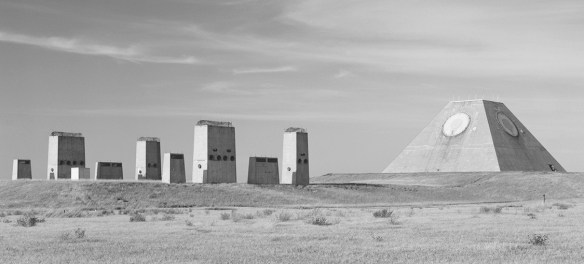
A huge pyramid in the middle of nowhere tracking the end of the world on radar, just an abstract geometric shape beneath the sky without a human being in sight: it could be the opening scene of an apocalyptic science fiction film, but it’s just the U.S. military going about its business, building vast and other-worldly architectural structures that the civilian world only rarely sees.

The Library of Congress has an extraordinary set of images documenting the Stanley R. Mickelsen Safeguard Complex in Cavalier County, North Dakota, showing it in various states of construction and completion. And the photos are awesome. Read more:  A Pyramid in the Middle of Nowhere Built To Track the End of the World | Gizmodo

Last chapter for many Environment Canada libraries | PostMedia | Canada.com


Full Post

Last chapter for many Environment Canada libraries

Books and reports from a Department of Fisheries library at the Maurice Lamontagne Institute in Mont Joli, Que., tossed into a dumpster, according to scientists distributing the photo.

Photograph by: HANDOUT , Postmedia News

Environment Canada has a phone number for its library in Calgary. But a meteorologist answers, and he can’t say what’s become of the books.

It’s a similar story in Edmonton and Quebec City where federal libraries, with shelves loaded with reference books and scientific reports on everything from beluga whales to songbirds, now exist only in name.

Environment Canada lists the libraries on its website but the books are long gone.

“It’s been moved to Saskatoon,” said a woman named Susan who picked up at the phone number for the Edmonton library. In Yellowknife an answering machine said the Environment Canada library “is closed.” And the number listed for the federal conservation and environment library in Winnipeg is no longer in service.

Environment Canada, like the department of Fisheries and Oceans, is closing and consolidating its science libraries to the dismay of some observers who worry valuable books and materials are being lost.

“My sense is that the Environment Canada policy has been to essentially hack one arm off to save the other,” said one scientist, who asked not to be identified for fear of losing his job. He said the big worry is the loss of so-called “grey literature” — material that hasn’t been widely published, with as few as one or two copies in existence — and historical reports on wildlife and the environment that exist nowhere else.

Environment Canada libraries in Winnipeg, Edmonton, Calgary and Yellowknife have closed and the collections have been shipped to Saskatoon. A skeleton staff of one librarian and a couple of co-op students are said to be dealing with the consolidated collection in Saskatoon, which includes 650 boxes stashed in a “caged” storage areas awaiting sorting and cataloguing.

Several Environment Canada libraries in the East — including the ones in Quebec City and Sackville, N.B., have also been shuttered, others have been downsized, and some cases valuable materials has been tossed, scientists say.

Cuts to the federal science library programs have been underway for years but concern and controversy has grown as the books have been cleared off the shelves, with excess and outdated material landing in dumpsters. Peter Wells, an ocean pollution expert at Dalhousie University in Halifax, describes the closing of the DFO libraries as a “national tragedy.” And recent reports have likened it to burning books.

Barbara Clubb, interim executive director of the Canadian Library Association, said the group’s members are concerned. The reports of loss of access to valuable materials are “very, very worrying,” said Clubb.

The government defends the closures saying they are part of an effort to modernize its science libraries.

Environment Canada’s media office said in a statement Thursday that the department is closing and consolidating 12 libraries and reading rooms as part of a “modernization initiative” and “digitization plan.”

And Gail Shea, Minister of Fisheries and Oceans insisted this week that the closing of DFO libraries will save taxpayers’ money and not impact access.

“It is absolutely false to insinuate that any books were burnt,” Gail Shea, Minister of Fisheries and Oceans said in a statement this week.

Seven DFO libraries across Canada, including two that have been amassing books and technical reports on the aquatic realm for more than a century, are being consolidated at two primary locations in Sidney, B.C., and Dartmouth, N.S.

Shea said duplicate materials were offered to other libraries. “They were also offered to the DFO staff on site at the library, then offered to the general public, and finally were recycled in a ‘green’ fashion if there were no takers,” the statement said.

Shea also said “the decision to consolidate our network of libraries was based on value for taxpayers.”

“An average of only five to 12 people who work outside of DFO visit our 11 libraries each year,” she said. “It is not fair to taxpayers to make them pay for libraries that so few people actually use.”

Science historian Jennifer Hubbard at Ryerson University in Toronto said Shea’s argument is misleading because people cannot “just waltz” into federal research libraries. Hubbard, who has worked extensively with the DFO collection, said a security pass is needed to visit the consolidated DFO library in Nova Scotia.

She also said it made “no economic sense” to close the brand new climate-controlled DFO library at the St. Andrews Biological Station in New Brunswick built by the Harper government at a cost of several million federal tax dollars.

Environment Canada media officer Danny Kingsberry said in the statement much work remains to be done as the department consolidates material from five staffed libraries, seven unstaffed reading rooms and material from retiring scientists who “leave their books, journals behind.”

“There are approximately 650 boxes of print material in a storage cage at the National Hydrology Research Centre in Saskatoon, where the Saskatoon library is located,” Kingsberry said.

“The bulk of it is transferred material from consolidated EC libraries and EC Programs that has not yet been reviewed by local library staff,” he said. “This material will be sorted and either added to the collection or not, based on the relevance of each item.”

Both DFO and Environment Canada have online library catalogues and will arrange interlibrary loans, but many federal librarian jobs have been eliminated with the libraries. Kingsberry said the plan is to digitize “rare, historical and ‘one-off’ ” holdings but it is not clear how long that costly job will take.

“What is the plan for digitization and how much is being done,” said Clubb, at the library association. The association is also looking for information on the government plan for ensuring “information professionals” are available to help people find and access material. “You can not get everything you need on Google, by any means,” said Clubb.

Hubbard agrees.

Claims by DFO that “all material has been scanned and made available online is simply untrue,” said Hubbard. She said she has been having trouble locating historic reports about East Coast marine science that were on the selves of DFO libraries that closed.

Hubbard and other researchers say historical data and reports are increasingly valuable given the change underway in the world’s ecosystems.

“DFO is dumping documents, including grey literature that exists in limited quantities, just at a point when fisheries biologists around the world have been turning to historical studies, data, and graphical information to reconstruct the effects of fishing and fisheries policies, and to document environmental change,” said Hubbard.

“The Department of the Environment’s scientists would similarly need to have access to older data and documents for doing historical time series to investigate environmental change in terms of populations, climate, etc, or even — ironically — potentially to critique some of the current scientific narratives of which the Conservative government is suspicious,” she said.

Environment Canada’s collections include reference materials like the 16-volume Handbook of the Birds of the World, historic photographs of glaciers in the Rockies and reports produced by federal scientists over the decades, some found nowhere else.

Insiders at Environment Canada say a lot of material was discarded as a result of the closures of the regional libraries and renovation and downsizing at the department’s reference library in Gatineau, Que. They said the loss includes dozens of boxes full of historical environmental reports and studies from around the world that had been translated for use by Canadians.

“They were immaculate translations,” said one scientist. While the original reports may still exist in foreign libraries, the translations are lost. “If you knew about the obscure Russian papers from the 1930s, the librarian could probably bring it in for you, but you’d have to read Russian.”

mmunro@postmedia.com

Twitter.com/margaretmunro

Finally, a Digital Library of Bizarre Human Bones From the Middle Ages | Gizmodo


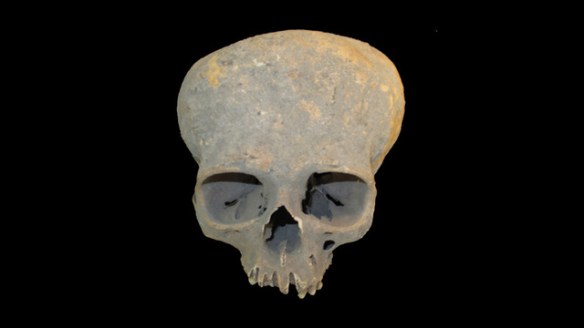
skull from Chichester

A spinal column with fused vertebrae. The bones of a woman with advanced syphilis. Skeletons deformed by rickets and leprosy. A fascinating online library of deformed bones from the Middle Ages goes live today—and while I didn’t even realize such a thing existed, now I can’t imagine living without it. God bless technology.

The Digit[ised] Diseases website is run by the Royal College of Surgeons in London. It brings together 3D scans of over 1,600 bone specimens taken from patients with debilitating and disfiguring conditions like rickets and leprosy, and makes them free for the public to browse. Bored on a Monday morning? Gawk at this deformed spinal column or marvel at this alien-like skull with an enlarged cranium. In the scientists’ own words, “it does not resemble any known hominid species.” Cool!

Read:  Finally, a Digital Library of Bizarre Human Bones From the Middle Ages | Gizmodo

Librarians as Instructional Designers: Strategies for Engaging Conversations for Learning | The Unquiet Librarian


School, academic, and public librarians often cite collaborative partnerships as one of the greatest challenges of the profession—how do we invite collaboration, how do we nurture and sustain those partnerships, and how might those efforts translate into additional endeavors?  Identifying common goals and cultivating trust are two fundamental building blocks in this process, but libraries and librarians being sensitive to the needs of the community, whether it is an individual, group, or organization, is also paramount.

Read more: Librarians as Instructional Designers: Strategies for Engaging Conversations for Learning | The Unquiet Librarian.