Personality-Based Book Recommendation Links


Best Books: 36 Reads For Every Personality On Your List | HuffPost

  • Class Clown
  • The Optimist
  • The Giver
  • The Fitness Buff
  • The Old Soul
  • The Chef To Be
  • The Introvert
  • The Extrovert
  • The Business-Oriented

The Readers: Books for Every Personality | ChaptersIndigo

  • Inside
  • The Trendsetter
  • The Foodie
  • The Rebel
  • The Man
  • The Inspired Woman
  • The News Junkie
  • The Book Clubber
  • The Geek
  • The Traditionalist

7 Books That Are Perfect For Introverts | HuffPo

Here Is The One Perfect Book For Every Single Myers-Briggs Type | HuffPo

Need to figure out your M-B type? Check out: What Myers-Briggs Personality Type Are You? | LifeHacker or the MBTI Personality Types Socioeconomic Infographic.


What Neuroscience Says About The Link Between Creativity And Madness | Co.Design


The idea that very creative people are also a little crazy has been around since humanity’s earliest days. In ancient Greece, Plato noted the eccentricities of poets and playwrights, and Aristotle saw that some creative types were also depressives. In modern times, that connection has persisted, from Robert Schumann hearing voices guide his music to Sylvia Plath sticking her head in an oven to Van Gogh cutting off his ear to Michael Jackson … being Michael Jackson.

Today the link between creativity and mental illness is firmly embedded in the public conscience. Unlike some supposed cultural wisdoms, however, there’s a good bit of scientific evidence behind this one. Behavioral and brain researchers have found a number of strong if indirect ties between an original mind and a troubled one (many summarized in a recent post by psychologist Scott Barry Kaufman at his Scientific American blog).

Read: What Neuroscience Says About The Link Between Creativity And Madness | Co.Design | business + design.

5 Big Happiness Myths Debunked–And The Power Of Negative Thinking | Fast Company


It sometimes feels as if the “happiness industry”–the self-help books, motivational speakers, corporate consultants and the rest–makes its money by being useless.

It’s an ingenious business model, when you think about it: promise to help people think positive, then when your techniques fail, conclude that they weren’t thinking positively enough–sending them back for more. Among the many myths and misconceptions dogging the subject of happiness, here are five of the worst, along with some suggestions for what to do instead.

Myths debunked:

  1. It’s Crucial To Maintain A Positive Mindset
  2. Ambitious Goals, Relentlessly Pursued, Are The Key To Success
  3. The Best Managers Are Those Who Make Work Fun
  4. Higher Self-esteem Equals Greater Happiness
  5. Avoid Pessimists At All Costs

Read: 5 Big Happiness Myths Debunked–And The Power Of Negative Thinking | Fast Company | Business + Innovation.

Is It OK to Yell at Your Employees? | Michael Schrage | HBR


Full Article

Steve JobsJeff Bezos. Martha Stewart. Bill Gates. Larry Ellison. Jack Welch. Successful. Visionary. Competitive. Demanding. And each with a well-deserved reputation for raising their voices. They yelled. Yelling was an integral part of their leadership and management styles.

Is that bad? Is that a flaw?

Harvard Business School recently published and popularized a case study of Sir Alex Ferguson, Manchester United’s recently retired manager and the most successful coach in English Premier League history. Ferguson was a fantastic leader and motivator. But Sir Alex was particularly famous for his “hair dryer treatment”: When he was angry with his players, he shouted at them with such force and intensity it was like having a hair dryer switched on in their faces.

Does that make Sir Alex’s leadership less worthy of study and emulation?

Of course, that’s sports. Elite coaches worldwide are notorious for yelling at their talented athletes. Vince Lombardi, Mike Ditka, Bela Karolyi, Pat Summitt, and Jose Mourinho were comparably effective at raising their voices to command attention and results. They inspired great performances and even greater loyalty.

High-decibel intensity is similarly found in special forces training and commands in the military. Yelling is intrinsic to elite military unit culture. It’s expected, not rejected. But perhaps the inherent physicality and emotional stresses of those fields make yelling more acceptable than in more creative and aesthetic endeavors.

But wait: Even the seemingly genteel world of classical music evokes clashes other than cymbals. The world’s best and most highly regarded conductors are frequently famous for raising their voices even higher than their batons. Arturo Toscanini, Herbert von Karajan, and even Daniel Barenboim had reputations for making sure their sharper words were heard above the flatter music. For world-class symphony orchestras, world-class conductors’ critiques are seldom sotto voce.

There’s surely never been a shortage of movie and theater directors who emphatically raise their voices to raise the level of performance of their actors and crew. Neither Stanley Kubrick nor Howard Hawks, for example, were mutes.

What’s true for the collaborative arts holds true for the collaborative sciences, as well. Nobelist Ernest Rutherford was a force of nature who rarely hesitated to firmly and loudly make his questions and concerns known during his astonishingly successful tenure running Cambridge’s Cavendish Lab. His Cavendish was arguably the most important experimental physics lab in the world.

To be sure, yelling doesn’t make someone a better leader or manager. But the notion that raising one’s voice represents managerial weakness or a failure of leadership seems to be prima facie nonsense. The empirical fact pattern suggests that in a variety of creative and intensely competitive talent-rich disciplines around the world, the most successful leaders actually have yelling as both a core competence and brand attribute. These leaders apparently benefit from the acoustic intensity of their authenticity and the authenticity of their intensity.

But is that a good thing? Or a necessary evil?

Stanford Professor Bob Sutton, who authored the managerial cult classic The No Asshole Rule is not quick to condemn leaders and managers who raise their voices with intent.

“To me it is all about context and culture,” he told me via email, “and the history of the relationship. So in some settings, yelling is accepted and is not viewed as a personal insult, but an expected part of leadership. The National Football League is an example… I once tried to teach the ‘no asshole rule’ to a group of folks from NFL teams, and in that context, many of the behaviors that might be shocking in a school, company, or hospital were normal. Much of it comes down to intent and impact, so does it leave the person feeling demeaned and de-energized? Or is it taken as acceptable and expected, and even as a sign of caring?”

Exactly. Would you pay more — and better — attention if you were being yelled at by someone who cares as much about the quality of your work as you do? Or would you find it demotivating? Conversely, if — or when — you raise your voice to a colleague, a boss, or a subordinate, do they hear someone whose passion matters more than their volume?

When I look at the organizations that seem to have the greatest energy and drive, the conversations aren’t whispered and the disagreements aren’t polite. Raised voices mean raised expectations. The volumes reflect intensity, not intimidation.

In other words, yelling isn’t necessarily a bug; it can be a feature — a poignant one.

Sutton concluded his email as follows: “Remember the late and great J. Richard Hackman from Harvard? He yelled at me now and then — I mean yelled, swearing, calling me an idiot — when I was about to make some bad career choices. I appreciated it at the time and have loved him more for it over the years. I knew he was doing because he cared and wanted to make sure I got the message. I wish he were here to yell at me right now.”

If you’re yelling because humiliating and demeaning people is part of who you are, you’ve got bigger professional issues than your decibel level. Your organization needs a quiet conversation about whether your people should work a little louder. But if raising your voice because you care is part of who you are as a person and communicator, your employees should have the courtesy and professionalism to respect that.

Is It OK to Yell at Your Employees? | Michael Schrage | Harvard Business Review

IBM Software Learns Your Personality, Could Tailor Ads Accordingly | MIT Technology Review


Trying to derive a person’s wants and needs—conscious or otherwise—from online browsing and buying habits has become crucial to companies of all kinds.

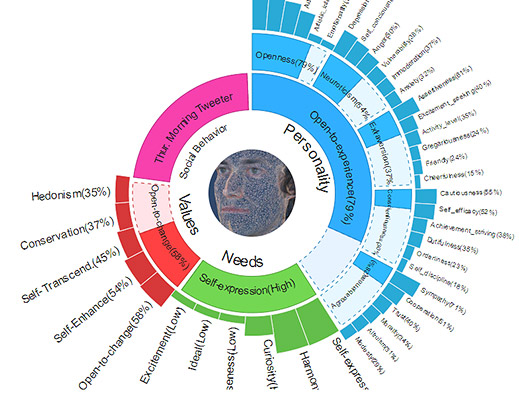
Now IBM is taking the idea a step further. It is testing technology that guesses at people’s core psychological traits by analyzing what they post on Twitter, with the goal of offering personalized customer service or better-targeted promotional messages.

Read more: IBM Software Learns Your Personality, Could Tailor Ads Accordingly | MIT Technology Review.

IBM Personality Analysis


How to Plant Ideas in Someone’s Mind | LifeHacker


If you’ve ever been convinced by a salesperson that you truly wanted a product, done something too instinctively, or made choices that seemed entirely out of character, then you’ve had an idea planted in your mind. Here’s how it’s done.

Three ideas suggested:

  • Reverse Psychology Actually Works
  • Never Talk About the Idea — Talk Around It
  • Undersell

Read: How to Plant Ideas in Someone’s Mind | LifeHacker.

‘Big Disconnect’ Offers Guidance for Parents in a Tech-Crazed World | PBS


Did you hear the one about the 7-year-old boy who opened a Wii on Christmas morning and when his parents finally checked on him, he’d played for 18 hours? Or the one about the 13-year-old girl who accidentally “butt-dialed” an old acquaintance whose number now belonged to a transsexual prostitute, who then launched a vendetta against the girl? Catherine Steiner-Adair, a psychologist whom parents seem to call whenever there’s a digital/psychological crisis at home, has heard all these stories and more, and shares them in “The Big Disconnect: Protecting Childhood and Family Relationships in the Digital Age.”

A new policy statement issued by the American Academy of Pediatrics on October 28 recommends parents control the quantity and content of the media their children consume, keep tech gadgets out of kids’ bedrooms, and model good behavior for kids by limiting their own tech use. Steiner-Adair advises the same limits, and backs these up with examples from the children and families she works with as a counselor. Here are the key lessons “The Big Disconnect” taught me, and the grades I’d give myself for how well I’m handling tech at each age.

Read: ‘Big Disconnect’ Offers Guidance for Parents in a Tech-Crazed World | Mediashift | PBS.

Can Technology Ever Make Us Truly Happy? | Gizmodo


Humans are clever: what sets us apart from the rest of the creatures on the planet is our ability to think about the world around us—and shape it. But in making all the technological advances that seems so smart, are we making the world better, or just different?

This video takes a pretty lofty view of that poser. Considering ideas like super intelligence, super longevity and super well being, it asks some pretty fundamental questions about whether those kinds of technological accomplishments are actually a good thing or not. What do you think? via Can Technology Ever Make Us Truly Happy? | Gizmodo

Want people to trust you? Try apologising for the rain | BPS Research Digest


If you want people to see you as trustworthy, try apologising for situations outside of your control such as the rain or a transport delay. That’s the implication of a new study by researchers at Harvard Business School and Wharton School, University of Pennsylvania.

Read: Want people to trust you? Try apologising for the rain | BPS Research Digest.

You may also like: Why It Might Be Helpful to Apologize for Something That’s Not Your Fault | HBR

How To Wire Your Brain For Happiness | HuffPost


The secret to lasting happiness might be neatly summed up in a cheesy neuroscience joke: “The neurons that fire together, wire together.”

The article shares 5 ways for hardwiring happiness.

via How To Wire Your Brain For Happiness | HuffPost.