Two Never Before Seen Fairy Tales by the Grimm’s Favorite Folklorist | Flavorwire


In March of 2012, the Guardian announced a major literary and cultural discovery: more than 500 new fairy tales had been unearthed in Germany. The haul of stories was vast, impressively so. It contained in its pages a new world of enchanted animals, magic and romance, legend, otherworldly creatures, parables about nature, and wild exaggeration. But there was something else. These tales had been collecting dust in a bunch of old boxes for more than 150 years. This dating is significant: it confirms that the tales are roughly contemporaneous with those of the Brothers Grimm. To be sure, this was an historic and unprecedented discovery. The woman who made it, a cultural curator and folklorist named Erika Eichenseer, compared the collection to “buried treasure.”

But before Eichenseer found this treasure, before she undertook the truly invaluable work of reading, sorting, and transcribing these tales, she had to discover them in a municipal archive in Regensburg, Germany. And before they were placed in this archive, they were the property of one Franz Xaver von Schönwerth, a high-ranking government official and amateur folklorist of the mid-nineteenth century, who, inspired by the Brothers Grimm, took it upon himself to travel around the Upper Palatinate region of Bavaria, to collect and interview and record the stories he heard from the people there. Schönwerth’s hard work did not go unnoticed. Jacob Grimm, in 1885, declared that “Nowhere in the whole of Germany is anyone collecting [folklore] so accurately, thoroughly and with such a sensitive ear.”

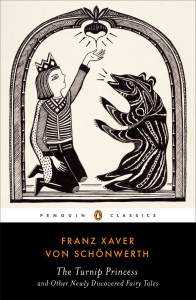
The fruits of this labor of love, of Schönwerth’s (and later Eichenseer’s) hard work, have now been expertly translated, introduced, and commented upon by Maria Tatar in a volume titled The Turnip Princess and Other Newly Discovered Fairy Tales.

READ EXCERPTS: Two Never Before Seen Fairy Tales by the Grimm’s Favorite Folklorist | Flavorwire

Kapow! Stan Lee Is Co-Teaching a Free Comic Book MOOC, and You Can Enroll for Free | Open Culture


“Why did superheroes first arise in 1938 and experience what we refer to as their ‘Golden Age’ during World War II?” “How have comic books, published weekly since the mid-1930’s, mirrored a changing American society, reflecting our mores, slang, fads, biases and prejudices?” “Why was the comic book industry nearly shut down in the McCarthy Era of the 1950’s?” And “When and how did comic book artwork become accepted as a true American art form as indigenous to this country as jazz?”

All of these questions … and more … will be explored in an upcoming MOOC (Massive Open Online Course) co-taught by the legendary comic book artist, Stan Lee. He will be joined by experts from the Smithsonian, and Michael Uslan, the producer of the Batman movies who’s also considered the first instructor to have taught an accredited course on comic book folklore at any university.

The course called The Rise of Superheroes and Their Impact On Pop Culture will be offered through edX, starting on May 5th.

MORE: Kapow! Stan Lee Is Co-Teaching a Free Comic Book MOOC, and You Can Enroll for Free | Open Culture

Publishers Know You Didn’t Finish “The Goldfinch” — Here’s What That Means For The Future Of Books | BuzzFeed News


Millions may have held their suspicions, but last month the Canadian e-reader company Kobo confirmed it: Most people who buy The Goldfinch don’t actually finish it. According to the company’s data, less than half of Canadian and British Kobo readers in 2014 made it to the end of Donna Tartt’s behemoth novel, one of the best-selling of the year.

How did Kobo know this? Like every e-reader and reading-app maker today, the company, a subsidiary of the Japanese e-commerce titan Rakuten, has access to a comprehensive suite of data about the reading behavior of its users. In a white paper titled “Publishing in the Era of Big Data” and released this fall, the company announced that “with the onset of digital reading … it is now possible to know how a customer engages with the book itself — what books were left unopened, which were read to the very last word and how quickly.” In other words, if you read books digitally, the people who serve you those books more than likely know just what kind of reader you are…READ MORE: Publishers Know You Didn’t Finish “The Goldfinch” — Here’s What That Means For The Future Of Books | BuzzFeed News.

James Patterson’s New Book Will Self-Destruct In 24 Hours | Co.Create


I have not read any Patterson books in the last decade or so, as I’m not a fan of his collaborations with other authors to churn out titles. That being said, this is a fantastic book promotion concept. Very creative…and ‘thrilling’ idea.

James Patterson's New Book Will Self-Destruct In 24 Hours | Co.Create | creativity + culture + commerce

He’s got bazillions of fans, sold hundreds of millions of books, and has been called the best paid writer in the world. But this is probably the first time James Patterson will release a book that will actually explode.

READ MORE: James Patterson’s New Book Will Self-Destruct In 24 Hours | Co.Create | creativity + culture + commerce.

Digital Publisher Ellora’s Cave sues Dear Author Blog for Reporting on its Financial Troubles | Gigaom


MUST READ if you are a librarian…blogger, author, book reviewer, in publishing or editing…love books…Digital publisher Ellora’s Cave sues Dear Author blog for reporting on its financial troubles | Gigaom. This makes me sick to my stomach. I feel for all the authors contracted to the company and unable to reverse their rights. The outcome of the lawsuit is extremely important. The fact the lawsuit was filed in the first place is having a huge impact on the blogging and book reviewing community.

HarperCollins Is Now Using Digital Watermarks To Stop Ebook Piracy | Gizmodo


HarperColllins and ebook distributor LibreDigital, have signed up to use a new technology called Guardian Watermarking for Publishing from Digimarc, a new anti-piracy technology that embeds an invisible watermark into ebooks at the time of transaction. The service is cloud-based and offers an easy-to-integrate API for most ebook formats, including EPUB, PDF and MOBI.

READ MORE: HarperCollins Is Now Using Digital Watermarks To Stop Ebook Piracy | Gizmodo

Hachette Says Amazon Is Delaying Delivery of Some Books | NYTimes.com


Amazon has begun discouraging customers from buying books by Malcolm Gladwell, Stephen Colbert, J. D. Salinger and other popular writers, a flexing of its muscle as a battle with a publisher spills into the open. The Internet retailer, which controls more than a third of the book trade in the United States, is marking many books published by Hachette Book Group as not available for at least two or three weeks.

READ MORE: Hachette Says Amazon Is Delaying Delivery of Some Books | NYTimes.com.

12 Irrefutable, Amazing Reasons We Need More Diversity In Books | HuffPost


Read: 12 Irrefutable, Amazing Reasons We Need More Diversity In Books | HuffPost

F Scott Fitzgerald stories published uncensored for the first time | Books | The Guardian


Sexual innuendo, drug references and antisemitic slurs removed by newspaper editors restored in new edition of Taps at Reveille.

Read more: F Scott Fitzgerald stories published uncensored for the first time | Books | The Guardian.

This Video Game Could Revolutionize Publishing—and Reading | The Atlantic


When the Best Books of 2013 are listed, the most important may not make the cut. Thats because the most exciting literary innovation of the year is not a book at all, but a video game for iPad and iPhone. Device 6 is a metaphysical thriller in which the world is made almost entirely from words. Playing it is like reading a book—except, in this book, the words veer off in unexpected directions, rather than progressing in orderly fashion down the page. When Anna, the game’s protagonist, turns a corner in the narrative, the text does too, swerving off to one side at a right angle, forcing the player to rotate the screen.

More in this story about other innovative gaming apps that have a literary angle. Read: This Video Game Could Revolutionize Publishing—and Reading | Rowland Manthorpe | The Atlantic.