Listen to Free, High-Quality AudioBooks of Classic Literature on Spotify: Austen, Dickens, Tolstoy & More | Open Culture


Where music goes, technologically speaking, audio books soon follow. We’ve had audio books on vinyl LP, on cassette tape, on CD, and on MP3, just like we’ve had music. Now that so many of us pull up our daily jams on Spotify, it shouldn’t come as a surprise that we can do a fair bit of our “reading” there as well. We’ve found a few lists that gather up the best audio book available on Spotify, including 21 classics and a collection of Shakespeare plays and sonnets at Gnarl’d, ten evergreen literary picks from Lifehacker, and a Spotify forum thread dedicated to subject.

Below, you’ll find Spotify links to more than 60 classic works of literature that, even if you struggled on getting them read in your English classes, you can now revisit in a perhaps much more lifestyle-compatible medium. To listen to any of these, you will of course need Spotify’s software and account. MORE: Listen to 60+ Free, High-Quality AudioBooks of Classic Literature on Spotify: Austen, Dickens, Tolstoy & More | Open Culture.

For more great audio, don’t forget to visit our collection, 630 Free Audio Books: Download Great Books for Free | Open Culture.
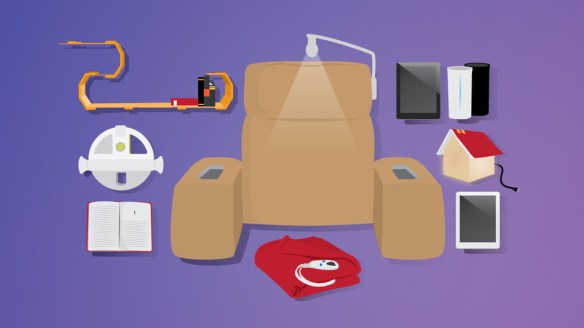
 

10 Gadgets for the Bookworm in Your Life | Mashable


Everyone knows one of them. They always have their nose stuck in a book, they don’t go anywhere without one and they are perennially asking you if you’ve read the book version of that movie that just came out. Bookworms. Book lovers. Bibliophiles.

Although book reading has historically been an analog and solitary activity, 2015 brings with it a new appreciation for digital gadgets, and the book industry isn’t exempt from the wave of tech innovation. READ MORE: 10 gadgets for the bookworm in your life | Mashable

Publishers Know You Didn’t Finish “The Goldfinch” — Here’s What That Means For The Future Of Books | BuzzFeed News


Millions may have held their suspicions, but last month the Canadian e-reader company Kobo confirmed it: Most people who buy The Goldfinch don’t actually finish it. According to the company’s data, less than half of Canadian and British Kobo readers in 2014 made it to the end of Donna Tartt’s behemoth novel, one of the best-selling of the year.

How did Kobo know this? Like every e-reader and reading-app maker today, the company, a subsidiary of the Japanese e-commerce titan Rakuten, has access to a comprehensive suite of data about the reading behavior of its users. In a white paper titled “Publishing in the Era of Big Data” and released this fall, the company announced that “with the onset of digital reading … it is now possible to know how a customer engages with the book itself — what books were left unopened, which were read to the very last word and how quickly.” In other words, if you read books digitally, the people who serve you those books more than likely know just what kind of reader you are…READ MORE: Publishers Know You Didn’t Finish “The Goldfinch” — Here’s What That Means For The Future Of Books | BuzzFeed News.

James Patterson’s New Book Will Self-Destruct In 24 Hours | Co.Create


I have not read any Patterson books in the last decade or so, as I’m not a fan of his collaborations with other authors to churn out titles. That being said, this is a fantastic book promotion concept. Very creative…and ‘thrilling’ idea.

James Patterson's New Book Will Self-Destruct In 24 Hours | Co.Create | creativity + culture + commerce

He’s got bazillions of fans, sold hundreds of millions of books, and has been called the best paid writer in the world. But this is probably the first time James Patterson will release a book that will actually explode.

READ MORE: James Patterson’s New Book Will Self-Destruct In 24 Hours | Co.Create | creativity + culture + commerce.

The Best Books of 2014 – The Ultimate List [Infographic] | BookBub Blog


Of all the books published over the last 12 months, which were the very best? We wanted to get a sense of the consensus, so we aggregated 23 different Best of 2014 lists — from The Washington Post to Library Journal to Buzzfeed and more. Then we compiled rankings based on the number of times each books was listed.

Below you’ll find an infographic that highlights the top-ranked books.  (We created separate infographics for books in the romance, mystery & thriller, business, young adult, and nonfiction categories.) We hope you find some great new books on these lists — we certainly did! via The Best Books of 2014 | The Ultimate List | BookBub Blog

E-Book Legal Restrictions Are Screwing Over Blind People | WIRED


Snip

…For the nearly 8 million people in the US with some degree of vision impairment, the advent of ebooks and e-readers has been both a blessing and a burden. A blessing, because a digital library—everything from academic textbooks, to venerated classics, to romance novels—is never further away than your fingertips. A burden, because the explosion of ebooks has served as a reminder of how inaccessible technology really can be…

READ MORE: E-Book Legal Restrictions Are Screwing Over Blind People | WIRED

A Better Way to Think About the Genre Debate | The New Yorker


A very thoughtful essay questioning the distinction between genre versus literature, using Station Eleven by Emily St. John Mandel as an example. Well worth the read.

Snip

It’s hard to talk in a clear-headed way about genre. Almost everyone can agree that, over the past few years, the rise of the young-adult genre has highlighted a big change in book culture. For reasons that aren’t fully explicable (Netflix? Tumblr? Kindles? Postmodernism?), it’s no longer taken for granted that important novels must be, in some sense, above, beyond, or “meta” about their genre. A process of genrefication is occurring.

That’s where the agreement ends, however. If anything, a divide has opened up. The old guard looks down on genre fiction with indifference; the new arrivals—the genrefiers—are eager to change the neighborhood, seeing in genre a revitalizing force. Partisans argue about the relative merits of “literary fiction” and “genre fiction.” (In 2012, Arthur Krystal, writing in this magazine, argued for literary fiction’s superiority; he fielded a pro-genre-fiction riposte from Lev Grossman, in Time.) And yet confusion reigns in this debate, which feels strangely vague and misformulated. It remains unclear exactly what the terms “literary fiction” and “genre fiction” mean. A book like “Station Eleven” is both a literary novel and a genre novel; the same goes for “Jane Eyre” and “Crime and Punishment.” How can two contrasting categories overlap so much? Genres themselves fall into genres: there are period genres (Victorian literature), subject genres (detective fiction), form genres (the short story), style genres (minimalism), market genres (“chick-lit”), mode genres (satire), and so on. How are different kinds of genres supposed to be compared? (“Literary fiction” and “genre fiction,” one senses, aren’t really comparable categories.) What is it, exactly, about genre that is unliterary—and what is it in “the literary” that resists genre? The debate goes round and round, magnetic and circular—a lovers’ quarrel among literati.

READ MORE: A Better Way to Think About the Genre Debate | The New Yorker

What Book Should You Read Next? Putting Librarians And Algorithms To The Test | Co.Exist


What Book Should You Read Next? Putting Librarians And Algorithms To The Test | Co.Exist | ideas + impact

Snips

When I received the Brooklyn Public Library’s recent email newsletter promoting a new service called BookMatch, I was both delighted and dismayed.

On the one hand, it was a great idea. All I had to do was fill out a short web form letting the librarians know a bit about what I wanted to read and what I liked to read, and one promised to write back with five personalized recommendations tailored to my interests and tastes. On the other, the fact I was so delighted was exactly what was dismaying.

Clearly, the librarians believe that human tastes and discretion are still relevant, even as automated algorithms are influencing an increasing portion of the media we consume, whether in the form of news, books, music, or movies. But are a book expert’s personalized suggestions really better than what I might get from Amazon, a site that hasn’t employed a human editor for its home page in 14 years? It’s very possible my positive feelings about the BookMatch program are sprung from mere sentimentality.

READ MORE: What Book Should You Read Next? Putting Librarians And Algorithms To The Test | Co.Exist | ideas + impact

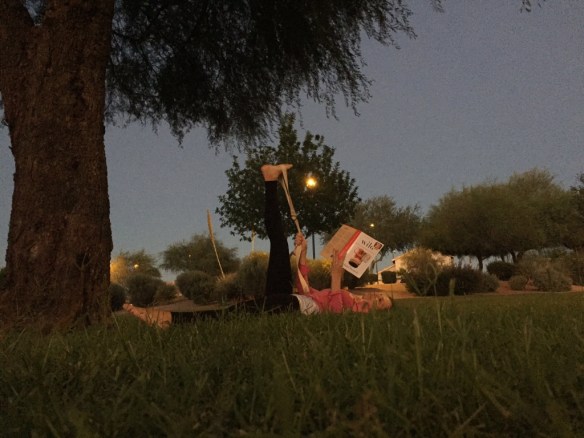
5 Best Yoga Poses for Reading | BOOK RIOT


My two most favourite activities! I definitely think butterfly pose should have been included on this list though.

The holiday season is a great time to carve out some stress-free time with a book. If you want to take that relaxation a step further, or work on some tighter muscles, some yoga poses are actually perfectly suited for reading time.The majority of these poses work better when you give your body some time to ease and settle into them. I usually give myself a two page time limit before switching to the other side, but you can do more or less depending on your body. Benefits of each yoga pose are listed below, along with links to more in-depth articles about how to practice them correctly.

READ MORE 5 Best Yoga Poses for Reading | BOOK RIOT.

50 Great Dark Books for the Dark Days of Winter | Flavorwire


The only books I have read on this list are Macbeth and American Psycho (I recommend both). I would have included Perfume: The Story of a Murder by Patrick Suskind.

We’ve reached the time of year when the days seem impossibly short and the nights never ending. Good if you’re a vampire or like to go to sleep early, less exciting for the rest of us. So what is one to do with all this extra darkness? Well, read some dark books, of course. After all, there’s nothing better to cut through the literal gloom than to curl up with some intellectual doom. All you need is a tiny light to see your book by. After the jump, 50 gloriously dark novels to read during these dark days. After a while, you may even stop wishing for the light to come.

via 50 Great Dark Books for the Dark Days of Winter | Flavorwire.