A Great Example Why Big Data is Becoming Hugely Important


“Barack Obama may have comfortably won re-election in the electoral college, and squeaked a victory in the popular vote. But here is the absolute, undoubted winner of this election: Nate Silver and big data.”

via Triumph of the Nerds: Nate Silver Wins in 50 States.

Nate Silver is a statistician and political blogger (FiveThirtyEight – Nate Silver’s Political Calculus) for The New York Times. His statistical forecasts for the 2012 American Presidential Election were amazingly accurate and are a great case study for validating the importance and value of big data.

Collection of Links: Big Data


Big data is almost on the cusp of the emerging technology hype cycle according to the Gartner 2012 Hype Cycle and according to Gartner’s Top 10 Strategic Technology Trends for 2012 (PCMAG.com). What is the ‘big’ deal with big data anyways? Below I have posted links to information resources highlighting a range of issues related to big data.

Gartner defines big data as…”the term adopted by the market to describe extreme information management and processing issues which exceed the capability of traditional information technology along one or multiple dimensions to support the use of the information assets. Throughout 2010 and into 2011, big data has focused primarily on the volume issues of extremely large datasets generated from technology practices such as social media, operational technology, Internet logging and streaming sources. A wide array of hardware and software solutions have emerged to address the partial issue of volume.”

The Data Drive Life by Gary Wolf (April 28, 2010) is a great backgrounder article on how we have come to generate more and more data in our daily lives.

Big Data/Linked Data White Paper from Fujitsu, March 2012

Business Perspective
From Harvard Business Review. The Next Wave of Process Strategy, October 30, 2012 and Big Data Hype (and Reality), October 18, 2012

Significance to Libraries
Data Science: What’s in it for the New Librarian? from Information Space, July 16, 2012

Big data is also about the Internet of Things and Linked Data. Linked Data for Libraries OCLC Video posted August 7, 2012

Defining the “Big” in Big Data by Leslie Johnston at the Library of Congress, May 17, 2012

Importance to Other Industries
Big Data and social media: A match made in heaven?
posted October 23, 2012 at the TechRepublic

Big Data is Transforming Healthcare from Wired Science, October 16, 2012

Software
Big Data Meets BI: Beyond The Hype from Information Week, October 30, 2012

Lists some of the other open source software in the big data space (versus Hadoop) Big Data Right Now: Five Trendy Open Source Technologies from TechCrunch, October 27, 2012

This is your brain on Jane Austen, and researchers at Stanford are taking notes


This is your brain on Jane Austen, and researchers at Stanford are taking notes.

Quotable: “In an innovative interdisciplinary study, neurobiological experts, radiologists and humanities scholars are working together to explore the relationship between reading, attention and distraction – by reading Jane Austen.”

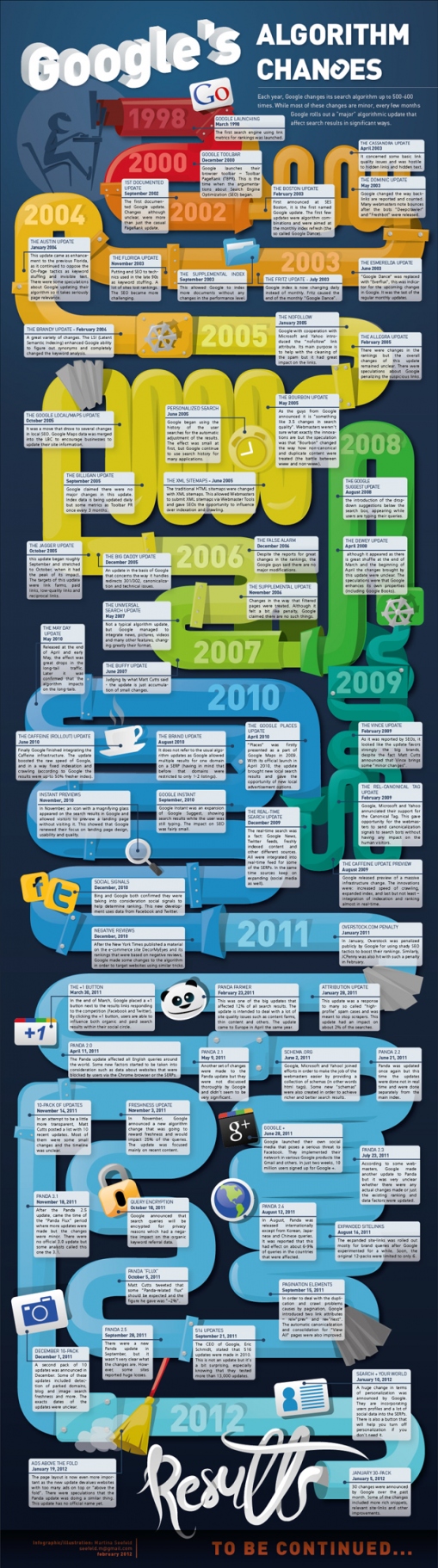
GTA Technology Topics, Tips and Tricks: Infographic Diversions – Dystopian Timeline to the Hunger Games; Wikipedia is Redefining Research; Google Algorithm Changes


Some fun infographic diversions…

GTA Technology Topics, Tips and Tricks: Comics in the Library, E-Comics


Today’s post is focused on comics. Disclaimer: I know next to nothing about comics or graphic novels so please forgive me for begin a total noob. I came across a Marvel announcement that I thought would be of interest to some of you SLISters that precipitated writing a GTA email on this topic.

The recent announcement by Marvel mentioned that the company will be including a code for downloading the *free* digital copy within every top-selling physical comic book purchased (those priced at $3.99).  Here is an article by Fast Company’s expert blogger Rob Salkowitz, questioning whether Marvel’s Digital Comic Book Shift “Will Fly” published March 12, 2012.  Note that there have been previous announcements by other comic book companies (such as DC Comics) previously regarding shifting to digital, so the announcement by Marvel is not that unique…excepting codes for downloading the *free* digital versions. Interesting times.

So, I was thinking, what are the reasons that libraries do not collect comic books?  Pricing and acquisition, difficult to catalog, collection development and management concerns, theft concerns. Do comics offer no learning or educational opportunities? Others reasons?? Some commentary on this very issue: Egads! Comics! In the Library!

Maybe with the announcement by Marvel, and the development of e-comic databases, more libraries will explore offering e-comic collections to their users (as an extension to currently offered graphic novel collections). Then again, I could see libraries getting out of offering any e-content at all to patrons due to pricing, licensing and availability issues, etc.

Here is a link from the University of Florida listing US university libraries with physical comic book holdings.

Library of Congress: Comic Books

British Comics Collection

If you are interested in graphic novels/comics in libraries I came across this 2010 resource, which is a holding of the University of Alberta RHSS Library. Graphic novels and comics in libraries and archives: essays on readers, research, history and cataloging by Robert Weiner.

Ok, I think I have just proposed a great research project for one of you!

11 Web-based Polling and Survey Tools


Free Technology for Teachers: 11 Web-based Polling and Survey Tools.

Low IQ & Conservative Beliefs Linked to Prejudice | Racism, Bias & Politics | Right-Wing and Left-Wing Ideology | LiveScience


Low IQ & Conservative Beliefs Linked to Prejudice | Racism, Bias & Politics | Right-Wing and Left-Wing Ideology | LiveScience.

GTA Tips & Tricks: A Few Research/Reference Resources


ALA (RUSA) Mars Best Free Websites
The 2011 Best Free Reference Websites. Quality websites on specific topics – fun to browse and see what’s out there.  It was interesting to see WikiLeaks on the list but I’m not surprised at TED.


University of Alberta LIS Subject Guide
If you have not yet discovered the Library and Information Studies Subject Guide on the University of Alberta Libraries website, I encourage you to review this resource as there are a variety of useful goodies, such as lists of LIS Databases & Journals and in depth resources on specific LIS topics.


Web of Science (see series of images below)
Not yet heard of citation mapping? Well this is a tool that can help you find related research articles by mapping references (citations) of other researchers who have cited the article. A popular arts and humanities, science and social sciences citation mapping database is called Web of Science.


Enter your search terms on the search page and press enter. Click on the link for an article of interest to you. Then click on the “Citation Map” link (note not all articles will have a citation mapping link).  Choose which direction to map and click on “CREATE MAP” at the bottom right of the screen. Then have fun exploring that citation map!!! There are some other features to Web of Science and I have only described here one of its most powerful tools.
Web of Knowledge [v.5.3] - Web of Science Full Record.jpg
_Users_jnmullings_Desktop_image2.jpg-2.jpg


Web of Knowledge [v.5.3]-1.jpg

Review of Winter 2011 MLIS Courses


Here’s some thoughts on the MLIS courses I took in the winter and spring/summer semesters at the University of Alberta. I ended up taking probably the four most difficult courses in the program in winter 2011.

LIS 505 – Introduction to Research
Oh the cold shivers running up my back at the memories. Suffice to say LIS 505 was a very difficult course and I’m not exaggerating! This is a required course in an MLIS program. Basically you come up with a research question (e.g. quantitative, qualitative or textual) and live with it for 3 months, do a plethora of related assignments and then churn out a 35 page single-spaced research proposal including interview questions, ethics review, hypotheses, recruitment poster, budget, timeline and on and on for final term project. What was both great and not so great were the students from other disciplines enrolled in the course. Most classes in LIS only have LIS students but not LIS 505, as the course is meant to instruct students on how to put together a research proposal and how to conduct research. So external students brought refreshing opinions but those same students hogged the class time in a class filled to over capacity. Luckily, my marathon effort on my final proposal reaped rewards and I got a grade I am happy with.

LIS 532 – Cataloging and Classification
This was the most frustrating course but the most practical and rewarding. We learnt standards in bibliographic description, AACR2 rules, MARC 21 format, LCC, DCC, LCSH. We had five items of varying format such as monograph, serial, DVD, electronic resource, which we learnt the above aspects of cataloging and classification. The detail required and the high level of understanding of rules and standards was exacting and the source of my frustration being a perfectionist. Luckily, we had a wonderfully giving instructor, KDG, who felt our pain but had high expectations of our efforts. Our term project was a 20 page group paper examining LCSH and DDC on a high-level topic (cooking and ethnicity). I would recommend all MLIS students take this fundamental course. I even got to apply what I learnt in my spring practicum work placement!

LIS 533 – Database Design for Information Management
This course at its core was not about building a database in a software program but learning the conceptual, logical and practical design steps when creating and implementing databases. For this course you needed to be able to think abstractly when ER modeling and analytically when developing relational models, creating SQL queries, QBE and using normalization. The term project required you to go through each step of database design, then create the database in Access, as well as forms, SQL queries and QBE. I did well with the analytical aspects to the course but in my mind failed with the more conceptual aspects, the ER modelling. The content of the course was difficult, even for those who have the aptitude for it, so I would not necessarily recommend this course to the majority of MLIS students but would to those that have a special interest in database design.

LIS 538 – Digital Libraries
Digital libraries was my favourite course in the winter term, though a demanding one. It really opened my eyes to all the different layers involved in considering building a digital library, such as funding, preservation, metadata standards, etc. The course really ran the gamut on topics and was very informative. The final project was to create a digital library using the Greenstone application, with an accompanying paper. The course was demanding because Greenstone was very tricky and problematic to use. Many hours I’ll never get back were spent on trial and error experimenting and perfecting my digital library which I called Interpretations of Tea. This course was my best grade so far in the program. I would recommend a digital libraries course to MLIS students but if you are not comfortable with technology you may want to look at other options.

So, as you can see from above, all my final projects were very demanding…and of course they were essentially due all at the same time, along with some other assignments. I had two weeks of stress, poor diet, no exercise, sporadic sleep, mental intensity and then after submitting an assignment 6:00pm on the last Friday of the term, I had to pack up and clean my apartment, then move Saturday back to Calgary and start my practicum work placement on the Monday. The practicum was for 3 weeks and then I finally got a break!

LIS 590 – Practicum
My practicum placement was at a special library for a large Canadian oil & gas company. I got great exposure to reference requests, original and copy cataloguing and I researched embedded librarianship and alternative library models for my final project. I would recommend library and information studies students compete a co-operative work placement or a practicum, as it provides great insight into real world librarianship. The practicum was pass/fail, three-week intensive (100 hours) and although I was not paid it does count toward three credits or a full course in my program.

LIS 598 Information Security
I took this as a one-credit course. We learnt about risk management, information security in the context of threats and vulnerabilities (such as hacking, natural disasters, password management, etc.), critiquing acceptable use policies. I learnt a lot in this course, plus it was timely with all the recent Lulzsec and Anonymous events. A final project was required consisting of four parts (Policy Analysis, Software Evaluation, Future Forecast and Incident Report). The summary may sound dry but the course was eye-opening, as we were shown the techniques and technology that hackers use and we studied risk management documents. I got a great grade in this course as well…and I only wish it had been a three-credit instead of a one-credit, it was that interesting.