The Breaking Bad Guide to Storytelling [Infographic] | Kapost Content Marketeer


“The Breaking Bad Guide to Storytelling” delves into the techniques and twists employed by the writers, producers and staff to keep the audience tuning in every week…or binge watching on Netflix. From Gilligan’s dedication to his pre-planned narrative arc to his adaptability to audience demands, we listened closely to the words of the creators themselves and compiled the key lessons every marketer should note.

via The Breaking Bad Guide to Storytelling [Infographic] | Kapost Content Marketeer.

breaking_bad_infographic.jpgBrought to you by Kapost

‘It’s Britney, witch!’: Britney Spears recites the ‘Thriller’ intro | PopWatch | EW.com


‘Tis the season for multiple costume changes! Britney Spears has temporarily traded in her dominatrix whips for bloody axes and wooden brooms.

In a Halloween-themed video for BBC‘s The Radio 1 Breakfast Show With Nick Grimshaw, the pop princess says “It’s Britney, witch!” and recites the intro from Michael Jackson’s “Thriller.” “Creatures crawl in search for blood, to terrorize your neighborhood,” Spears says in an adorable Southern-fried Vincent Price voice.

Spears reads the famous song intro from a throne, orders pepperoni pizza, rides a broom, and shows that in between working for those Lambos and martinis, she’s got a killer sense of humor.

Watch scary story time with Brit here:

via ‘It’s Britney, witch!’: Britney Spears recites the ‘Thriller’ intro | PopWatch | EW.com.

The Future Of Storytelling Is About To Get Wild | ReadWrite


Many of us go about our lives constantly surrounded by screens, immersed in various “stories”: movies, TV shows, books, plot-driven video games, news articles, advertising, and more. Whether we realize it or not, we’re creating new behaviors, routines, mindsets, and expectations around what we watch, read or play—which in turn presents new challenges and opportunities for creators and marketers.

In other words, while the fundamentals of good storytelling remain the same, technology is changing how stories can be told. But what does that mean exactly?

Since last year, Latitude, a strategic insights consultancy, has been conducting an ongoing Future of Storytelling initiative to understand what audiences want for the long haul. Below are eight predictions for the future of storytelling based on what we found. (More information about Latitude’s multi-phase research project is available here.)

  1. Stories Come Out Of The Screen, Into The Physical World
  2. Characters Will Become Connections
  3. Stories Will Unfold From Different Vantage Points
  4. Stories Will Be Told 24/7
  5. Storytelling Goes Bottom-Up
  6. Stories Will Make The World A Better Place
  7. Videos Will Offer One-Click Storefronts
  8. Passive Or Active Experience—It’ll Be Your Choice

Read: The Future Of Storytelling Is About To Get Wild | ReadWrite.
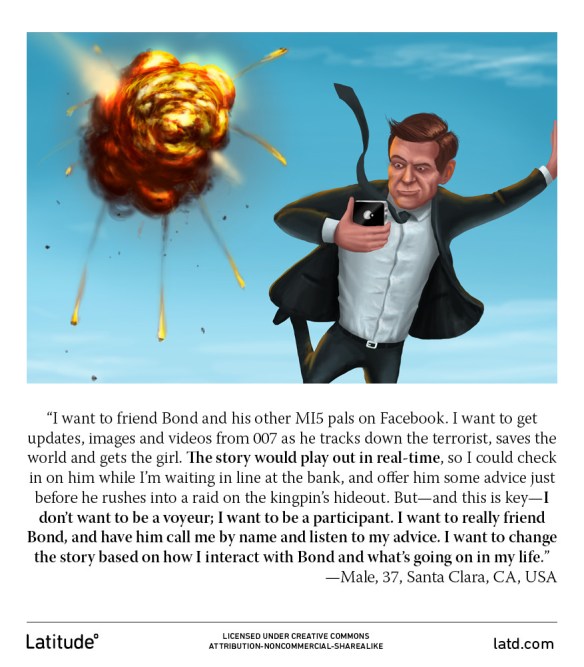
Latitude - Characters Will Become Connections

Andrew Fitzgerald: Adventures in Twitter fiction | TED.com


In the 1930s, broadcast radio introduced an entirely new form of storytelling; today, micro-blogging platforms like Twitter are changing the scene again. Andrew Fitzgerald takes a look at the (aptly) short but fascinating history of new forms of creative experimentation in fiction and storytelling.

via Andrew Fitzgerald: Adventures in Twitter fiction | Video on TED.com.

The Joy of Data Driven Storytelling | Leslie Bradshaw


The Magic Behind Stop-Motion Animation Revealed [VIDEO] | Mashable


The art of stop-motion animation has left viewers in awe for decades. Yet, such a simple pleasure requires a lot of planning for perfect execution.

As part of the PBS Digital Studios series Off Book, a few highly skilled stop-motion artists reveal a little bit of the magic behind their creations.

via The Magic Behind Stop-Motion Animation Revealed [VIDEO] | Mashable

An Online Project Collects The Stories Behind Favorite Heirlooms | Co.Design


Genie lamps, ancient tomes, swords in stones: Classic tales reveal that certain objects possess magical powers, absorbed through generations of inheritance. With today’s relentless pressure to just buy more and more, it’s easy to forget the power of our own belongings. We’re all hoarders on some level. But most of us have at least one heirloom with a rich history, an item that seems more alive than the rest.

British photographer Joakim Blockstrom wants to hear these particular stories and to document your favorite heirlooms. Blockstrom founded The Heirloom Project, an online bank of images of passed-down objects along with their histories. The intent is to start a discussion about the meaning of inheritance and its relationship to our identities and what we value.

An Online Project Collects The Stories Behind Favorite Heirlooms | Co.Design | business + design

See the full post: An Online Project Collects The Stories Behind Favorite Heirlooms | Co.Design | business + design.

Neil Gaiman to Release First Video Game | Mashable


Horror-fantasy icon and best-selling author Neil Gaiman is stepping into a new world: a virtual one. The British-born writer has announced the launch of his first video game, Wayward Manor.

See the full article: Neil Gaiman to Release First Video Game | Mashable.

Told in pictures | Eye Magazine


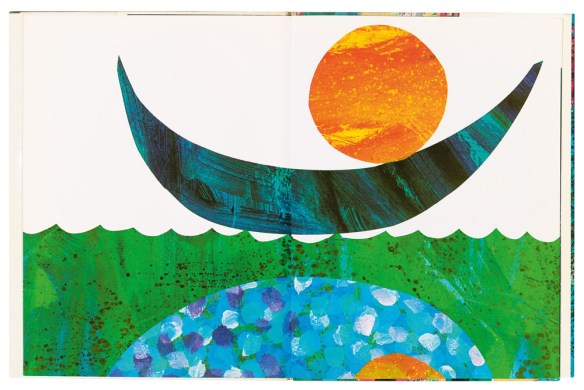
What distinguishes the picturebook as a genre within children’s publishing is the way the images work with the words. Rather than merely illustrating the words, the images carry equal weight to them, achieving a harmonious balance between the two where each element adds something to the whole that the other does not. But there is an entire sub-genre of picturebook that eschews a written text altogether, relying entirely on a sequence of images to tell a story or create a meaning.

See the full story at Told in pictures Eye Magazine

A Beautifully Simple Comic Book for the Blind | Wired Design | Wired.com


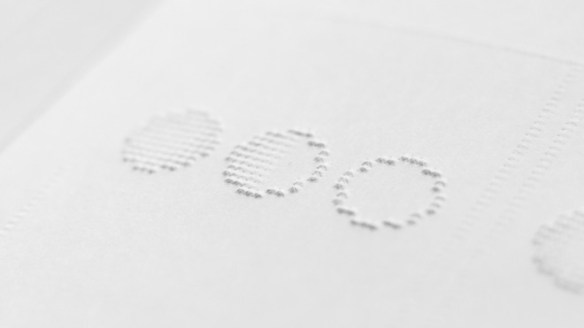
Braille has come a long way since its invention in the 19th century, but it’s still tough to apply it to the highly-visual storytelling we see in comics. This realization led Phillipp Meyer, a Copenhagen-based interaction designer, to create the first comic for the blind.

Simple, recognizable shapes paired with a contextual title and a simple narrative flow was enough for readers to glean a basic understanding of a story. From there, the reader’s imagination is in charge.

For the full story see: A Beautifully Simple Comic Book for the Blind | Wired Design | Wired.com.

Braille Comic