Top UX predictions for 2015 from UX Magazine contributors. The Top UX Predictions for 2015 | UX Magazine
Author Archives: infophile
How Technology Is Warping Your Memory | HuffPo
Take a moment to think about the last time you memorized someone’s phone number. Was it way back when, perhaps circa 2001? And when was the last time you were at a dinner party or having a conversation with friends, when you whipped out your smartphone to Google the answer to someones question? Probably last week.
Technology changes the way we live our daily lives, the way we learn, and the way we use our faculties of attention — and a growing body of research has suggested that it may have profound effects on our memories (particularly the short-term, or working, memory), altering and in some cases impairing its function.
The implications of a poor working memory on our brain functioning and overall intelligence levels are difficult to over-estimate…READ MORE: How Technology Is Warping Your Memory | HuffPo
Reading On A Screen Before Bed Might Be Killing You | HuffPo
You’ve heard that using screens before bedtime can mess with your sleep, but new research suggests the problem is even more serious.
Reading from an iPad before bed not only makes it harder to fall asleep, but also impacts how sleepy and alert you are the next day, according to new research from Brigham and Womens Hospital in Boston, Massachusetts. The study, published in the journal Proceedings of the National Academy of Sciences on Monday, said the findings could impact anyone who uses an eReader, laptop, smartphone, or certain TVs before bed.
The new research supports conclusions from older studies, which have also found that screen time before sleep can be detrimental.
READ MORE: Reading On A Screen Before Bed Might Be Killing You | HuffPo
So you wanna be a data scientist? A guide to 2015’s hottest profession | Mashable
Are you good at math? Like, really good at math? Do you also know Python and, oh yeah, have deep knowledge of a particular industry?
On the off chance that you possess this agglomeration of skills, you might have what it takes to be a data scientist. If so, these are good times. LinkedIn just voted “statistical analysis and data mining” the top skill that got people hired in 2014.
Glassdoor reports that the average salary for a data scientist is $118,709 versus $64,537 for a programmer. A McKinsey study predicts that by 2018, the U.S. could face a shortage of 140,000 to 190,000 “people with deep analytic skills” as well as 1.5 million “managers and analysts with the know-how to use the analysis of big data to make effective decisions.” READ MORE: So you wanna be a data scientist? A guide to 2015s hottest profession | Mashable
JPEG, GIF, & PNG: Know Your File Types | Who Is Hosting This?
Trying to save space on image files? It can be tough to know exactly which filetype is the best to use. If you save your image as the wrong type, you could end up blurring a beautiful photo, losing all the detail of your logo, or turning a transparent background black.
If you’d like to know exactly which is the perfect image filetype to use for which images, and save a lot of space and bandwidth in the process while maintaining a quality image, check out the handy reference below for the facts.
via JPEG, GIF, & PNG: Know Your File Types | Who Is Hosting This?

A Better Way to Think About the Genre Debate | The New Yorker
A very thoughtful essay questioning the distinction between genre versus literature, using Station Eleven by Emily St. John Mandel as an example. Well worth the read.
Snip
It’s hard to talk in a clear-headed way about genre. Almost everyone can agree that, over the past few years, the rise of the young-adult genre has highlighted a big change in book culture. For reasons that aren’t fully explicable (Netflix? Tumblr? Kindles? Postmodernism?), it’s no longer taken for granted that important novels must be, in some sense, above, beyond, or “meta” about their genre. A process of genrefication is occurring.
That’s where the agreement ends, however. If anything, a divide has opened up. The old guard looks down on genre fiction with indifference; the new arrivals—the genrefiers—are eager to change the neighborhood, seeing in genre a revitalizing force. Partisans argue about the relative merits of “literary fiction” and “genre fiction.” (In 2012, Arthur Krystal, writing in this magazine, argued for literary fiction’s superiority; he fielded a pro-genre-fiction riposte from Lev Grossman, in Time.) And yet confusion reigns in this debate, which feels strangely vague and misformulated. It remains unclear exactly what the terms “literary fiction” and “genre fiction” mean. A book like “Station Eleven” is both a literary novel and a genre novel; the same goes for “Jane Eyre” and “Crime and Punishment.” How can two contrasting categories overlap so much? Genres themselves fall into genres: there are period genres (Victorian literature), subject genres (detective fiction), form genres (the short story), style genres (minimalism), market genres (“chick-lit”), mode genres (satire), and so on. How are different kinds of genres supposed to be compared? (“Literary fiction” and “genre fiction,” one senses, aren’t really comparable categories.) What is it, exactly, about genre that is unliterary—and what is it in “the literary” that resists genre? The debate goes round and round, magnetic and circular—a lovers’ quarrel among literati.
READ MORE: A Better Way to Think About the Genre Debate | The New Yorker
What Book Should You Read Next? Putting Librarians And Algorithms To The Test | Co.Exist

Snips
When I received the Brooklyn Public Library’s recent email newsletter promoting a new service called BookMatch, I was both delighted and dismayed.
On the one hand, it was a great idea. All I had to do was fill out a short web form letting the librarians know a bit about what I wanted to read and what I liked to read, and one promised to write back with five personalized recommendations tailored to my interests and tastes. On the other, the fact I was so delighted was exactly what was dismaying.
…
Clearly, the librarians believe that human tastes and discretion are still relevant, even as automated algorithms are influencing an increasing portion of the media we consume, whether in the form of news, books, music, or movies. But are a book expert’s personalized suggestions really better than what I might get from Amazon, a site that hasn’t employed a human editor for its home page in 14 years? It’s very possible my positive feelings about the BookMatch program are sprung from mere sentimentality.
5 Best Yoga Poses for Reading | BOOK RIOT
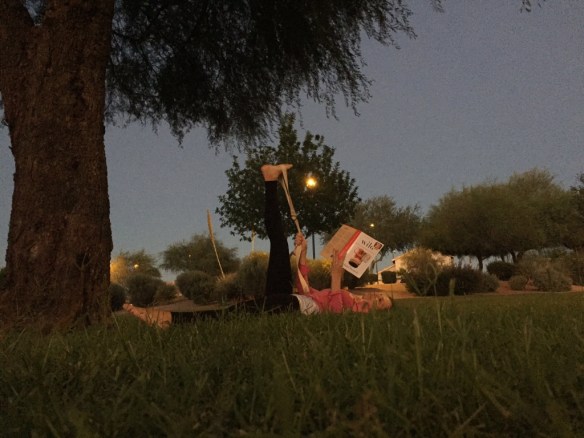
My two most favourite activities! I definitely think butterfly pose should have been included on this list though.
The holiday season is a great time to carve out some stress-free time with a book. If you want to take that relaxation a step further, or work on some tighter muscles, some yoga poses are actually perfectly suited for reading time.The majority of these poses work better when you give your body some time to ease and settle into them. I usually give myself a two page time limit before switching to the other side, but you can do more or less depending on your body. Benefits of each yoga pose are listed below, along with links to more in-depth articles about how to practice them correctly.
READ MORE 5 Best Yoga Poses for Reading | BOOK RIOT.
50 Great Dark Books for the Dark Days of Winter | Flavorwire
The only books I have read on this list are Macbeth and American Psycho (I recommend both). I would have included Perfume: The Story of a Murder by Patrick Suskind.
We’ve reached the time of year when the days seem impossibly short and the nights never ending. Good if you’re a vampire or like to go to sleep early, less exciting for the rest of us. So what is one to do with all this extra darkness? Well, read some dark books, of course. After all, there’s nothing better to cut through the literal gloom than to curl up with some intellectual doom. All you need is a tiny light to see your book by. After the jump, 50 gloriously dark novels to read during these dark days. After a while, you may even stop wishing for the light to come.
via 50 Great Dark Books for the Dark Days of Winter | Flavorwire.
This Font Could Help Dyslexics Read Better | CNET + A Typeface For Dyslexics? Don’t Buy Into The Hype | FastCompany
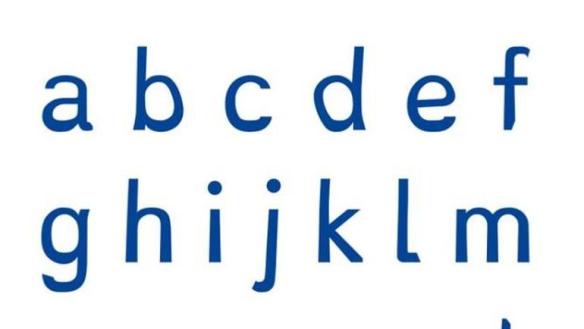
This Font Could Help Dyslexics Read Better | CNET
Inspired by his own experiences with dyslexia, Dutch designer Christian Boer developed a font to make reading easier.
and a rebuttal…
A Typeface For Dyslexics? Don’t Buy Into The Hype | FastCompany
Lucida creator Chuck Bigelow argues that dyslexie and other similar fonts are statistically no better than Arial.
 infophile