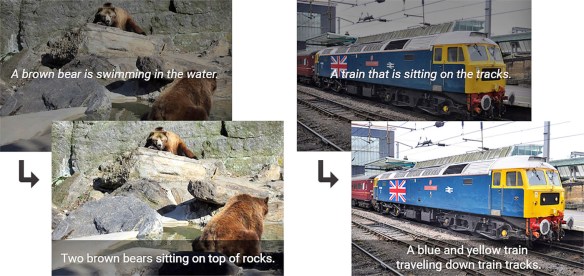
How to solve Facebook’s fake news problem: experts pitch their ideas | The Guardian #news #facts #authority #validation #HireALibrarian #duh


The past few months there was quite the vacuum of factual, non-fake news to post to infophile. Thankfully, with the U.S. election finally over, some cool, timely and hopefully accurate stories are percolating up in my news feeds. Interesting times. How about just Hire a Librarian!!!

A cadre of technologists, academics and media experts are thinking up solutions, from hiring human editors, to crowdsourcing or creating algorithms

Source: How to solve Facebook’s fake news problem: experts pitch their ideas | Technology | The Guardian

The Internet Archive is building a Canadian copy to protect itself from Trump | The Verge #Internet #digital #archives #digitalpreservation


It has come to this…

The Internet Archive, a digital library nonprofit that preserves billions of webpages for the historical record, is building a backup archive in Canada after the election of Donald Trump. Today, it began collecting donations for the Internet Archive of Canada, intended to create a copy of the archive outside the United States. READ MORE: The Internet Archive is building a Canadian copy to protect itself from Trump – The Verge

Listen to the First Music Ever Made With a Computer | Gizmodo #archives #music #preservation #computers #history


Researchers from New Zealand have restored the very first recording ever made of computer generated music. The three simple melodies, laid down in 1951, were generated by a machine built by the esteemed British computer scientist Alan Turing. READ MORE: Listen to the First Music Ever Made With a Computer | Gizmodo

Do You Use a Mac? Press Cmd + Ctrl + Space Right Now | Gizmodo #shortcuts #emojis


Yay, emojis!  Do You Use a Mac? Press Cmd + Ctrl + Space Right Now | Gizmodo

Google swallows 11,000 novels to improve AI’s conversation| The Guardian #AI #books #language


When the writer Rebecca Forster first heard how Google was using her work, it felt like she was trapped in a science fiction novel. “Is this any different than someone using one of my books to start a fire? I have no idea,” she says. “I have no idea what their objective is. Certainly it is not to bring me readers.”

After a 25-year writing career, during which she has published 29 novels ranging from contemporary romance to police procedurals, the first instalment of her Josie Bates series, Hostile Witness, has found a new reader: Google’s artificial intelligence.

“My imagination just didn’t go as far as it being used for something like this,” Forster says. “Perhaps that’s my failure.” Forster’s thriller is just one of 11,000 novels that researchers including Oriol Vinyals and Andrew M Dai at Google Brain have been using to improve the technology giant’s conversational style. After feeding these books into a neural network, the system was able to generate fluent, natural-sounding sentences. READ MORE: Google swallows 11,000 novels to improve AI’s conversation | Books | The Guardian

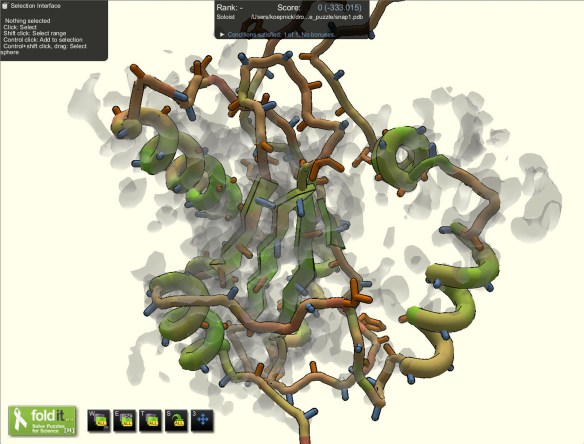
Gamers beat scientists to making a protein discovery | engadget #gaming #crowdsource #science #research


Photo Source: engadget + Scott Horowitz

[P]roof that crowdsourced science can solve problems quickly. READ: Gamers beat scientists to making a protein discovery | Engadget

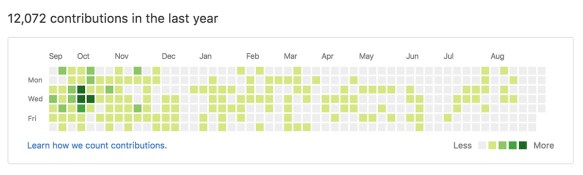
We Need a Better Way to Visualize People’s Skills | HBR #skills #data #visualization #employment #analytics #competencies


Photo Source: HBR

How can companies get a better idea of which skills employees and job candidates have? While university degrees and grades have done that job for a long time, they’ve done it imperfectly. In today’s rapidly evolving knowledge economy, badges, nanodegrees, and certificates have aimed to bridge the gap – but also leave a lot to be desired. While HR departments are eager for better “people analytics,” that concept is still fuzzy. And simply collecting data is not enough – to be used, data has to be presented usefully. READ MORE: We Need a Better Way to Visualize People’s Skills | HBR

Evo Is a Little Robot With a Big Mission: Get Girls to Code | WIRED #coding #STEM #tech #women #robots #education #gadgets


WHEN HIS DAUGHTERS were young, Nader Hamda says, they were really into apps and computers. But now that they’re a little older, their interest is waning. And that’s not unusual. “They’re not an exception,” he says. “They’re more of a rule.”

Sadly, this is true. According to numerous studies, young girls are moving away from computer science, not towards it. And Hamda says this is why his company, Ozobot, is now offering an educational robot called Evo. Evo is small and spherical, only about an inch in diameter. It looks kinda like an IBM Selectric type ball. But it’s also designed to be social.

READ MORE: Evo Is a Little Robot With a Big Mission: Get Girls to Code | WIRED