Power Tools | Roy Tennant – The Digital Shift


Excerpt of article content specific to libraries:

Tools in a digital library context often provide similar benefits, although they tend to be different in nature. I would say that a basic tool for any digital librarian is likely a computer running a LAMP stack:

L = Linux
A = Apache web server
M = MySQL
P = A “P” programming language such as Perl or Python

With that, there is very little you can’t do. Well, that is, once you install the dependencies of whatever else you’re wanting to run. But you get the idea. It’s a basic platform from which much else is made possible. It’s an essential tool set.

Some of the other digital library tools in my repertoire include:

Swish-e – I’ve used this indexing software since the mid-90s, and haven’t seen a reason to change. With it, I’ve set up and maintained a variety of web sites that function as if they are database-supported but in fact are simply flat XML files that are indexed using Swish-e (see, for example, FreeLargePhotos.com).

XSLTProc – Sure, there are many options for XML processing out there and I won’t attempt to defend this particular decision except to say that it is easy to use and does what I need it to do (process XSLT stylesheets against specified XML files). Again, it underpins a number of my web sites.

Nano – You can stop laughing now. Seriously. Stop laughing. I mean it. Nano is a simple text editor (before it was Pico, which was what the PINE linemode email system used for message editing). I use it to do simple editing tasks in text files and programs on the server. I know it isn’t nearly as cool emacs, or even vi, but hey, it’s what I’m used to.

Tools are power. They give you capabilities you would not have without them.
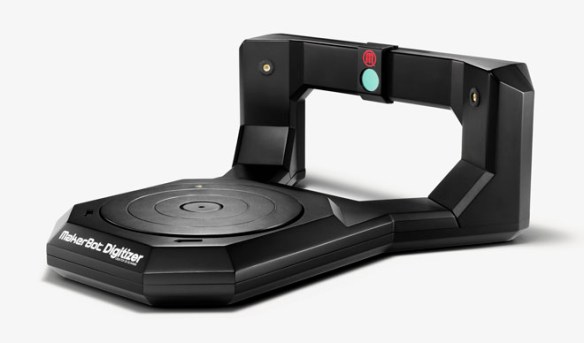
via Power Tools | Roy Tennant – The Digital Shift.

MakerBot Digitizer Will Clone All Your Stuff Using a Turntable and Lasers | Wired.com


See the post: MakerBot Digitizer Will Clone All Your Stuff Using a Turntable and Lasers | Gadget Lab | Wired.com

MakerBot Digitizer Will Clone All Your Stuff Using a Turntable and Lasers | Gadget Lab | Wired.com

E-Books Could Be The Future Of Social Media | Co.Labs


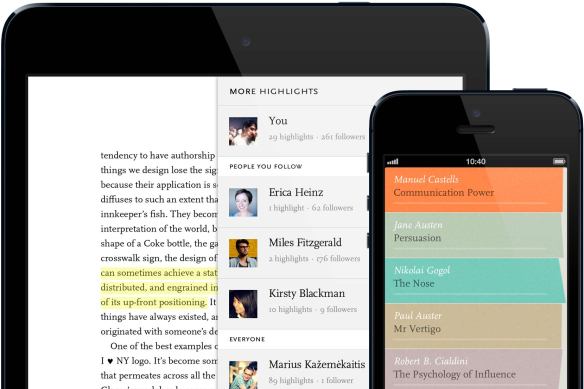
In the future, e-books will act just like social networks. We’ll use them on our phones, share and comment right inside e-reader apps, and publishers will use our data to help them make better marketing decisions. If you think digital reading is exploding now, just wait.

The article examines a new reading app called Readmill, which makes “each and every book its own self-contained social network.” See the full story: E-Books Could Be The Future Of Social Media ⚙ Co.Labs ⚙ code + community.

E-Books Could Be The Future Of Social Media ⚙ Co.Labs ⚙ code + community

Image Attribution: Readmill

Google Translate adds African languages | theguardian.com


Google is planning to add Somali, Igbo, Hausa, Yoruba and Zulu to its list of language options on Google Translate, the search engine giant’s free automatic translation service.

A post published [on August 27, 2013] on the Google Africa page on Google+ called on users to evaluate the translation quality of the five languages. After assessing passages that are translated into English and vice versa, users can rate them as Excellent, Good, Fair or Poor.

via Google Translate adds African languages | World news | theguardian.com.

Gadgets: Going Way Beyond Wearable Technology | Information Space


These mediums of providing information are still exciting and brand new. The opportunities for devices that augment reality, capture life’s moments in real-time and improve on the function of smartphones are limitless, but what about when the the human body actually becomes one with the technology? I want to take a further look at technology that goes deeper than the surface of the skin.

See the full story: Gadgets: Going Way Beyond Wearable Technology | Information Space.

The Smithsonian Just Added a Chunk of Code to Its Permanent Collection | Gizmodo


Great to see an organization swoop in, so to speak, to preserve a defunct application, then go a step further and open the source code to developers. Hope to see this happen more often.

The Smithsonian’s Cooper-Hewitt design museum in New York just acquired the source code to an iPad app called Planetary from its now-defunct developer. Code is officially art now.

Planetary, as you can see in the video above, is basically a fancy music visualizer. The app’s source code was donated to the Cooper-Hewitt, which promptly open-sourced the code in hopes that people will use its visualization methods for other applications. Beyond the original lines of code, the museum has made a commitment to preserving the offshoots of the open-source project, and to nurturing their development. Planetary’s source has also been printed out in machine-readable OCR-A font on archival stock. Apparently, posterity demands a physical paper record that’s a little less fleeting than a digital archive.

See the full story: The Smithsonian Just Added a Chunk of Code to Its Permanent Collection | Gizmodo.

True-to-life short film about smartphones | The Feed Blog | CBS News


(CBS News) Ever leave home and get that eerie feeling like something is wrong? Like you’ve forgotten something so important that you rewind through every waking moment before realizing your lifeblood, your reason for living, your smartphone is sitting on the kitchen counter? Well take my advice and leave it. After watching “I Forgot My Phone,” a two-minute film about society’s addiction to these devices, written by and starring actress and comedian Charlene deGuzman, you’ll agree with me. Visit Charlene’s YouTube page or check it out above. Just don’t watch it on your phone.

This brilliant short film shows how depressingly easy it is to let our phones distract us from true enjoyment of many of life’s great experiences like birthdays, the beauty of nature, quality time spent with friends, and even marriage proposals. So next time you walk out the front door, try leaving the phone at home.

via True-to-life short film about smartphones | The Feed Blog | CBS News.

Governments Requested Information On 38,000 Facebook Users In The First Half Of 2013 | Fast Company


Facebook received about 38,000 data requests from government agents in 71 countries in the first half of 2013, according to the company’s first Global Government Requests Report, which it published [Tuesday]. The report comprises both criminal and national security requests made in the first six months of the year, with half of those requests coming from the United States.

via Governments Requested Information On 38,000 Facebook Users In The First Half Of 2013 | Fast Company | Business + Innovation.

How Selfies Are Re-Energizing The New York Public Library | Co.Exist


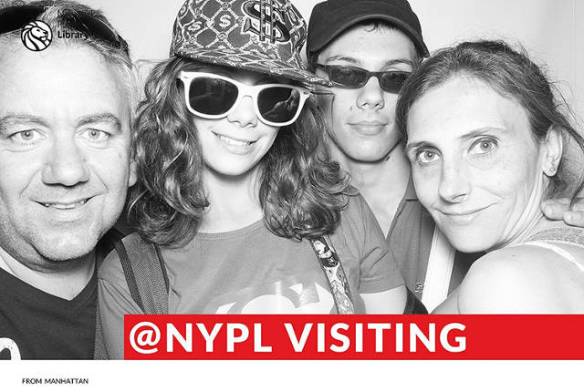
The photos look like they could have been taken at a bar, a bat mitzvah, or one of those swanky media parties with sponsored vodka. But they weren’t. These photobooth shots were snapped at the New York Public Library as part of a new social media initiative to engage more with the library’s selfie-loving patrons, and the live photostream is making our hearts melt.

How Selfies Are Re-Energizing The New York Public Library | Co.Exist | ideas + impact

See the full story: How Selfies Are Re-Energizing The New York Public Library | Co.Exist | ideas + impact.